
The Difference Between Follow and No-Follow Links: The Ultimate SEO Guide
Hyperlinks are the connective tissue of the World Wide Web. Without them, the internet would be a collection of isolated islands of information rather than a navigable network. For users, a link is a simple portal from one page to another. However, for search engines and digital marketers, links represent something much more complex: authority, trust, and a vote of confidence.
In the early days of the web, all links were treated more or less the same. If a website linked to you, it was interpreted as a recommendation. However, as search engines like Google evolved, the need to categorize these recommendations became critical. This led to the creation of link attributes, most notably the distinction between “follow” and “no-follow” links.
Read: Web Development: A Comprehensive Guide
Understanding the nuance between these two types of links is fundamental to Search Engine Optimization (SEO). A “follow” link acts as a digital endorsement that can boost your site’s ranking, while a “no-follow” link tells search engines to proceed with caution. This article provides an exhaustive exploration of these attributes, their history, their technical implementation, and how they influence the modern digital landscape. By the end of this guide, you will understand how to balance your link profile to achieve maximum visibility and authority.
Read: How to Install WordPress
What Are Links in SEO?
To understand follow and no-follow attributes, one must first understand the role of the hyperlink in the eyes of a search engine. A hyperlink is an HTML element that allows users to click their way to another web page or resource. In SEO, these are often referred to as “backlinks” when they point from an external site to yours.
Search engines use links for two primary purposes:
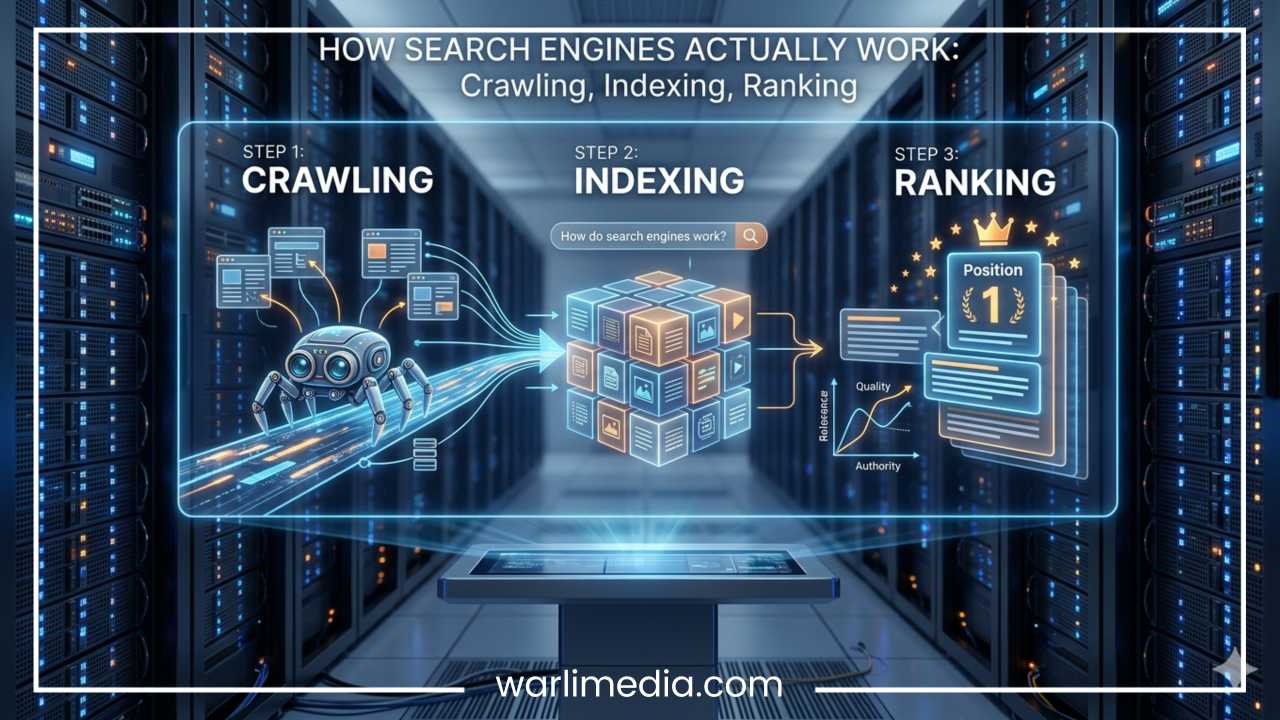
To discover new pages: Search engine “crawlers” or “spiders” find new content by following links from pages they have already indexed.
To determine how well a page should rank: Links serve as a signal of quality. If many high-authority websites link to a specific page, search engines infer that the page contains valuable information.
This concept is often described as link equity or, more colloquially, link juice. Think of link equity as a flow of power. When a reputable site links to a smaller site, it “pours” some of its own perceived authority into that site. This flow of authority was originally calculated through an algorithm known as PageRank, named after Google co-founder Larry Page. While modern SEO involves hundreds of ranking factors, the quality and quantity of links remain among the most significant components of a successful search strategy.
Read: About Search Engine Optimization
What Is a Follow Link?
A “follow” link is the standard, default state of a hyperlink. Strictly speaking, “follow” is not a technical term you will find in HTML code. There is no rel="follow" attribute required to make a link pass authority. If you create a link and do not add any specific instructions to the contrary, search engines automatically treat it as a “follow” link.
How Search Engines Treat Follow Links
When a search engine bot encounters a follow link, it does two things:
It crawls the link to discover the destination page.
It passes “link juice” (authority) from the source page to the destination page.
Passing Link Equity
Follow links are the primary drivers of SEO growth. They act as a formal “vote” for your website. If a major news outlet or a high-traffic industry blog links to your content with a follow link, they are effectively telling Google, “We trust this source, and you should too.” This helps improve the destination page’s Domain Authority (DA) or Domain Rating (DR), making it more likely to rank for competitive keywords.
Example HTML
The standard HTML for a follow link looks like this:
HTML
<a href="https://example.com">Example Website</a>
Notice that there are no additional attributes within the <a> tag. Because this is the default, search engines will naturally flow authority through this connection.
What Is a No-Follow Link?
A “no-follow” link is a link that includes a specific piece of code telling search engine crawlers not to pass authority from the source site to the destination site. While a user can still click on the link and arrive at the intended page just as they would with any other link, the “SEO value” is theoretically severed at the source.
Definition of rel=”nofollow”
The rel="nofollow" attribute is a signal to search engines. It essentially says, “I am linking to this page, but I am not necessarily vouching for it or passing my ranking power to it.”
Purpose and Spam Control
The primary purpose of the no-follow attribute is to prevent “link spam.” In the early 2000s, it was common for people to spam blog comments and forums with links to their own websites to artificially inflate their search rankings. By introducing the no-follow tag, website owners could allow users to post links without risking their own site’s reputation or helping spammers “game” the system.
Example HTML
To make a link no-follow, you add the rel="nofollow" attribute inside the anchor tag:
HTML
<a href="https://example.com" rel="nofollow">Example Website</a>
From a user perspective, this link looks and functions exactly like a follow link. However, to a search engine bot, the relationship between the two pages is strictly limited.
History of the No-Follow Attribute
The journey of the no-follow attribute began in 2005. It was a collaborative effort involving Google, Yahoo, and Microsoft (Bing) to combat the rising tide of comment spam. Before this, the comment section of any popular blog was a goldmine for SEOs looking to build easy backlinks. By implementing rel="nofollow" as a standard for user-generated content, search engines successfully removed the incentive for this type of spam.
Evolution and the 2019 Update
For over a decade, the no-follow attribute was treated as a strict directive. If a link was marked no-follow, Google simply did not count it for ranking purposes. However, as the web grew more complex, Google realized they were missing out on valuable data by ignoring these links entirely.
In September 2019, Google announced a massive change: no-follow would no longer be a “directive” but a “hint.” This means Google’s algorithms can now choose to ignore the no-follow tag and pass authority anyway if they believe the link is high-quality and relevant.
Introduction of New Attributes
Along with the 2019 update, Google introduced two additional attributes to provide even more context:
rel=”sponsored”: Specifically for links that are advertisements or paid placements.
rel=”ugc”: Specifically for “User Generated Content,” such as links within comments or forum posts.
These attributes allow webmasters to be more granular in how they label their outgoing links, helping search engines better understand the intent behind the connection.
Key Differences Between Follow and No-Follow Links
The differences between these two link types can be summarized by how they interact with search engine algorithms. While they look identical to the naked eye, their “behind the scenes” impact is vastly different.
Comparison Table
| Feature | Follow Link | No-Follow Link |
| SEO Value Transfer | Passes authority (link juice). | Generally does not pass authority. |
| Search Engine Action | Acts as a “vote” for the destination. | Acts as a “hint” for the destination. |
| Default State | Yes, all links are follow by default. | No, requires the rel="nofollow" tag. |
| Impact on Rankings | Direct impact on search rankings. | Indirect impact via traffic and discovery. |
| Primary Use Case | Editorial content and trusted citations. | Paid links, comments, and untrusted sites. |
Crawling and Indexing
Follow links are the “green lights” of the web. They encourage crawlers to move from one page to another, helping new content get indexed quickly. No-follow links, while sometimes crawled now under the “hint” model, act more like a “caution” sign. They signify that the link exists for the user’s benefit, but search engines should not necessarily use that link to determine the importance of the destination page.
How Google Treats No-Follow Links Today
The modern interpretation of no-follow links is much more fluid than it used to be. Under the “hint” model, Google uses the no-follow attribute as one of many signals to determine how to process a link.
The Shift from Directive to Hint
Google shifted to the hint model because no-follow links still contain useful information. For example, if a major publication like The New York Times uses no-follow for all external links as a blanket policy, Google’s old system would have ignored all those citations. By treating it as a hint, Google can recognize that a link from such a prestigious source still has value, even if the “no-follow” tag is present.
Context-Based Evaluation
Google now looks at the context surrounding the link. If a no-follow link comes from a highly relevant, authoritative page and receives a lot of clicks, Google may decide to count that link as a positive signal for the destination site. They are no longer bound by the strict “ignore” rule, allowing their AI to make more nuanced decisions about what constitutes a “good” link.
When to Use Follow Links
You should use follow links when you want to provide a genuine endorsement of another webpage. These are the building blocks of a healthy, interconnected web.
Editorial Links
When you are writing an article and you cite a source, link to a tool you use, or refer to a study, you should generally use a follow link. This is a natural part of the “editorial” process. By linking out to high-quality sources, you actually improve the credibility of your own content in the eyes of search engines.
Internal Linking Strategy
Internal links (links that point to other pages on your own website) should almost always be follow links. You want search engines to crawl your entire site easily and distribute authority across your various pages. Using no-follow on internal links is generally considered a poor SEO practice that hinders “crawling efficiency.”
Natural Linking Practices
In general, if a link is “earned” rather than “bought” or “automated,” it should be a follow link. If you find a resource truly helpful and want your readers to find it as well, there is no reason to restrict the flow of authority.
When to Use No-Follow Links
Using no-follow links is about protecting your site’s integrity and complying with search engine guidelines.
Paid Links and Sponsored Content
If you are being paid to link to a website—whether through a direct advertisement, a sponsored blog post, or an affiliate program—you must use a no-follow attribute (or the specific rel="sponsored" tag). Failing to do so is a violation of Google’s Webmaster Guidelines and can lead to a manual penalty.
User-Generated Content (UGC)
If your website allows users to post content (such as comments on a blog or posts in a forum), those links should automatically be marked as no-follow or rel="ugc". This prevents your site from becoming a target for automated spam bots looking to farm backlinks.
Untrusted or Unknown Sources
If you must link to a site but you don’t necessarily trust its quality or want to be associated with its SEO profile, use a no-follow link. This is common when linking to a “bad example” of something or a controversial source for the purpose of critique.
SEO Impact: Do No-Follow Links Matter?
One of the biggest myths in SEO is that no-follow links are “useless.” While they may not provide the same direct ranking boost as follow links, they are incredibly valuable for several reasons.
Referral Traffic
The primary purpose of a link is to be clicked. If a no-follow link on a popular site sends 5,000 visitors to your page, that traffic is incredibly valuable regardless of its “link juice” status. Those visitors might buy your products, sign up for your newsletter, or share your content themselves.
Brand Exposure and Awareness
Being mentioned and linked on high-profile sites builds brand authority. Even if the link is no-follow, the “digital PR” value of being associated with a major brand can lead to more searches for your company name, which is a powerful ranking signal in itself.
Indirect Follow Links
A common phenomenon in SEO is that no-follow links often lead to follow links. If a blogger sees your content via a no-follow link on a major news site, they might decide to write about you and give you a “follow” link from their own blog.
A Natural Link Profile
A website that has 100% “follow” links looks suspicious to search engines. It suggests that the links were manually built or manipulated. A natural, healthy link profile always contains a mix of both follow and no-follow links.
Common Misconceptions
As SEO has evolved, several myths have persisted regarding how links function.
“No-follow links are useless for SEO”: As discussed, these links provide traffic, brand awareness, and “hints” to Google that can indirectly help rankings.
“Follow links always improve rankings”: Not necessarily. A follow link from a “spammy” or irrelevant site can actually hurt your SEO. Quality and relevance matter more than the attribute itself.
“More links = better SEO”: This was true in 2005, but it is not true today. Ten high-quality follow links from authoritative sites are worth more than 10,000 low-quality links.
“No-following internal links helps ‘sculpt’ PageRank”: This is an outdated tactic. Google’s algorithms are now smart enough that trying to “save” authority by no-following certain internal pages (like your “Contact Us” page) is generally ineffective and can actually hurt your site’s indexability.
Best Practices for Link Building
When building links for your website, your focus should always be on quality, relevance, and naturality.
Focus on Quality Over Quantity
A single link from a domain with high authority and high relevance to your niche is worth more than dozens of links from unrelated, low-authority sites. Focus your efforts on creating content that people want to link to.
Maintain a Diverse Profile
Do not be afraid of no-follow links. If you are guest posting or being interviewed, a no-follow link from a massive site is better than no link at all. Aim for a mix that reflects a natural discovery process.
Avoid Link Schemes
Never buy “link packages” from sites that promise 5,000 backlinks for $50. These are almost always low-quality follow links that will trigger search engine penalties. Instead, focus on “earned” media and relationship building.
Relevance is King
A link from a site in your specific niche (e.g., a cooking blog linking to a kitchenware store) is infinitely more valuable than a link from a generic “link farm” site. Google evaluates the context of the link to ensure it makes sense for the user.
Tools to Check Link Types
If you want to see whether a link is follow or no-follow, there are several easy ways to check.
Browser Inspect Tool
You don’t need any fancy software. Right-click on any link in your browser (Chrome, Firefox, or Safari) and select “Inspect” or “Inspect Element.” This will open the HTML source code. Look for the rel="nofollow" attribute. If it’s not there, it’s a follow link.
SEO Browser Extensions
Extensions like MozBar, Ahrefs SEO Toolbar, or SEOquake can highlight no-follow links on a page automatically. Many of these tools will highlight no-follow links in a different color (often red or dashed lines) so you can see them at a glance.
Backlink Checkers
Tools like Ahrefs, Semrush, or Majestic allow you to input a URL and see a full breakdown of every site linking to it. These tools categorize links into “Dofollow” and “Nofollow,” providing a clear picture of your site’s link profile and how it compares to competitors.
Final Thoughts
The distinction between follow and no-follow links is a cornerstone of modern SEO. Follow links remain the “currency” of the web, passing the authority needed to climb search engine rankings. No-follow links, meanwhile, serve as a vital tool for maintaining the web’s integrity, controlling spam, and providing a natural balance to a site’s link profile.
In the current era of search, the line between these two has blurred. Google’s transition to a “hint” model means that every link—regardless of its technical attribute—contributes to the story of your website’s authority. The best strategy is not to obsess over the tags, but to focus on creating high-quality, linkable content. When you provide value to the web, the right links—both follow and no-follow—will naturally follow.
FAQs About Follow vs No-Follow Links
Does no-follow affect ranking?
While they do not pass PageRank directly in the way follow links do, they can affect ranking indirectly through traffic, brand signals, and by serving as “hints” to Google about the quality of your site.
Should I use no-follow on all external links?
No. Linking to high-quality, relevant external sources with follow links is a good practice. Only use no-follow for paid links, untrusted content, or user-generated sections.
Can no-follow links bring traffic?
Yes. The attribute only affects how search engines see the link. To a human user, the link is fully functional and can be a significant source of referral traffic.
What is the difference between ugc and sponsored?
rel="sponsored" is for links that involve a commercial agreement or payment. rel="ugc" is for links created by users, such as in comments or forum posts. Both function similarly to “no-follow” in that they generally do not pass authority, but they give Google more specific information about the link’s origin.
If I have a no-follow link from a high-authority site, is it better than a follow link from a low-authority site?
Often, yes. A no-follow link from a site like Wikipedia or Forbes can drive massive traffic and boost your brand’s credibility more than a follow link from an obscure, irrelevant blog.