Why Quality Always Beats Quantity in Link Building
In the early days of search engine optimization, the formula for success was deceptively simple: the website with the most links won. Digital marketers treated backlink acquisition like a game of pure volume, frequently resorting to automated software, link farms, and massive directory submissions to inflate their numbers. If you had 5,000 links and your competitor had 4,000, you were almost guaranteed the top spot on the search engine results page (SERP).
However, the landscape of the internet has undergone a radical transformation. Search engines, led primarily by Google’s increasingly sophisticated algorithms, have shifted their focus from raw data to nuanced signals of trust, authority, and relevance. The “more is better” philosophy has not only become obsolete; it has become dangerous. Today, the core argument for any sustainable SEO strategy is that quality fundamentally outweighs quantity. A single link from a prestigious, relevant publication can carry more ranking power than thousands of low-tier, automated placements. This article explores why the “quality-first” approach is the only way to build long-term search visibility and brand credibility.
Read: Best Free WordPress Themes
What Is Link Building?
To understand the shift toward quality, one must first understand the foundational role of the backlink. In the ecosystem of the web, a backlink is essentially a vote of confidence. When Website A links to Website B, it is telling search engines that the content on Website B is valuable, credible, or noteworthy.
The Role of Backlinks in SEO
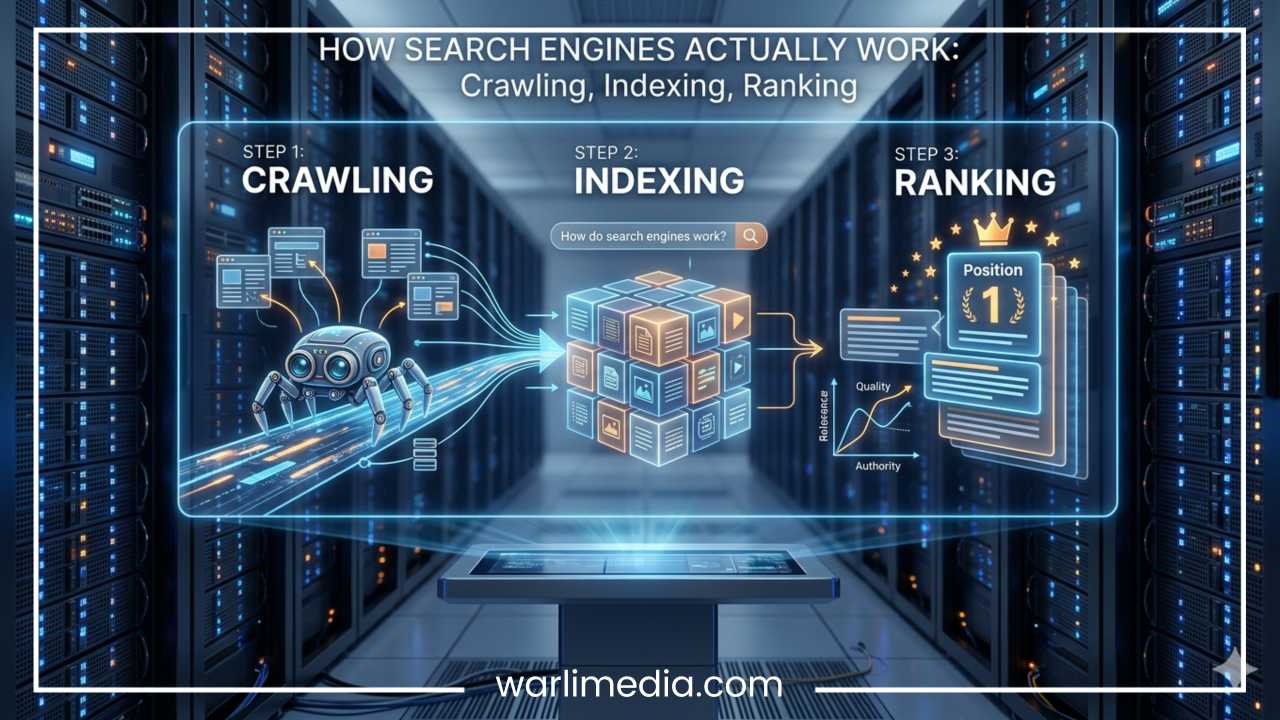
Search engines use “spiders” or “crawlers” to navigate the web. Links are the bridges between pages. When a crawler finds a link to your site on a high-traffic, respected domain, it views your site as a part of that trusted neighborhood. Backlinks help search engines discover new pages and determine how well a page should rank for specific queries.
Read: What is WordPress
Essential Link Building Terminology
DoFollow vs. NoFollow: By default, links are “DoFollow,” meaning they pass “link equity” or “link juice” to the destination site. A “NoFollow” link (indicated by a
rel="nofollow"attribute) tells search engines not to pass authority to the linked page. While NoFollow links don’t directly boost rankings in the traditional sense, they are vital for a natural-looking link profile and can drive significant referral traffic.Anchor Text: This is the clickable text in a hyperlink. If the anchor text uses relevant keywords, it helps search engines understand what the target page is about. However, over-optimizing anchor text with exact-match keywords can trigger spam filters.
Domain Authority (DA) / Domain Rating (DR): These are third-party metrics (developed by Moz and Ahrefs, respectively) that predict how well a website will rank. While not official Google metrics, they serve as useful proxies for measuring the “strength” of a potential link source.
Despite the rise of social signals and AI-driven content analysis, backlinks remain one of the top three ranking factors in Google’s algorithm. They provide the “social proof” that algorithms need to verify the information presented on a webpage.
Read: Best WordPress Themes: Power Your Website
Quality vs. Quantity: What Do They Mean?
The debate between quality and quantity is often misunderstood. It is helpful to define these two paths clearly to see where the risks and rewards lie.
What is “Quantity” in Link Building?
A quantity-focused strategy is built on the premise that SEO is a numbers game. Proponents of this method seek to acquire as many links as possible in the shortest amount of time, often at the lowest possible cost. These links typically come from:
Low-Quality Directories: Websites that exist solely to list other websites, often with no editorial oversight.
Spammy Blogs and Comment Sections: Using automated tools to drop links in the comment sections of unrelated blogs.
Link Farms: Groups of websites developed specifically to cross-link with one another to artificially boost search rankings.
The hallmark of a quantity-first approach is lack of discernment. The niche, content quality, and audience of the linking site are ignored in favor of the raw tally of inbound URLs.
What is “Quality” in Link Building?
A quality-focused strategy is defined by selectivity. It prioritizes the “pedigree” of the linking site over the total number of links. A quality link usually possesses three characteristics:
Authority: The linking site is a recognized leader in its field with high trust metrics.
Relevance: The site is in the same or a closely related niche as your own. A link from a tech blog to a software company is high quality; a link from a recipe site to a law firm is not.
Real Traffic: The linking site has an actual audience that clicks on links and engages with content.
Editorially Earned: The link was placed because a human editor believed the content added value to their readers, not because a fee was paid or a bot was triggered.
The Risks of Quantity-Focused Link Building
Choosing quantity over quality is not just inefficient—it can be catastrophic for a website’s health. Search engines have spent decades developing “anti-spam” measures to protect the integrity of their results.
The Google Penguin Legacy
In 2012, Google released the Penguin algorithm update. This was a watershed moment in SEO. Penguin was specifically designed to catch and penalize sites that were “gaming” the system through manipulative link building. Sites that had spent years building thousands of low-quality links saw their rankings vanish overnight. Today, Penguin is part of the core algorithm, meaning it evaluates links in real-time.
Toxic Backlinks and Manual Actions
A “toxic” backlink is one that comes from a site known for spam, malware, or being part of a Private Blog Network (PBN). If your site accumulates too many of these, Google may issue a Manual Action. This is a human-reviewed penalty that can result in your site being completely de-indexed (removed) from search results. Recovering from a manual action is a grueling process that involves auditing every link and submitting “disavow” files to Google.
Short-Term Gains, Long-Term Losses
While quantity-focused tactics might provide a temporary “sugar high” in rankings, they are inherently unstable. As search engines get smarter, they eventually identify the patterns of low-quality link building. Relying on these tactics creates a “house of cards” SEO strategy that can collapse with any minor algorithm update.
Why Quality Links Matter More
If quantity is the “house of cards,” quality is the “brick and mortar.” Focusing on high-tier links provides a level of security and performance that volume simply cannot match.
Trust and Authority Signals
Search engines function on a “neighborhood” principle. If your website is linked to by The New York Times, Harvard University, or an industry-leading trade publication, search engines assume you belong in that “high-trust” neighborhood. This transferred trust is far more valuable than the “noise” created by 1,000 obscure blogs.
Better Rankings with Fewer Links
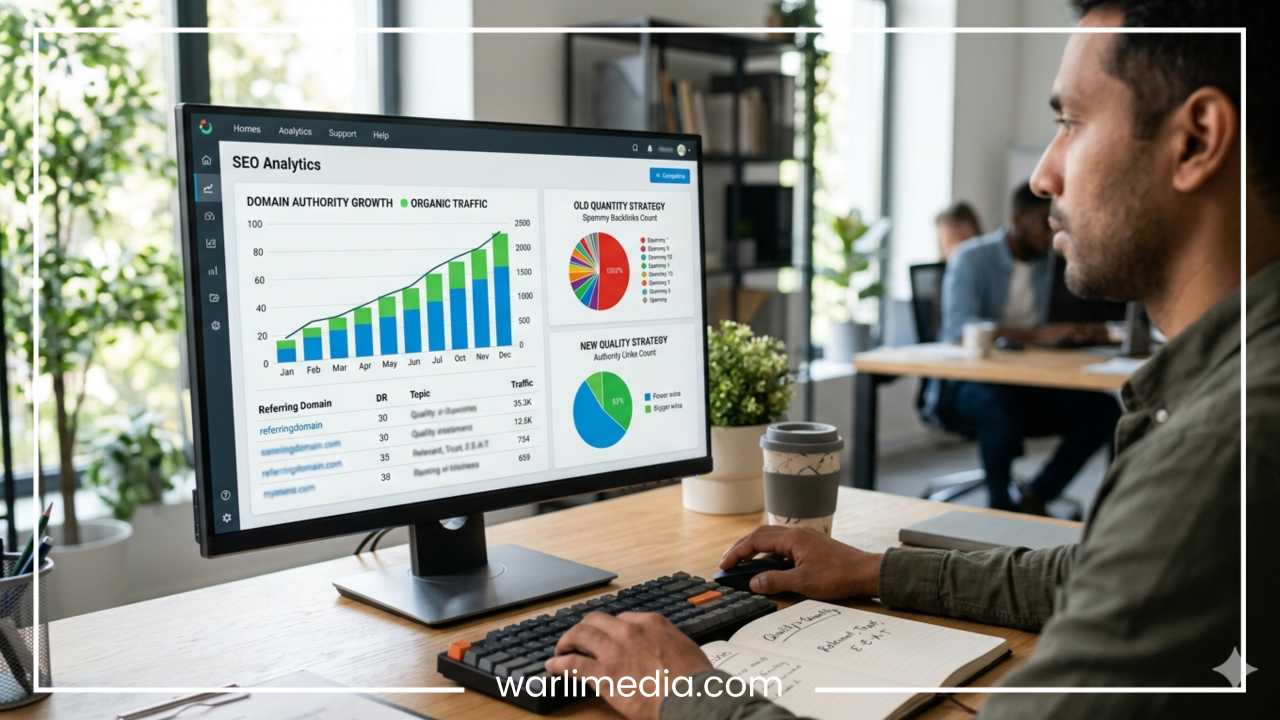
It is a common SEO phenomenon: a page with 10 high-authority, highly relevant links will almost always outrank a page with 500 low-quality links. Quality links pass a massive amount of “PageRank” (the original Google algorithm for measuring link importance). One “power link” can do the heavy lifting of months of low-tier outreach.
Higher Referral Traffic
A link shouldn’t just be an SEO tool; it should be a pathway for users. Quality links are placed on sites that people actually read. If you get a link from a popular industry news site, you will receive “referral traffic”—actual humans clicking the link to see what you have to say. These visitors are often highly qualified leads who already trust you because the site they were reading endorsed you.
Brand Credibility
Link building is a form of digital PR. When your brand is mentioned and linked in a respected publication, it builds “brand equity.” Customers who see your name in authoritative contexts are more likely to convert. Quality link building builds your reputation; quantity link building tarnishes it.
How Search Engines Evaluate Link Quality
Search engines use a sophisticated set of criteria to determine if a link is a “vote” they should count.
Relevance: The Most Important Signal
Relevance is the new “authority.” Google’s goal is to provide the most helpful answer to a user’s query. If a website about “Organic Gardening” links to a “Web Hosting” service, the link lacks topical relevance. Search engines may ignore this link entirely or view it as suspicious.
Placement and Context
Where a link lives on a page matters.
In-Content Links: A link embedded naturally within a paragraph of a long-form article is the “gold standard.” It suggests the author is citing a valuable source.
Boilerplate Links: Links found in footers, sidebars, or headers (site-wide links) are weighted much lower because they are often associated with paid advertisements or templates.
E-E-A-T (Experience, Expertise, Authoritativeness, and Trustworthiness)
Google uses the E-E-A-T framework to evaluate the quality of content. When an expert in a field links to you, it reinforces your own “Expertise” and “Authoritativeness.” Search engines look at the author of the linking content—if the author is a recognized figure in the niche, the link carries significantly more weight.
Case Studies and Real-World Examples
To illustrate the power of quality over quantity, let’s look at a hypothetical (but industry-standard) comparison between two competing websites in the “Fitness Equipment” niche.
Website A: The Quantity Approach
Website A hires an “SEO agency” that promises 2,000 backlinks for $500. Within a month, the site has 2,000 new links from:
Social bookmarking sites.
General web directories.
Blog comments on unrelated sites (e.g., a comment on a knitting blog linking to a treadmill page).
Result: Website A sees a small jump in rankings for two weeks. Then, Google’s real-time spam filter identifies the pattern. The site’s rankings drop below their original starting point, and they are now flagged as a “low-quality” domain.
Website B: The Quality Approach
Website B spends the same $500 (and more in time) to create an original, data-driven report on “The Impact of Home Gyms on Mental Health.” They reach out to five major health influencers and two fitness magazines.
Result: They secure only three links—but they are from Men’s Health, a university blog, and a popular fitness YouTuber’s website.
Long-Term Impact: Website B sees a steady, permanent climb in rankings. They also receive 1,200 direct visitors from the Men’s Health link, resulting in 50 direct sales. Because the links are from high-trust sources, Website B’s “Domain Authority” increases, making it easier for them to rank for every future article they write.
How to Identify High-Quality Backlinks
Identifying a good link opportunity requires an investigative mindset. Before pursuing a link, perform a mini-audit of the target site.
The Quality Checklist
Check Domain Metrics: Use tools like Ahrefs, SEMrush, or Moz to check the Domain Rating (DR) or Domain Authority (DA). Aim for sites with a score above 30, though niche-specific smaller sites can still be very valuable.
Verify Organic Traffic: A site might have a high DA but zero traffic (a sign of a PBN or a penalized site). Use an SEO tool to ensure the site actually ranks for keywords and has real visitors.
Assess Content Quality: Read the articles on the site. Is the writing good? Are there real author bios? Or does it look like AI-generated “word salad” designed to host links?
Examine Outbound Links: Look at who the site is already linking to. If they are linking to gambling, pharmacy, or adult sites, avoid them. You are judged by the company you keep.
Red Flags to Avoid
PBNs (Private Blog Networks): These are networks of sites owned by one person to sell links. They often have similar IP addresses, identical themes, or no social media presence.
“Write For Us” Pages that Charge Fees: If a site’s primary business model is selling “guest posts” without editorial standards, the links are essentially paid advertisements and carry high risk.
Strategies to Build High-Quality Links
Building quality links is harder than buying quantity, but the ROI is significantly higher. Here are the most effective, evergreen strategies:
Digital PR and Data Studies
The most powerful links are those you don’t even have to ask for. By conducting original research, surveys, or data analysis, you create a “primary source” that other journalists and bloggers will want to cite. When they cite your data, they naturally link back to your study.
The “Skyscraper” Technique
Find a piece of content in your niche that already has many links. Create something that is significantly better—more updated, better designed, or more in-depth. Reach out to the people who linked to the original piece and show them your superior resource.
Guest Posting on Authority Sites (Done Right)
Guest posting is not dead, but “spammy” guest posting is. Instead of writing 50 mediocre articles for 50 small blogs, write one masterpiece for a major industry publication. Ensure your link is placed contextually within the body of the article where it genuinely helps the reader.
Broken Link Building
This is the “helpful” approach. Use SEO tools to find broken links on high-authority sites in your niche. Contact the site owner to let them know they have a dead link on their page, and suggest your own relevant content as a replacement. You are providing value by helping them fix their site.
Common Link Building Mistakes to Avoid
Even well-intentioned marketers can fall into “quantity” traps. Avoid these common pitfalls:
Ignoring Relevance for the Sake of DA: A DA 90 link from a site about “Space Exploration” will do very little for your “Local Bakery” website. Relevance should always be your first filter.
Using Automated Outreach Tools: If your outreach email looks like a template, it will be deleted. Quality link building requires personalized, human-to-human communication.
Keyword-Stuffed Anchor Text: Trying to force “best cheap running shoes for men” as the anchor text for every link looks unnatural. Use branded terms (e.g., your company name), naked URLs, or natural phrases.
Focusing on “Quantity” Goals: Don’t set a goal of “100 links per month.” Set a goal of “2 high-impact links from top-tier publications.”
The Future of Link Building
As we look toward the future of search, the importance of quality will only intensify. Artificial Intelligence is now being used by search engines to understand “Topical Authority.” This means Google isn’t just looking at links; it’s looking at whether you are a recognized expert in a specific subject.
Brand Mentions and “Linkless” Backlinks
Search engines are becoming savvy enough to recognize “unlinked brand mentions.” If a major publication mentions your company name but doesn’t include a clickable link, search engines can still associate that positive mention with your site. This further reinforces the idea that reputation is the ultimate goal, not just the technical link.
The Decline of the “Link Broker”
As algorithms get better at identifying paid placements and link schemes, the business of buying and selling links will become increasingly ineffective. The future belongs to those who build genuine relationships with other creators and provide real value to the web’s users.
Final Thoughts
The temptation to choose quantity over quality is understandable. In a world of instant gratification, seeing a backlink profile grow from zero to a thousand in a week feels like progress. But in the world of SEO, this is a dangerous illusion.
Link building is not a clerical task; it is a strategic one. It is about building a digital footprint that reflects the real-world value of your business. By focusing on high-authority, relevant, and editorially earned links, you are telling search engines—and your customers—that you are a leader in your field.
The math of modern SEO is clear: one great link can outperform 100 bad ones. Stop counting your links and start making your links count. Focus on creating exceptional content, fostering industry relationships, and earning your place in the top-tier “neighborhoods” of the internet. That is the only sustainable way to win the long game of search engine optimization.