AI Overviews SEO: How to Get Your Site Cited by Google Gemini (Complete Guide)
The landscape of search is undergoing its most significant transformation since the invention of the crawler. For decades, SEO was a game of “ranking”—vying for the blue links that appeared on a results page. Today, the game has shifted toward “citing.” With the integration of AI Overviews and the Gemini engine into the search experience, Google is no longer just a librarian pointing to a book; it is an assistant summarizing the book for the user.
For website owners, publishers, and SEO professionals, the goal has evolved. While traditional organic rankings remain important, securing a spot in the AI-generated summary is the new frontier of digital visibility. This guide explores the mechanics of AI Overviews, how Gemini selects its sources, and the precise strategies you need to employ to ensure your content is the one being cited.
Read: Learning How to Promote Specific Posts On Your Blog
Introduction to AI Overviews and Gemini
What are AI Overviews?
AI Overviews (formerly known as Search Generative Experience or SGE) are AI-generated snapshots that appear at the top of Google Search results. They provide a synthesized answer to a user’s query by pulling information from multiple web sources simultaneously. Unlike a traditional search result that presents a single page’s perspective, an AI Overview acts as a multi-source summary.
The Role of Google Gemini
Gemini is the underlying large language model (LLM) family that powers these sophisticated responses. Gemini is designed to be multimodal and highly reasoning-capable. In the context of search, Gemini’s role is to understand the nuance of a user’s intent, scan the index for the most relevant and trustworthy information, and rephrase that information into a conversational, easy-to-digest format.
Read: Feedburner: A Legacy Service and Guide to Modern Subscription Management
AI Overviews vs. Traditional SERPs
In a traditional Search Engine Results Page (SERP), the user clicks a link, visits a site, and finds the answer. In an AI Overview, the answer is provided directly on the Google interface. While this has raised concerns about “zero-click” searches, it has also created a high-intent visibility opportunity. Being cited within these overviews positions your brand as a primary authority on the topic.
Why Citations Matter More Than Rankings
A traditional #1 ranking is no longer the absolute ceiling of visibility. If an AI Overview occupies the top half of a mobile screen, the #1 organic link is pushed “below the fold.” However, the AI Overview includes carousel links and inline citations. Being the source that Gemini trusts enough to cite means you gain the highest level of endorsement Google can offer.
Read: The 6 Best Tools to Use On Your Business Blog
How AI Overviews Work Behind the Scenes
Retrieval-Augmented Generation (RAG)
To understand how to get cited, you must understand Retrieval-Augmented Generation (RAG). Gemini does not simply “know” things from its training data; for search, it uses RAG to fetch real-time information from the live web.
Retrieval: Gemini identifies the best-ranking and most relevant pages for a query.
Augmentation: It extracts the specific facts or paragraphs from those pages.
Generation: It synthesizes those facts into a coherent response.
If your content is not “retrievable” or lacks clear factual “chunks,” it cannot be used in the generation phase.
How Google Selects Sources
Google does not necessarily pick the top three organic results for its AI citations. Instead, it looks for “corroboration.” If multiple high-authority sites agree on a fact, Gemini is more likely to include that fact. It selects sources that provide the most direct, unambiguous answer to the specific sub-questions within a query.
Featured Snippets vs. AI Overviews
A Featured Snippet is a “quick answer” usually pulled from a single source. An AI Overview is a “synthesized answer” pulled from many. While a Featured Snippet is a winner-take-all scenario, AI Overviews allow for multiple sites to be cited side-by-side.
Query Intent Mapping
Gemini categorizes queries into three main buckets:
Informational: “How does photosynthesis work?” (Heavy AI Overview usage)
Transactional: “Buy leather boots.” (Focus on product carousels)
Exploratory: “Best vacation spots for hikers.” (Multi-source AI citations)
What “Being Cited” Actually Means
Getting cited is not a monolithic event. There are several ways your site can appear within the AI interface:
Inline Links
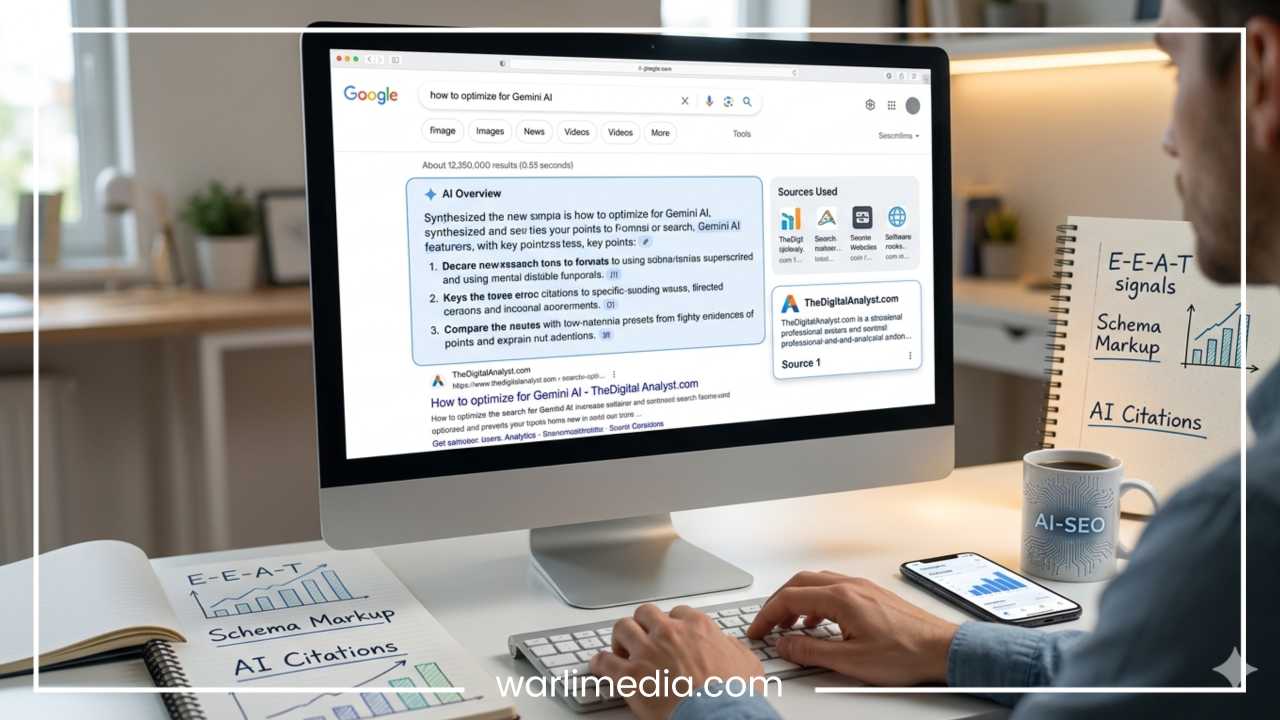
These are the most valuable. They appear as small icons or hyperlinked text directly following a sentence or claim in the AI’s summary. They function like academic footnotes, telling the user exactly where the information came from.
Source Panels
To the right or below the AI text, Google often provides a “link card” or carousel. This panel features the featured image, the page title, and the site name. This is where the bulk of the click-through rate (CTR) originates.
Follow-up Query References
If a user asks a follow-up question, Gemini may maintain the context of the initial sources. If you were cited in the first answer, you are significantly more likely to be the primary source for the “Ask a follow-up” stage.
Visibility vs. Click-Through Tradeoff
The concern is that if the AI answers the question, the user won’t click. However, data suggests that users looking for depth—those who want to verify the AI’s claim or see the “why” behind a “how”—will click the citations. The goal is to be the source of that depth.
Core Ranking Signals for AI Citations
E-E-A-T Signals
Experience, Expertise, Authoritativeness, and Trustworthiness (E-E-A-T) are the bedrock of AI citations. Because Gemini is designed to avoid “hallucinations” or spreading misinformation, it heavily biases toward sites with proven credentials.
Author Bios: Every article should have a clear author box with credentials (e.g., “Written by [Name], a certified nutritionist with 10 years of experience”).
Brand Signals: A strong “About Us” page and mentions of your brand on other authoritative sites help Gemini verify your identity.
Content Clarity & Structure
Gemini is a language model; it “reads” differently than a human. It looks for logical structures.
Logical Hierarchy: Use H2s and H3s as signposts. A heading like “How to Calibrate a Telescope” tells Gemini exactly what the following 300 words are about.
Concise Definitions: Providing a “What is X” definition in the first paragraph of a section makes it incredibly easy for the RAG process to extract that definition.
Topical Authority
You cannot get cited for a high-competition query if your site only has one page on the topic. Google looks for “content clusters.”
Depth vs. Breadth: Instead of writing one 5,000-word guide, write one pillar page and ten supporting articles on niche sub-topics.
Internal Linking: Link your sub-topics back to the pillar page. This signals to Gemini that your site is a comprehensive map of that specific knowledge area.
Content Optimization for Gemini Citations
This is the most actionable phase of AI SEO. To be cited, your content must be “snackable” for an AI.
1. Answer-First Content Style
Adopt the Inverted Pyramid style of journalism.
The Lead: Give the most important information (the answer) in the first 2–3 lines.
The Body: Provide the supporting evidence, data, and context.
The Tail: Add related info and background.
Gemini often stops “reading” a section once it finds the answer it needs. Put the answer at the top.
2. Semantic SEO
Move beyond keywords to Entities. An entity is a well-defined object or concept. If you are writing about “Paris,” Gemini expects to see entities like “Eiffel Tower,” “Louvre,” and “Seine.”
Context Building: Use Natural Language Processing (NLP) friendly writing. Use clear subject-predicate-object sentence structures. Avoid overly flowery prose that obscures the facts.
3. Question-Based Formatting
A vast majority of AI Overviews are triggered by questions.
FAQ Sections: Use a dedicated FAQ section at the bottom of your articles. Use the exact wording users type into search.
Heading Questions: Use your H2s to ask questions: “Why is Schema Markup Important for AI?” followed by a direct answer.
4. Chunking Content
“Chunking” is the process of breaking content into distinct modules.
Short Paragraphs: 2–3 sentences max.
Bullet Points: Use lists for any sequence of steps or collection of items. Gemini loves lists because they are easy to reformat into its own bulleted summaries.
Scannability: If a human can’t scan your page and find the answer in five seconds, Gemini likely won’t prioritize it as a citation source.
Structured Data & Technical SEO
Technical SEO provides the “scaffolding” that helps Gemini understand your content’s context without needing to interpret the prose.
Schema Markup
Schema is the language of search engines. To get cited in AI Overviews, you should prioritize:
FAQ Schema: Directly maps questions to answers.
HowTo Schema: Perfect for “how-to” queries, providing a step-by-step roadmap for the AI.
Article/BlogPosting Schema: Identifies the author, date published, and main entity of the page.
HTML Clarity
A “messy DOM” (Document Object Model) can hinder an AI’s ability to parse a page. If your site is bloated with excessive Javascript, unclosed tags, or “div soup,” the crawler might struggle to extract the text content efficiently. Keep your HTML clean and semantically correct.
Page Speed & Core Web Vitals
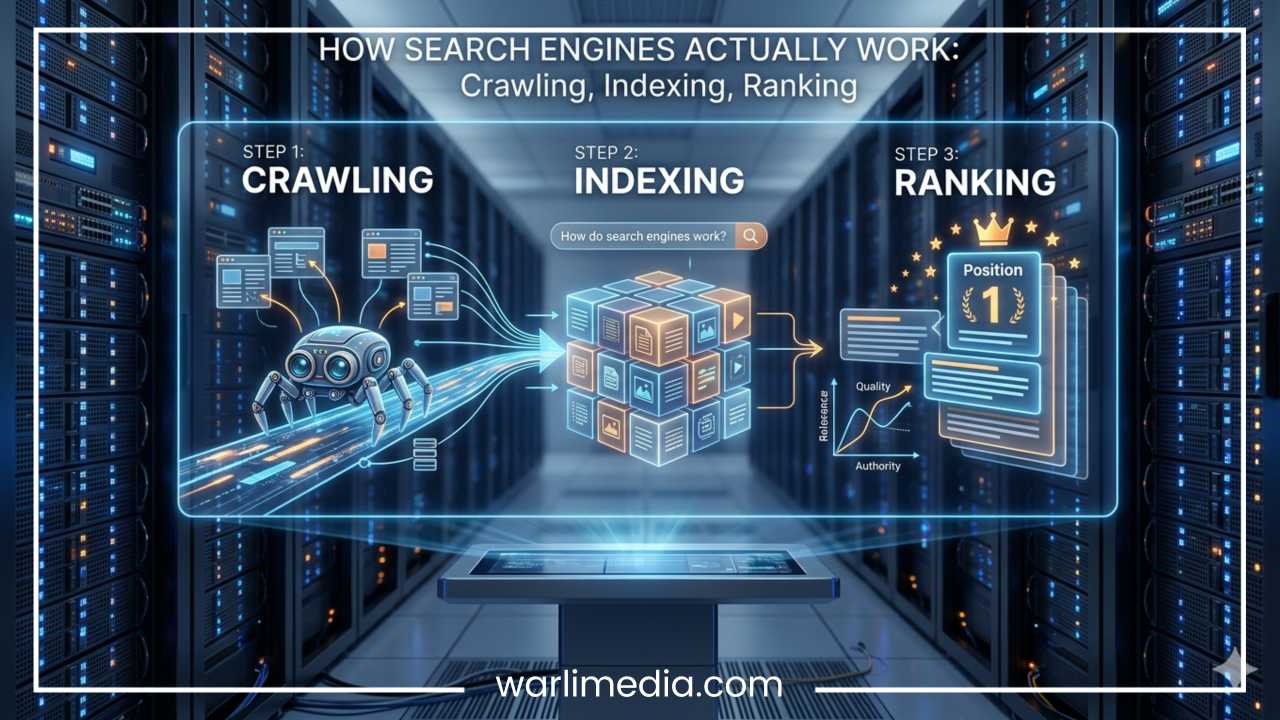
While speed is a minor direct ranking factor, it is a major “crawling” factor. A faster site allows Googlebot to index your updates more quickly. If you update a page with a fresh answer to a trending topic, you want Gemini to see that change within hours, not weeks.
Authority & Trust Signals
Citations are essentially a vote of trust. Gemini will not cite a source it deems “shady” or unverified.
Backlinks in the AI Era
Backlinks still matter, but the focus has shifted from quantity to relevance. A link from a niche-specific blog is now more valuable for AI citations than a generic “high DR” link. These links act as a “knowledge graph” validator, telling Google that other experts in your field trust your data.
Brand Mentions and Unlinked Citations
Google’s models are increasingly capable of recognizing brand mentions even without a hyperlink. If your brand is frequently mentioned in discussions about “Sustainable Gardening,” Gemini will begin to associate your entity with that topic, making you a prime candidate for citations.
Digital PR Strategies
To get cited by AI, you need to be “in the conversation.” This involves:
Guesting on relevant podcasts.
Being quoted in major news outlets.
Contributing to industry reports.
How to Research AI Overview Opportunities
You cannot optimize for everything. You must identify where AI Overviews are most active.
Identifying AI-Triggered Queries
Use SEO tools to filter for keywords that currently trigger an AI Overview. Generally, these are:
Long-tail keywords: “How to fix a leaky faucet without a wrench.”
Comparison keywords: “Difference between OLED and QLED.”
Complex informational queries: “Impact of rising interest rates on tech stocks.”
SERP Analysis Techniques
Look at the current AI Overview for your target keyword.
What sources are currently being cited?
What is the “gap” in the AI’s answer?
Does the AI miss a crucial step or a modern perspective?
Your goal is to create content that fills that gap, making your site the “missing piece” the AI needs to provide a better answer.
Testing & Experimentation Strategy
AI SEO is not “set it and forget it.” It requires constant iteration.
Updating Content vs. Creating New Pages
If you have a page ranking on page 1 but not being cited, don’t delete it. Instead, “AI-ify” it:
Add a summary at the top.
Convert a long paragraph into a bulleted list.
Add FAQ schema.
A/B Testing Formats
Try different ways of answering the same question across different pages. On one page, use a table. On another, use a numbered list. Monitor which one gets pulled into the AI Overview carousel.
Measuring Citation Frequency
While traditional tools track “rank,” you need to track “visibility.” Use Search Console to look for “Impressions” on queries where you know an AI Overview exists. If impressions are high but “Average Position” is low, you are likely being cited in the AI Overview.
Common Mistakes to Avoid
Writing Vague, Fluffy Content
AI models are trained to find information density. If your article takes 500 words of “introduction” to get to the point, Gemini will skip you. Avoid “In today’s fast-paced world…” and get straight to the facts.
Over-optimizing for Keywords
Keyword stuffing is dead. “Topic stuffing” or “Entity stuffing” is also dangerous. Write for the user first, but structure it for the machine. If the text sounds robotic to a human, it’s probably too rigid for Gemini’s natural language preferences.
Ignoring Intent
If a user wants to buy something, an AI Overview will show products. If you try to get cited with a “history of the product” article for a transactional query, you will fail. Match your content type to the user’s stage in the journey.
Thin AI-Generated Content
Using AI to write content to get cited by AI is a race to the bottom. Gemini can detect low-effort, synthetic content. It looks for “Information Gain”—the addition of new, unique value that isn’t already in its training set.
Advanced Strategies: The Differentiator
To truly stand out and become a “permanent” citation, you must provide something the AI cannot generate on its own.
Creating “Citation-Worthy” Data Points
The most cited pages are often those that provide original statistics. Conduct a survey, analyze public data, or run an experiment. When you provide a specific number (e.g., “74% of SEOs believe AI will change their role”), Gemini has to cite you as the source of that specific data point.
Original Research & Statistics
Primary research is the ultimate AI SEO “moat.” An AI can summarize existing knowledge, but it cannot conduct a new study. By being the primary source of new information, you force the AI to reference your site.
First-Hand Experience (The “Extra E” in E-E-A-T)
Google recently added “Experience” to its quality guidelines. Use phrases like “In my 20 years of testing engines…” or “When I visited the site, I noticed…”. This personal perspective is something an LLM cannot replicate, making your content uniquely valuable.
Opinionated Insights vs. Generic Summaries
Don’t just say what something is. Say why it matters. Provide a “take” or a strategic recommendation. Gemini often summarizes “pros and cons.” If you provide a nuanced, expert opinion on a product or strategy, you are likely to be cited in the “Expert Perspectives” or “Pros/Cons” section of the overview.
Future of AI Search & SEO
Shift from Ranking to Referencing
The future of SEO is less about being #1 and more about being “the most referenced.” We are moving toward a “Citation Economy.” Brands will be valued by how often they are cited as authorities by AI agents.
Role of AI Agents
Soon, users won’t just search; they will use AI agents to perform tasks (e.g., “Book me the best eco-friendly hotel in Oslo”). To be the hotel that is booked, your site must have clear, structured data that an agent can verify and act upon.
Zero-Click Search Impact
Yes, zero-click searches will increase for simple questions. However, for complex, high-value industries (Legal, Medical, Finance, B2B Tech), the AI Overview is merely the “handshake.” The “conversation” still happens on your website.
Final Thoughts
The rise of AI Overviews and Google Gemini is not the death of SEO; it is the professionalization of it. The “hacks” of the past—keyword density, link spam, and thin content—no longer work in a world where an AI is reading and summarizing your work.
To win in this new era, your strategy must be built on three pillars:
Structure: Make your content “machine-readable” through clear hierarchies and schema.
Directness: Answer the user’s questions immediately and concisely.
Authority: Prove your expertise through original research, clear credentials, and a deep web of topical content.
The websites that get cited by Gemini will be those that provide the most “Information Gain” and the highest level of trust. Focus on being the most helpful, most structured, and most authoritative voice in your niche, and the citations—and the traffic—will follow.