
How to Write Content That AI Engines Love to Cite
In the current digital landscape, the way information is discovered and consumed has undergone a seismic shift. For decades, search engine optimization (SEO) focused almost exclusively on traditional search engine results pages (SERPs), where success was measured by blue links and click-through rates. However, the rise of large language models (LLMs) and AI-driven answer engines has introduced a new paradigm. These systems do not just provide a list of websites; they synthesize information, provide direct answers, and, most importantly, cite the sources they deem most authoritative and reliable.
The challenge for modern content creators, technical writers, and marketers is no longer just “ranking.” The new frontier is “citability.” Many writers produce high-quality, engaging content that humans enjoy, yet they find themselves ignored by AI engines. This happens because AI does not read like a human; it processes data through patterns, semantic relationships, and structured hierarchies. If your content lacks the specific signals that an AI uses to verify credibility, it will remain a hidden gem rather than a cited authority.
Read: Website Hosting & Domain Names Explained: Your Beginner’s Guide
The purpose of this guide is to bridge that gap. We will explore the mechanics of how AI engines identify, extract, and reference information. By understanding the underlying logic of AI discovery, you can craft content that is not only valuable to your audience but serves as a primary resource for the algorithms that now mediate human knowledge. Creating AI-citable content is about building a foundation of trust, clarity, and technical precision that makes it impossible for an engine to overlook your expertise.
Understanding How AI “Reads” Content
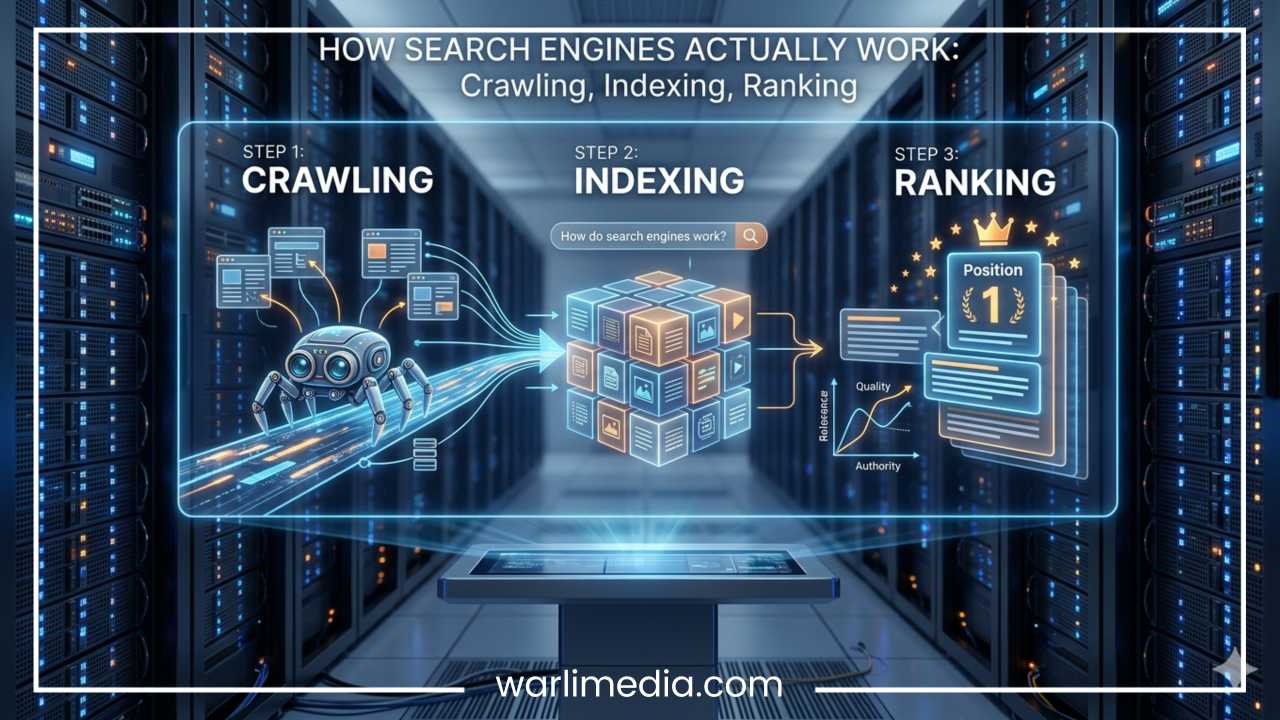
To write content that AI loves to cite, one must first understand the mechanical process of AI “reading.” Unlike a human reader who might be swayed by emotional prose or catchy metaphors, an AI engine views a webpage as a collection of vectors, entities, and semantic relationships. When an LLM or a search generative experience (SGE) processes a prompt, it scans indexed content to find the most relevant “nodes” of information that satisfy the user’s intent.
Read: Registering a Domain Name For Business
Semantics and Context
AI engines utilize Natural Language Processing (NLP) to move beyond keyword matching. They look for semantic density—the presence of related terms and concepts that prove a piece of content actually understands the topic at hand. For example, if you are writing about “decentralized finance,” an AI expects to see contextually relevant terms like “liquidity pools,” “smart contracts,” and “automated market makers.” If these are missing, the AI may categorize the content as “thin” or “surface-level,” making it unlikely to be cited as a definitive source.
Extraction and Summarization
When an AI engine prepares a response, it performs “extractive” or “abstractive” summarization. It looks for “nuggets” of factual information that can be easily pulled from a paragraph. Content that uses convoluted sentence structures or excessive “fluff” makes extraction difficult. AI engines prefer content where the core answer is easily identifiable. This is why “inverted pyramid” writing—putting the most important information first—has become a technical necessity for AI citability.
Read: What is a Domain Name? Choosing & Owning Your Online Address
The Role of Knowledge Graphs
AI engines often cross-reference web content with existing Knowledge Graphs—massive databases of interconnected entities and facts. When your content aligns with established facts while providing new, verifiable insights, it reinforces its own credibility. The AI perceives your content as a high-quality update or expansion of a known entity. Structured data and clear entity relationships (e.g., clearly defining “Product A” as a “Software-as-a-Service”) help the AI place your content within its internal map of the world.
Research First: The Foundation of AI-Citable Content
The credibility of your content begins long before the first word is typed. AI engines are increasingly sophisticated at detecting “circular reporting” or content that simply rehashes common knowledge without adding value. To be cited, your content must be grounded in rigorous research.
Prioritizing Primary Sources
AI models are trained on massive datasets, which includes a high volume of secondary and tertiary sources. To stand out, your content should cite primary sources: original research papers, official government reports, whitepapers, or first-hand interviews. When you link to a primary source, you signal to the AI that your content is a bridge to high-authority data. This increases the likelihood that the AI will use your article as a “summary” of that complex data, citing you as the helpful interpreter.
Accuracy and Recency
While “evergreen” content is the goal, AI engines are programmed to favor accuracy above all else. If your content contains factual errors that contradict the broader consensus of verified data, it will be flagged as unreliable. Furthermore, AI engines often prioritize the most recent data available to ensure they aren’t providing outdated advice. Even when writing evergreen guides, ensure that the underlying statistics and references are the most current versions available.
Using Reputable Datasets
If you are making a claim—such as “the adoption of Web3 technologies increased by 40%”—you must back it up with a citation to a reputable dataset. AI engines track these citations. If they see you consistently referencing McKinsey, Gartner, or academic journals, they begin to associate your domain with high-quality research. This “halo effect” makes all your content more likely to be seen as citable.
Writing for AI Readability and Structure
Structure is the “API” of your content. If the structure is broken, the AI cannot interface with your information. Writing for AI readability requires a disciplined approach to formatting that guides the algorithm through your logic.
Hierarchy with Headings
Use a logical H1–H4 heading structure. The H1 should define the primary entity or topic. H2s should represent the main pillars of the argument, and H3s should break down specific components. This hierarchy allows AI engines to “chunk” your content. If a user asks a specific question related to a sub-topic, the AI can jump directly to the relevant H3 section of your article to extract the answer.
The Power of Lists and Tables
AI engines love structured lists and tables because the data is already organized for extraction. A table comparing the features of two different blockchain protocols is much easier for an AI to parse and cite than a 500-word narrative comparison. Similarly, bulleted lists provide clear “key takeaways” that LLMs often use directly in their generated summaries.
Semantic Keywords and Topic Clustering
Rather than repeating a single keyword, use a “topic cluster” approach. If the main topic is “Content Marketing,” include sub-topics like “Lead Generation,” “SEO Strategy,” and “Audience Segmentation.” This demonstrates to the AI that your content is comprehensive. When the AI sees a high density of related semantic terms, it confirms the article’s depth, increasing its “Authority Score” in that specific niche.
Technical Parsability
Ensure your content is free of intrusive elements that might break an AI’s crawler. While humans can ignore a poorly placed ad or a broken script, these can sometimes hinder the way an AI analyzes the text. Keep the Markdown clean and ensure that the most critical information is not buried behind interactive elements that require a “click” to reveal, as many crawlers struggle with hidden text.
Content Depth and Originality
The internet is flooded with “me-too” content—articles that say exactly the same thing as the top ten results on Google. AI engines have no reason to cite a copy of a copy. To be cited, your content must provide “Information Gain.”
Avoiding Thin Content
Thin content is defined as information that is easily found elsewhere or lacks sufficient detail to be useful. AI engines prioritize comprehensive guides. If you are writing about a complex topic, aim for depth. Instead of just saying “AI is changing SEO,” explain the specific algorithms involved, provide a timeline of changes, and discuss the technical implications for developers.
Original Data and Expert Commentary
One of the most effective ways to get cited by an AI is to produce original data. This could be a survey you conducted, a case study from your own business, or a unique technical analysis. When you provide a unique “fact” that doesn’t exist elsewhere, you become the only source for that information. AI engines are forced to cite you because you are the originator of the data point.
Expert Insights
Incorporate quotes and perspectives from subject matter experts. This adds a layer of “E-E-A-T” (Experience, Expertise, Authoritativeness, and Trustworthiness) that AI engines are specifically designed to look for. When an AI sees a quote from a verified expert in the field within your article, it elevates the entire piece of content.
Fact-Checking and Accuracy
In an era of AI “hallucinations,” the engines themselves are under immense pressure to provide accurate information. Consequently, they are becoming increasingly strict about the accuracy of the sources they cite. A single major factual error can disqualify your entire website from being used as a reference.
Cross-Referencing
Before publishing, cross-reference every major claim. If your article states a technical specification, verify it against the official documentation. AI engines use a “consensus-based” verification system. If your content says “X” but ten other high-authority sites say “Y,” the AI will assume you are wrong and exclude you from its citation list.
The Cost of Mistakes
Errors in content don’t just hurt your reputation with humans; they damage your “Trust Score” with AI algorithms. Once a domain is flagged for spreading misinformation or inaccuracies, it becomes difficult to regain that lost ground. High-quality fact-checking is not just an editorial requirement; it is a technical one.
Citing Authoritative Sources
When you fact-check, don’t just do it internally—show your work. Explicitly mention where your facts came from. “According to the latest report from the World Bank…” is a signal to the AI that you have done your due diligence. It allows the AI to verify your claim against its own internal database of World Bank facts, confirming your reliability.
Citing and Linking the Right Way
Citations are a two-way street. To be cited by an AI, you must demonstrate that you know how to cite others correctly. This establishes your place within the “knowledge web.”
The Hierarchy of Trusted Sources
Not all links are created equal. AI engines categorize outbound links into tiers:
Tier 1: Academic journals (.edu), government databases (.gov), and official industry standards (e.g., W3C, IEEE).
Tier 2: Major news organizations, established industry leaders, and recognized non-profits.
Tier 3: Personal blogs and general interest websites.
Your content should prioritize Tier 1 and Tier 2 links. Linking to original research rather than a blog post about research shows the AI that you are closer to the source of truth.
Proper Referencing Format
Use clear, descriptive anchor text for your links. Instead of “click here,” use “the 2024 report on global energy consumption.” This tells the AI exactly what the linked content is and how it supports your argument. Additionally, providing a “References” or “Further Reading” section at the end of a long-form article provides a clean, structured list that AI engines can easily index.
Internal Linking and Topical Authority
Internal linking is crucial for building topical authority. By linking to your own related articles, you create a “web” of information on your site. If an AI engine sees that you have written ten deep-dive articles on “Smart Contract Security,” and they are all interconnected, it views your site as an authority on that specific cluster. This makes it more likely to cite you for any query related to that topic.
Technical SEO and Metadata
While the “content” is the meat, the “metadata” is the skeleton that holds it together. Technical SEO ensures that an AI engine can interpret the context of your writing without having to guess.
Schema Markup
Schema markup is a form of structured data that you add to your HTML. It tells the AI exactly what the content is. For example, using “Article” schema tells the engine who the author is, when it was published, and what the main image is. Using “FAQ” schema can lead directly to your content being cited in “People Also Ask” boxes or AI-generated summaries. “How-To” schema is particularly effective for technical guides, as it breaks the process down into steps that an AI can easily replicate in a response.
Meta Titles and Descriptions
The meta title and description should be concise and fact-heavy. While they are often written to attract human clicks, they also serve as the “abstract” for the AI. A clear meta description that summarizes the article’s answer in 150 characters helps the AI quickly categorize the page during the crawling process.
Readability and Hierarchy
Technical SEO also involves the physical layout of the page. High readability scores (e.g., Flesch-Kincaid) generally correlate with higher AI citability. Use standard fonts, clear contrast, and avoid “heavy” code that slows down the page. A fast-loading, easy-to-parse page is more likely to be prioritized by an engine that needs to retrieve information in milliseconds.
Updating Content for AI Longevity
Evergreen content is not “set it and forget it” content. To remain citable over the long term, a piece of content must be maintained.
The Decay of Authority
Information decays. A technical guide written three years ago may still be 90% accurate, but that 10% of outdated information is enough for an AI to stop citing it. AI engines are designed to provide the best current answer. If a newer article from a competitor contains updated statistics or refers to a more recent software version, the AI will switch its citation to the newer source.
The Refresh Cycle
Establish a schedule for auditing your high-performing content. Update old statistics, replace broken links, and add new sections that address recent developments in the field. When you update a page, the “last modified” date in your metadata is refreshed. This signals to the AI that the information has been reviewed and is still reliable.
Monitoring AI Citations
Keep an eye on how AI engines are currently answering questions in your niche. If you notice that an AI is citing a competitor for a specific query, analyze their content. What data are they providing that you aren’t? Is their structure clearer? Use this competitive intelligence to update your own content and reclaim the citation.
Final Thoughts
Writing content that AI engines love to cite is a blend of traditional journalistic integrity and modern technical precision. It requires a move away from “writing for clicks” and toward “writing for authority.” By focusing on deep research, clear structure, and verifiable accuracy, you create a resource that adds genuine value to the global knowledge base.
To begin adopting an AI-aware content strategy, follow these actionable steps:
Audit for Structure: Review your existing articles and ensure they use a clear H1–H4 hierarchy and include structured elements like lists or tables.
Verify Your Sources: Replace links to secondary blog posts with links to primary research and authoritative organizations.
Enhance Metadata: Implement Schema markup to give AI engines a roadmap of your content.
Prioritize Depth: Expand “thin” sections with original insights, expert quotes, or unique data points.
The future of the web is conversational and synthesized. By positioning your content as a highly citable, authoritative source, you ensure that your voice remains a part of that conversation. Content that is both human-friendly and AI-ready is the gold standard of the modern information age. Focus on being the most reliable source in the room, and the AI engines will naturally follow.