
Voice Search SEO Guide: Optimize for Alexa, Siri & Smart Assistants
The landscape of digital discovery is undergoing a fundamental shift. For decades, the gateway to the internet was a rectangular box where users typed fragmented keywords. Today, that interaction has evolved into a conversation. Voice search has transformed from a futuristic novelty into a primary method of navigation, driven by the ubiquity of smartphones and the rapid adoption of smart speakers.
As artificial intelligence becomes more sophisticated, virtual assistants like Apple’s Siri and Amazon’s Alexa have become household staples. Users no longer simply search for “weather”; they ask, “Hey Siri, do I need an umbrella today?” This transition from “search queries” to “natural language conversations” is the crux of why Voice Search SEO has become an essential pillar of modern digital marketing.
Read: How to Download YouTube Videos
Voice search matters because it prioritizes speed, convenience, and local intent. When a user searches via voice, they are typically looking for an immediate answer or a specific location while on the go or multitasking. For businesses, this means the traditional SEO playbook—while still relevant—must be adapted. To remain visible, brands must optimize for the way people speak, not just the way they type. Search is becoming conversational, and those who fail to speak the language of their customers will find themselves silenced by the competition.
Read: 500 Free Web Directories List to Add URL
How Voice Search Works
To optimize for voice, one must first understand the mechanics behind the “magic.” When you ask Alexa a question, a complex chain of technological events occurs in milliseconds.
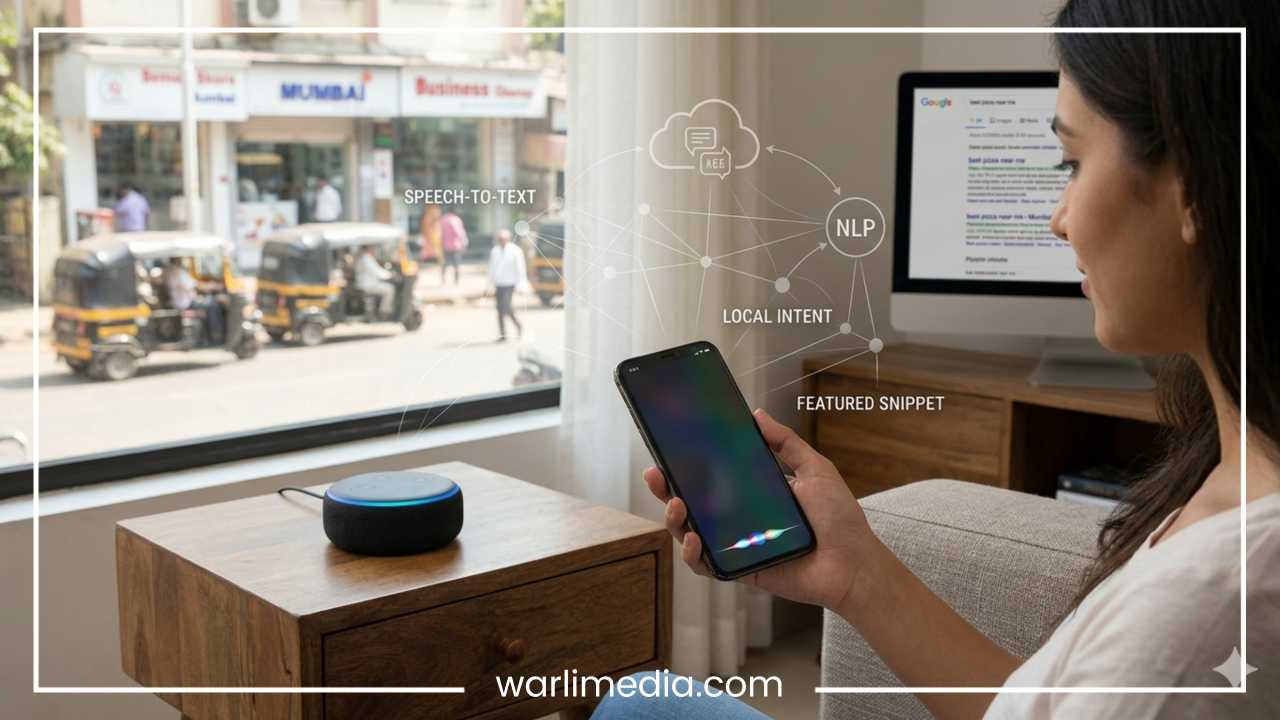
Speech-to-Text and NLP
The process begins with Speech-to-Text conversion, where the device captures audio waves and translates them into digital text. This is followed by Natural Language Processing (NLP). NLP is the AI’s ability to understand context, intent, and syntax. Unlike traditional search, which looks for keyword matches, NLP attempts to understand the “why” behind the question. It filters out “filler words” and focuses on the core intent. This technology has progressed to the point where assistants can understand dialects, accents, and even emotional nuances, making the interaction feel more like a human dialogue than a technical query.
Read: Free Directory Submission List [300+ Directories]
How Assistants Pull Results
Once the intent is understood, the assistant queries a search engine. While Siri often relies on Apple’s own indices and partnerships (and historically Bing or Google), Alexa frequently utilizes Bing. These assistants don’t provide a list of ten blue links; they aim to provide the single best answer. They scan the web for the most authoritative and concise piece of information that directly addresses the user’s vocalization.
The Role of Featured Snippets (Position Zero)
This is where Featured Snippets or Position Zero come into play. Because a smart speaker usually reads back only one result, being the second or third result on a page is effectively the same as being invisible. The assistant pulls the most concise, relevant, and authoritative “snippet” of information from the web to read aloud. If your content is structured to be the primary answer, you effectively own that specific voice query.
Difference Between Typed vs. Spoken Queries
The difference is behavioral and linguistic. Typed queries are “telegraphic”—shorthand versions of thoughts meant for efficiency. Spoken queries are “prosodic” and full-sentence. When typing, a user might enter “best running shoes.” When speaking to Siri, they might say, “Siri, what are the best running shoes for someone with flat feet who runs on trails?” The latter is longer, contains more descriptors, and implies a much deeper level of specific intent.
Voice Search vs. Traditional SEO
The divergence between traditional and voice SEO lies primarily in the nature of the query, the environment of the user, and the desired outcome.
Keyword Length and Complexity
Traditional SEO targets short-tail or medium-tail keywords because users are inherently lazy when typing. Voice SEO thrives on long-tail, conversational strings. People speak in full sentences, which means your content must be optimized for these longer phrases.
Intent-Driven Searches
Voice searches are often high-intent and immediate. Users are frequently looking for immediate solutions or specific locations. This leads to a dominance of Local Intent. While traditional SEO might focus on ranking for broad terms to drive general traffic, Voice SEO focuses on driving action—whether that is visiting a store, calling a business, or getting a quick fact.
Mobile-First and Hands-Free Usage
A significant portion of voice search happens while the user is driving, cooking, exercising, or walking. The results must be mobile-optimized and easily digestible. If a user asks for instructions while cooking, they want a clear, step-by-step list read to them, not a long-winded introductory essay about the history of the dish.
Comparison Examples:
-
Typed: “best pizza Mumbai”
-
Voice: “Where can I get the best pizza near me right now?”
The typed query is a general research request. The voice query implies a need for a business that is currently open, nearby, and highly rated. Traditional SEO focuses on ranking for the city-level keyword; Voice SEO focuses on the “near me” and “open now” parameters.
Why Voice Search is Growing
Several factors have converged to make voice the fastest-growing search medium in the history of the internet.
Smartphone Adoption
The most obvious driver is the smartphone. With Siri and Google Assistant integrated into billions of devices, every person carries a voice-activated concierge. As smartphone hardware improves, the microphones and processing power dedicated to voice recognition make the experience seamless.
Smart Speakers and Smart Homes
The explosion of Smart Speakers—like the Amazon Echo and Google Home—has brought voice search into the private spaces of the home. These devices have become central hubs for controlling lights, playing music, and, crucially, answering questions. Alexa has become a household name, transforming how families interact with information.
In-Car Assistants
Modern vehicles are now mobile computers. Systems like Apple CarPlay and Android Auto allow drivers to perform searches, send messages, and navigate without ever taking their eyes off the road. This “safe search” environment is a major contributor to voice search volume.
Accessibility and Speed
Voice is inherently faster than typing. The average person can type about 40 words per minute but can speak about 150. This efficiency makes voice the preferred choice for quick inquiries. Additionally, for users with visual impairments, motor disabilities, or those who are not tech-savvy (such as children or the elderly), voice search is a vital tool for digital inclusion.
Core Ranking Factors for Voice SEO
To rank for voice, your website must meet high technical and authority standards. Search engines will only “read back” a result if they have high confidence in its accuracy and the site’s performance.
Page Speed & Core Web Vitals
Voice search users are looking for instant gratification. If your page takes five seconds to load, the voice assistant will likely move on to a faster source. Search engines prioritize sites that load quickly on mobile networks. Optimizing for Core Web Vitals—specifically Largest Contentful Paint (LCP) and First Input Delay (FID)—is non-negotiable for anyone serious about Voice SEO.
Mobile Optimization
Since the majority of voice searches occur on mobile devices or through devices that pull from mobile-indexed sites, a responsive, mobile-friendly design is a fundamental requirement. Your site must look and function perfectly on a small screen to be considered a viable source for voice results.
HTTPS Security
Security is a trust signal. Most voice search results come from secured (HTTPS) websites. If your site is still running on HTTP, it is highly unlikely that a voice assistant will choose it as a “trusted” answer to a user’s question.
Structured Data (Schema Markup)
Using Schema Markup is like providing a cheat sheet to the search engine. By labeling your data (e.g., as an FAQ, a product, or a local business), you make it easier for the AI to parse your site for the specific answer a user needs. This increases the chances of your content being selected for a featured snippet.
High Domain Authority
Search engines tend to favor results from websites that are perceived as authoritative in their niche. Backlinks, age of the domain, and consistent quality of content all contribute to this authority. In voice search, where only one answer is given, the search engine takes no risks—it chooses the most reputable source available.
Keyword Strategy for Voice Search
The “keyword” is no longer just a word; it is a question, a thought, and a natural expression.
Focus on Long-Tail Keywords
The days of ranking for single words are fading. In Voice SEO, the focus is on long-tail keywords that mimic how humans speak. These are less competitive and have a much higher conversion rate because they are more specific.
Question-Based Keywords
Voice queries almost always begin with a question word. You must build your content around the “5 Ws and 1 H”:
-
Who: “Who is the best orthopedic surgeon in London?”
-
What: “What is the best way to clean a leather sofa?”
-
Where: “Where is the nearest pharmacy that is open 24 hours?”
-
When: “When does the sun set today?”
-
Why: “Why is my laptop fan making so much noise?”
-
How: “How do I fix a leaky faucet without a wrench?”
Natural Language Queries
Think about the “filler” words people use when speaking that they don’t use when typing. Words like “the,” “for,” “to,” and “of” are common in voice search. Your keyword strategy should include these natural phrases rather than just “robotic” keyword strings.
Tools for Discovery
Use tools like “Answer the Public,” “Semrush,” or “Ahrefs” to identify the questions people are asking in your industry. Looking at the “People Also Ask” section in Google search results is another goldmine for finding voice-friendly keyword opportunities.
Optimizing Content for Voice Search
Writing for voice requires a shift in tone. You are not writing a formal dissertation; you are answering a friend.
Conversational Tone
Your content should read like a transcript of a helpful conversation. Avoid overly technical jargon unless you are defining it. Use “I” and “You” to create a connection. If the content sounds natural when read aloud, it is optimized for voice.
Use FAQ Sections
One of the most effective ways to capture voice search traffic is to include a dedicated FAQ section on your pages. Each question should be an H2 or H3 heading, followed by a clear, concise answer. This structure is perfectly suited for search engine crawlers looking for “quick hits” of information.
The 40-50 Word Rule
When a user asks a question, they want the answer immediately. Structure your content so the direct answer is provided in the first 40–50 words of a section. This is the “sweet spot” that search engines prefer for reading aloud. You can provide more depth and context below this initial answer.
Readability and Formatting
Optimize for readability by aiming for a Grade 6–8 level writing style. Use short sentences and simple words. Additionally, use bullet points and numbered lists. Voice assistants find it very easy to read out: “Step one: do this. Step two: do that.”
Featured Snippets & Position Zero Optimization
In voice search, there is no silver medal. The “Position Zero” result is the only one that matters.
What are Featured Snippets?
Featured snippets are the boxes at the top of search results that provide a direct answer to a query. They are the primary source for voice assistant answers.
Types of Snippets to Target:
-
Paragraph Snippets: These are the most common and are used for “What is” or “Why” questions.
-
List Snippets: These appear for “How to” queries or “Top” lists.
-
Table Snippets: These are used for data comparisons, pricing, or specifications.
How to Win Them:
To capture this spot, your answer must be objectively better—clearer, more accurate, and better formatted—than the current one. Use “Answer-first” writing, where you state the facts immediately and then elaborate. Ensure your on-page SEO—title tags, meta descriptions, and internal linking—is robust, as this signals to search engines that your page is a primary authority on the topic.
Local SEO for Voice Search
“Near me” searches are the bread and butter of voice interaction. If you own a local business, Voice SEO is your most powerful tool for driving physical foot traffic.
Importance of “Near Me”
Over half of voice searches are for local information. Users ask Siri for the nearest coffee shop, the best mechanic in the area, or the hours of a local grocery store. If your local SEO is weak, you are invisible to these high-intent customers.
Google Business Profile (GBP) Optimization
Your GBP is the first place an assistant looks. Ensure your profile is 100% complete. This includes your business name, an accurate category, high-quality photos, and updated hours (especially holiday hours).
NAP Consistency
Name, Address, and Phone number (NAP) must be identical across the entire web. If your address is listed as “Street” on your website but “St.” on Yelp, it can create enough ambiguity to prevent a voice assistant from recommending you.
Reviews and Ratings
Alexa and Siri often prioritize businesses with high ratings. A voice assistant might say, “I found three Italian restaurants nearby; the first one has 4.8 stars.” Encouraging satisfied customers to leave positive reviews is a direct way to improve your voice search visibility.
Technical SEO for Voice Search
Under the hood, your site needs to be “machine-readable” and lightning-fast.
Schema Markup
Implementing Schema.org markup is essential. Use “FAQSchema” for your question sections, “LocalBusiness” schema for your physical locations, and “Product” schema for your inventory. This metadata helps search engines understand the context of your content without having to guess.
Fast-Loading Pages
Speed is a technical requirement. Use techniques like image compression, minifying CSS and JavaScript, and leveraging browser caching. A slow site is the fastest way to lose a voice search ranking.
Mobile-First Indexing
Search engines now primarily use the mobile version of a page for indexing. If your mobile site is stripped down or missing the structured data found on your desktop site, you will struggle to rank in voice search.
Clean Site Architecture
A logical, shallow site architecture allows search engine bots to crawl and index your “answer” pages efficiently. Use a clear XML sitemap and ensure your internal linking structure points toward your most important conversational content.
Content Types That Perform Best in Voice Search
Certain formats are naturally “voice-friendly.” Focusing your content strategy on these types will yield the best results.
FAQ Pages
As mentioned, FAQ pages are goldmines for voice SEO. They are literally built on the question-and-answer format that assistants love. A well-organized FAQ page can rank for dozens of different voice queries.
How-to Guides and Tutorials
Step-by-step instructions are easily broken down into list snippets that Alexa can read out while a user is busy in the kitchen or garage. Make sure each step is clear and concise.
Definition-style Content
Creating a “glossary” of terms for your industry can help you capture “What is…” queries. Providing the most succinct definition of a complex term often leads to a featured snippet.
Local Landing Pages
If your business has multiple locations, create a dedicated page for each one. Include local landmarks, neighborhood names, and specific directions. This helps you capture hyper-local voice traffic from people in that specific area.
Voice Commerce (V-Commerce)
Voice search isn’t just for information; it’s for transactions. V-Commerce is the next frontier of retail.
Shopping via Voice
Alexa, integrated with the Amazon ecosystem, allows users to reorder household essentials or buy new products entirely by voice. Siri and Google Assistant are following suit by integrating with various shopping platforms.
Implications for eCommerce
For eCommerce businesses, this means product descriptions must be optimized for voice. Focus on natural language descriptions and ensure your price and availability are clearly marked in your schema. The future of shopping is “hands-free,” and friction-less voice purchasing will soon be a standard consumer expectation.
Challenges in Voice Search SEO
Despite its growth, Voice SEO presents unique hurdles for marketers that require creative solutions.
The Single Result Problem
Traditional SEO allows for a “top 10” visibility. Voice search usually only presents one answer. This “winner-takes-all” dynamic makes the competition for the top spot much more intense than in traditional search.
Difficulty Tracking
Currently, it is difficult to see exactly how many people reached your site via voice search in standard tools like Google Search Console or Google Analytics. Marketers must rely on indirect signals, such as an increase in long-tail keyword rankings and featured snippet wins, to gauge success.
Intent Ambiguity
Sometimes, the AI misinterprets intent. A user asking for “batteries” might want to buy them, or they might want to know how they work. Crafting content that satisfies multiple layers of intent—providing both a quick answer and a path to purchase—is a delicate balance.
Future of Voice Search SEO
The evolution of voice search is inextricably linked to the evolution of Artificial Intelligence and how we live our lives.
AI Assistants and Generative Search
We are moving toward Generative Voice Search, where assistants don’t just read a snippet but synthesize a personalized answer based on multiple high-quality sources. This will place an even higher premium on being an authoritative, trusted source of information.
Multimodal Search
The future is not just voice; it is Multimodal. This involves using voice to refine an image search or using a screen to interact with a voice result. For example, “Siri, show me shoes like this, but in red.” SEO will need to account for how images, text, and voice work in harmony across different devices.
Predictive and Hyper-Personalized Results
As AI learns user habits, search will become proactive. Your assistant might say, “Based on your previous orders, you are likely running low on coffee; should I add it to your cart?” Optimizing for these predictive algorithms will involve deeper integration with user data and consistent brand presence across all digital touchpoints.
Final Thoughts
Voice search is not a passing trend; it is a permanent shift in how humanity interacts with the digital world. The transition from keywords to conversations represents a more natural, human-centric way of accessing the world’s information.
For businesses and SEO professionals, the mandate is clear: adapt or become obsolete. Optimizing for Alexa and Siri requires a focus on speed, mobile performance, structured data, and, above all, the creation of content that provides direct, conversational answers to real-world questions. By embracing a Voice SEO strategy today, you are not just optimizing for a device; you are preparing your brand for the future of digital discovery. Search is no longer just about being found—it’s about being heard and being helpful in the moments that matter most to your customers.