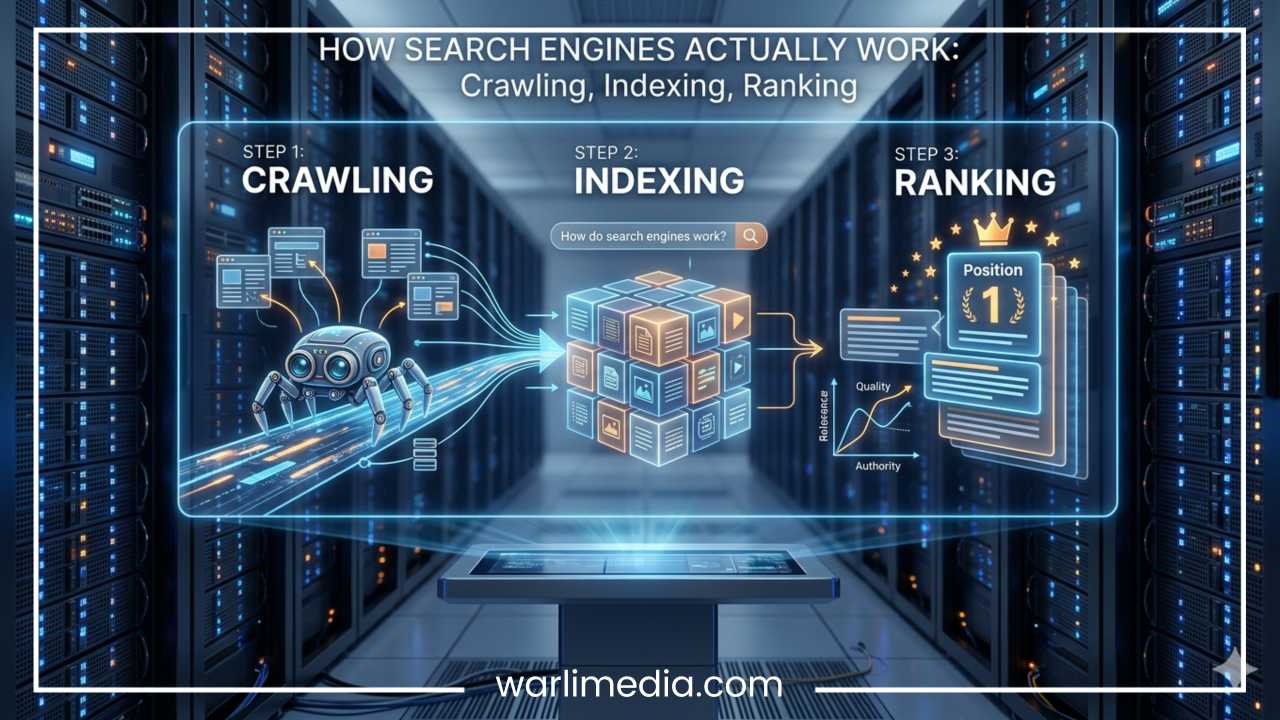

The Evolution of Search: From Keywords to AI
In the modern digital landscape, the act of searching has become as fundamental to human existence as reading or writing. It is the primary gateway through which we access the sum total of human knowledge, conduct commerce, and connect with our communities. Every day, billions of queries are processed, ranging from mundane requests for weather updates to complex academic inquiries and life-altering medical searches. The ability to find specific information within a sea of petabytes of data in a fraction of a second is perhaps the most significant technological achievement of the information age.
How did we arrive at a point where a machine can not only find a document containing a word but also understand the nuance of a question and provide a synthesized answer? The journey from the early days of the World Wide Web to the current era of generative artificial intelligence is a story of constant refinement, shifting paradigms, and the relentless pursuit of relevance. Initially, search was a clunky, manual process that relied on strict adherence to syntax. Today, it is an intuitive, conversational, and highly personalized experience that often anticipates our needs before we fully articulate them.
Read: How to Implement a Comprehensive SEO Campaign & Boost Your Rankings
Understanding this evolution is critical for several reasons. For businesses and marketers, it dictates the rules of Search Engine Optimization (SEO) and digital visibility. For technologists, it represents the cutting edge of machine learning and natural language processing. For the average user, understanding the mechanisms behind the results screen is vital for navigating issues of digital ethics, privacy, and the veracity of information. This article explores the transformative milestones of search technology, tracing its path from simple keyword matching to the sophisticated AI-driven ecosystems of today.
The Era of Keyword-Based Search
In the early 1990s, the internet was a digital frontier that lacked a central directory. To find information, users often had to know the exact URL of a website or rely on curated directories maintained by humans. The birth of the first search engines marked the transition from “knowing where to look” to “asking where to look.” This era was defined by keyword-based search, a mechanical process where the engine acted as a giant indexer of words.
Read: Learn SEO for Free: Grow Your Small Business Online
Early search engines like AltaVista, Lycos, and the original version of Yahoo! operated on the principle of exact matching. If a user typed “blue suede shoes” into the search bar, the engine would scan its database for documents that contained that specific string of text. The logic was binary: either the word existed on the page, or it did not. This led to a highly fragmented user experience. To find the right information, users had to master the art of “keywordese”—a way of speaking to computers using Boolean operators such as AND, OR, and NOT. For example, a student researching the French Revolution might have to type “French AND Revolution NOT Napoleon” to narrow down results.
The limitations of this approach were profound. Early engines had little to no understanding of context, synonyms, or intent. If you searched for “apple,” the engine could not distinguish between the fruit, the technology company, or a record label unless you provided additional specific keywords. Furthermore, because search engines prioritized the frequency of keywords, the system was easily manipulated. This led to the rise of “keyword stuffing,” a practice where webmasters would hide hundreds of repetitive keywords at the bottom of a page—often in white text on a white background—to trick the engine into ranking the page higher.
Read: Increase Blog Traffic: Free Techniques That Work
The breakthrough that signaled the end of this primitive era came with the introduction of Google’s PageRank algorithm. Unlike its predecessors, which looked primarily at the content of a single page, PageRank viewed the web as a social network of documents. It treated a link from one website to another as a “vote” of confidence. If a page was linked to by many other high-quality pages, it was deemed authoritative. This shifted the focus from mere keyword density to relevance and authority. While keywords remained the primary vehicle for search, the “quality” of the result began to matter as much as the “match.”
The Rise of Semantic Search
As the web grew in complexity, the limitations of keyword matching became a bottleneck for progress. The industry realized that for search to truly evolve, machines needed to move beyond “strings” (sequences of characters) and start understanding “things” (entities and concepts). This marked the beginning of the era of semantic search.
Semantic search refers to the ability of a search engine to understand the intent and contextual meaning of a query, rather than just the literal words used. The most significant leap in this direction occurred in 2013 with Google’s Hummingbird update. Unlike previous updates that were mere tweaks to the existing system, Hummingbird was a complete overhaul of the core algorithm. It allowed the engine to process long-form, conversational queries. Instead of breaking a sentence into isolated keywords, Hummingbird looked at the relationship between the words.
A primary example of this shift is how search engines handle local queries. In the keyword era, searching for “best Italian restaurants near me” might have yielded pages that happened to have that exact phrase. In the semantic era, the search engine understands that “best” implies a need for high ratings, “Italian” is a category of cuisine, and “near me” is a request for geographic proximity based on the user’s IP address or GPS data.
Integral to semantic search is the concept of the Knowledge Graph. This is a massive database of entities—people, places, organizations, and objects—and the relationships between them. When you search for a famous author, the search engine doesn’t just show you links; it provides a “Knowledge Panel” with their birthdate, a list of books, and related authors. This is possible because the engine understands that “Ernest Hemingway” is a specific person who wrote “The Old Man and the Sea,” not just a collection of letters.
Structured data and schema markup also played a vital role during this period. By providing search engines with explicit clues about the content of a page (e.g., labeling a number as a “price” or a “review score”), webmasters helped machines categorize information more accurately. This transition moved search from being a simple retrieval tool to an information-processing engine that could interpret human nuance.
Personalization and Contextual Search
While semantic search helped engines understand the “what” of a query, personalization and contextual search focused on the “who” and the “where.” As search engines became more integrated into our lives through mobile devices and browser accounts, they began to accumulate data that allowed them to tailor results to the individual user.
Personalization means that two people sitting in the same room might receive different results for the same query. This is driven by several factors:
User History: If a user frequently visits sports websites, a query for “giants” is more likely to return results for the New York Giants football team rather than information about mythical creatures.
Location: Searching for “weather” or “coffee shops” automatically triggers results specific to the user’s current city.
Device Type: A search performed on a smartphone might prioritize mobile-friendly sites or apps, whereas a desktop search might focus on in-depth articles.
Predictive search and autocomplete features were further refinements of this trend. By analyzing billions of previous searches, engines could guess what a user was about to type after just a few keystrokes. This not only saved time but also guided users toward more effective query structures.
However, the rise of personalization brought significant ethical and social challenges. The most prominent of these is the “filter bubble.” When an algorithm only shows a user information that aligns with their past behavior and preferences, it can reinforce existing biases and insulate them from opposing viewpoints. This has had profound implications for political discourse and the spread of information. Privacy also became a major concern, as the effectiveness of personalized search relied on the collection and storage of vast amounts of personal data.
Early attempts at deeper personalization were seen in services like Google Now or early iterations of Siri and Cortana. These assistants aimed to provide “information without asking”—notifying a user of a flight delay because they found a confirmation email in their inbox or suggesting a departure time for a meeting based on current traffic. While these features were revolutionary, they set the stage for the even more invasive and helpful AI-powered systems that followed.
Mobile and Voice Search Revolution
The hardware we use to access the internet has always dictated the nature of search. The transition from desktop computers to smartphones was not just a change in screen size; it was a fundamental shift in how people interacted with information. Mobile search introduced the element of “on-the-go” urgency, leading to the “Mobile-First” indexing movement where the mobile version of a website became the primary version for ranking.
Parallel to the mobile revolution was the rise of voice search. With the introduction of voice assistants like Siri, Alexa, and Google Assistant, search became eyes-free and hands-free. This change forced a massive shift in how content was optimized. When people type, they use shorthand (“weather London”). When they speak, they use full sentences and questions (“What is the weather like in London today?”).
Voice search pushed the boundaries of Natural Language Understanding (NLU). Computers had to account for accents, dialects, and ambient noise. Furthermore, voice search often seeks a single, definitive answer rather than a list of links. This gave rise to “Position Zero” or “Featured Snippets,” where a search engine provides a direct answer at the very top of the results page.
For businesses, the mobile and voice revolution made Local SEO a necessity. Because mobile searches often have high “local intent”—such as someone looking for a pharmacy while driving—being at the top of local map results became a life-or-blood matter for small businesses. This era solidified the idea that search is not just a digital activity; it is a bridge between the digital world and our physical surroundings.
AI-Powered Search
We have now entered the most transformative phase in the history of information retrieval: the era of AI-powered search. While previous eras used algorithms to rank human-written content, the current era uses machine learning and deep learning to understand, synthesize, and even generate information.
Modern search engines are no longer just indexers; they are reasoning engines. The integration of large language models (LLMs) has fundamentally changed the interface. In traditional search, a user enters a query and receives a list of sources to read. In AI-powered search, the engine reads those sources for the user and provides a synthesized summary. This is often referred to as “Generative Search.”
Machine Learning and Ranking
Machine learning models, such as Google’s RankBrain and later BERT (Bidirectional Encoder Representations from Transformers), allowed engines to understand the context of words in relation to all the other words in a sentence. This was a massive leap over previous semantic methods because it could handle complex, “polysemous” words (words with multiple meanings) based on the surrounding text. This ensured that the most relevant content rose to the top, even if it didn’t use the exact keywords the user expected.
The Impact of Generative AI
The introduction of generative assistants—such as Google Gemini, Claude, and integrated AI features in Bing—has turned search into a dialogue. Users can now ask follow-up questions, request that information be formatted in a specific way (like a table or a list), or ask the AI to perform tasks like summarizing a 50-page PDF found on the web. This shifts the search engine’s role from a “librarian” to a “research assistant.”
Multimodal Search
AI has also enabled search to move beyond text. Multimodal search allows users to combine different types of input. For instance, a user can take a photo of a broken part on a bicycle and ask the AI, “How do I fix this?” The AI identifies the object in the image, searches its database for repair manuals, and provides a step-by-step text guide. This integration of visual, auditory, and textual data makes search more accessible and powerful than ever before.
Ethical and Technical Considerations
Despite its power, AI-powered search brings new risks. “Hallucinations”—where an AI confidently states false information—are a significant concern for accuracy-critical searches like health or legal advice. There are also ongoing debates regarding copyright and the “fair use” of content. If an AI search engine provides a complete answer by scraping a website, the user may never click through to the original creator’s site, potentially destroying the economic incentive for high-quality journalism and content creation.
Furthermore, the “black box” nature of deep learning means that it can be difficult to determine exactly why an AI reached a certain conclusion, leading to concerns about algorithmic bias. If the training data contains historical prejudices, the AI search results may inadvertently perpetuate them.
The Future of Search
As we look toward the horizon, search is expected to become even more invisible and anticipatory. We are moving toward a concept often called “ambient search” or “anticipatory AI.”
Predictive and Anticipatory Search
In the future, search might not require a prompt at all. By analyzing patterns in a user’s life—their schedule, their biometrics from wearable devices, and their environmental context—AI could provide information before a user realizes they need it. Imagine a smart glass display that highlights the name and profession of a person walking toward you at a conference, or a navigation system that automatically reroutes you because it “knows” you are in a rush to a high-priority meeting.
Augmented Reality (AR) and Visual Integration
The integration of search into Augmented Reality will change how we interact with the physical world. Instead of looking down at a phone, users will see “search layers” superimposed on their field of vision. Pointing your eyes at a restaurant could show its menu, health rating, and friend reviews in real-time. This turns the entire world into a searchable database.
Reasoning and Problem Solving
The next frontier for AI search is moving from “information retrieval” to “complex problem solving.” Rather than just finding a recipe, a future search engine might help a user plan a week-long meal plan that fits a specific budget, accounts for three different allergies in a household, and creates a shopping list optimized for the layout of their local grocery store. This requires the AI to move beyond simple facts and into the realm of logic and reasoning.
Final Thoughts
The evolution of search from simple keyword matching to artificial intelligence is a reflection of our own evolving relationship with technology. We have moved from a time when we had to learn the language of computers to a time when computers have learned the language of humans. This journey has made information more accessible than at any point in history, breaking down barriers of language, education, and geography.
However, as search becomes more powerful, the responsibility of the user and the creator also grows. We must remain vigilant about the accuracy of AI-generated information, the protection of our digital privacy, and the health of the broader information ecosystem. For businesses and creators, the lesson is clear: while the tactics of SEO will continue to change, the underlying goal remains the same—providing genuine value and relevance to the end user.
Ultimately, search is no longer just a tool we use; it is an intelligent layer of our reality. As we continue to refine the algorithms and models that power our queries, the bond between human curiosity and digital intelligence will only grow stronger, forever changing how we discover, learn, and understand the world around us. Staying informed about these shifts is not just a technical requirement for some—it is a digital literacy requirement for all.