3 Pillars of SEO: Technical, On-Page, and Off-Page Guide
Search Engine Optimization is often viewed as a mysterious, ever-changing enigma. With search engine algorithms evolving daily, many business owners and digital marketers feel like they are chasing a moving target. However, beneath the complex layers of updates and machine learning lies a stable framework that has remained the foundation of digital visibility for decades.
At its core, SEO is the process of making your website more accessible, relevant, and authoritative. While the tactics change, the goals remain the same: provide the best possible answer to a user’s query and ensure the search engine can find and trust that answer. To master this, we look at the three pillars of SEO: Technical, On-Page, and Off-Page.
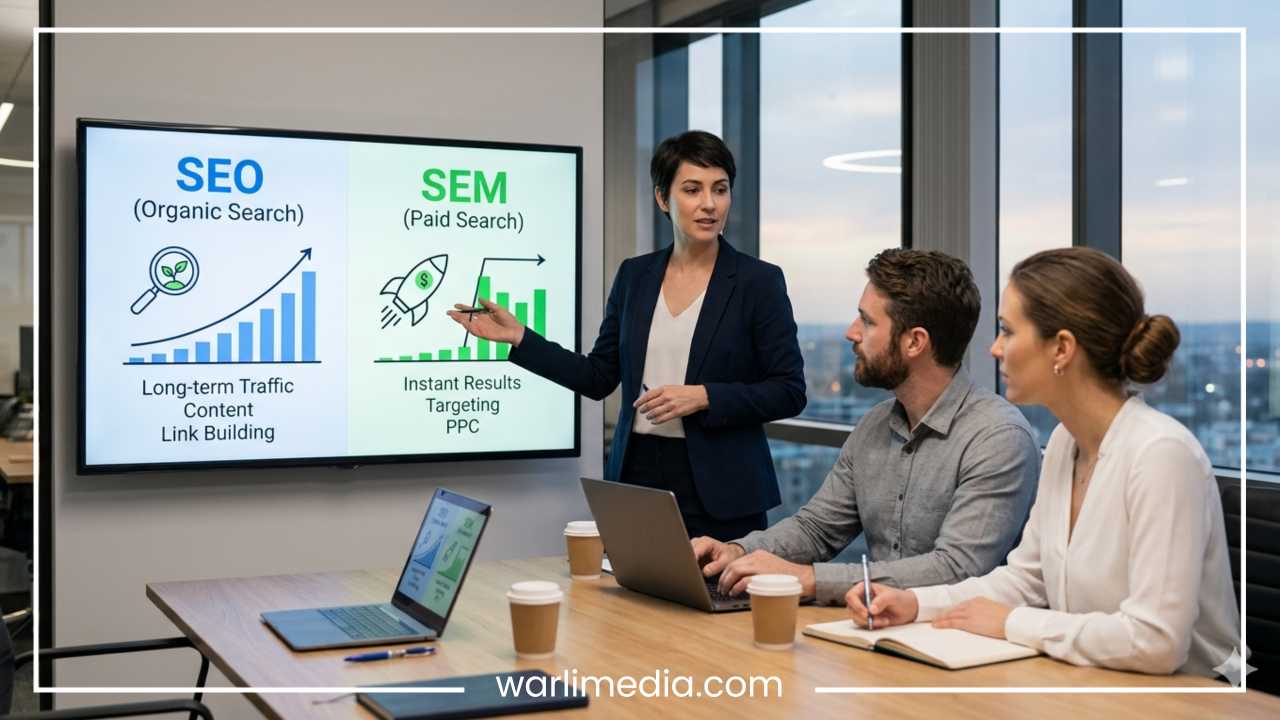
SEO still matters immensely because organic search is often the primary source of website traffic. Unlike paid advertising, which stops the moment your budget runs out, SEO provides a compounding return on investment. It builds a digital asset that earns traffic while you sleep. By understanding how search engines evaluate websites through these three distinct lenses, you can create a strategy that is not only effective today but also resilient against future algorithm shifts.
All three pillars work together in a delicate synergy. A website with world-class content but poor technical optimization will never be found. Conversely, a technically flawless site with no authority or backlinks will struggle to outrank established competitors. This guide will dive deep into each pillar, providing the actionable advice needed to build a comprehensive SEO strategy.
Read: How to Make Labels That Grab Attention
What Are the 3 Pillars of SEO?
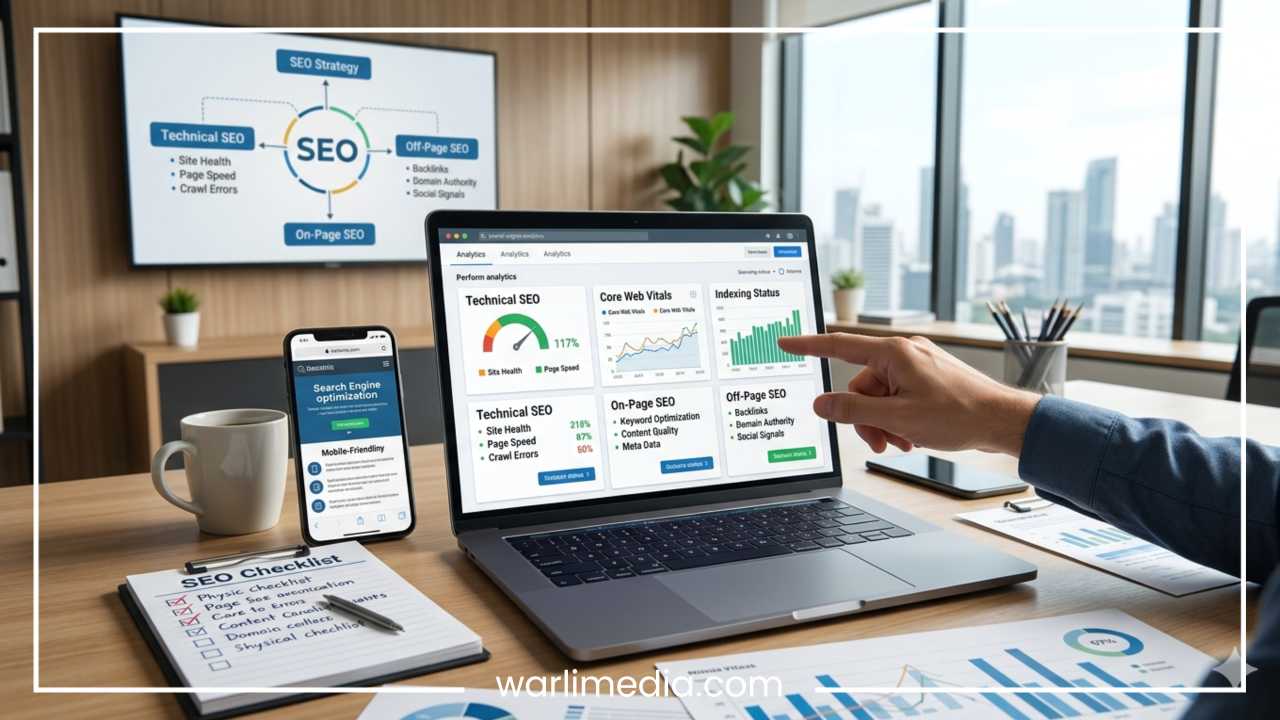
Before diving into the granular details, it is helpful to visualize how these three components interact. Think of your website as a house.
Technical SEO is the foundation and the framing. It ensures the structure is sound, the plumbing works, and the doors are unlocked so search engines can enter.
On-Page SEO represents the interior design and the rooms. It is the content, the layout, and the utility of the house. It tells visitors what each room is for and ensures they have a pleasant stay.
Off-Page SEO is the reputation of the house in the neighborhood. It is what others say about you, the recommendations you receive, and your standing in the community.
| Pillar | Focus Area | Primary Goal |
| Technical | Backend, Infrastructure | Crawling, Indexing, Performance |
| On-Page | Content, Keywords, UX | Relevance, Search Intent |
| Off-Page | Backlinks, Brand Trust | Authority, Reputation |
If any of these pillars is weak, the entire structure is at risk of underperforming. True SEO success comes from a balanced approach where each pillar supports the others.
Read: How to Think Like an Entrepreneur
Technical SEO
Technical SEO is the process of optimizing the infrastructure of your website so that search engines can crawl and index your content more effectively. While on-page SEO focuses on the “what,” technical SEO focuses on the “how.” It is the invisible engine that powers your visibility.
Website Speed and Core Web Vitals
User experience has become a primary ranking factor. Search engines prioritize websites that load quickly and behave predictably. The industry standard for measuring this performance is known as Core Web Vitals.
Largest Contentful Paint (LCP): This measures how long it takes for the main content of a page to load. A good score is 2.5 seconds or faster.
Interaction to Next Paint (INP): This measures the responsiveness of a page to user input, such as clicking a button or a link.
Cumulative Layout Shift (CLS): This measures visual stability. If elements jump around while a page is loading, it creates a poor user experience.
To improve these metrics, you should compress high-resolution images, implement lazy loading (so images only load when they appear on the screen), and use browser caching. Additionally, a Content Delivery Network (CDN) can help serve your site from servers closer to the user’s physical location, drastically reducing latency.
Mobile-Friendliness
With the majority of web traffic now coming from mobile devices, search engines use mobile-first indexing. This means the mobile version of your website is considered the primary version. If your site is difficult to navigate on a smartphone, your rankings will suffer on both desktop and mobile.
Responsive design is the standard solution, ensuring that your content automatically adjusts to fit any screen size. Pay close attention to touch-friendly navigation—buttons should be large enough to tap easily—and ensure font sizes are legible without needing to zoom in.
Crawlability and Indexability
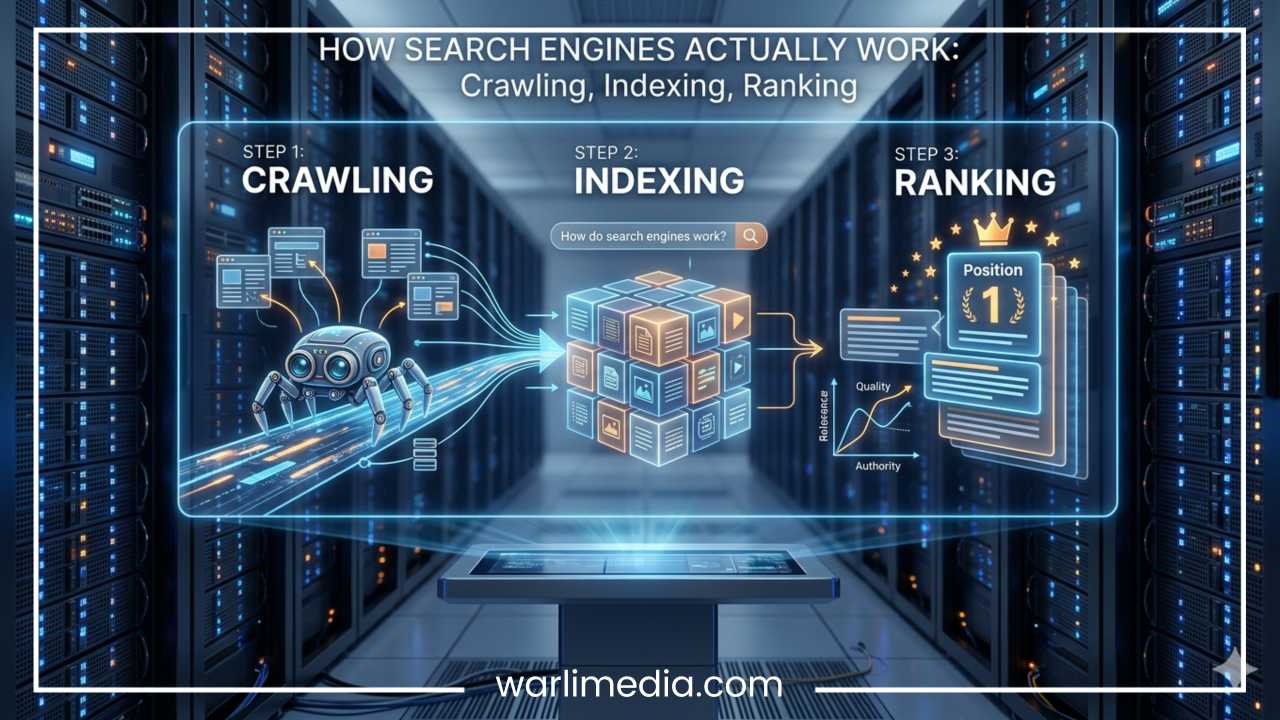
A search engine cannot rank a page it cannot find. Technical SEO ensures that the “spiders” or “bots” sent out by search engines can navigate your site efficiently.
XML Sitemaps: This is a roadmap of your website that tells search engines which pages are important.
Robots.txt: This file tells search engines which parts of your site they should not visit, such as admin login pages or private folders.
Canonical Tags: If you have multiple pages with similar content, a canonical tag tells the search engine which version is the “master” copy, preventing duplicate content issues.
Noindex Tags: Use these for pages that provide value to users but shouldn’t appear in search results, like thank-you pages or internal search result pages.
Site Architecture
A logical site structure helps both users and search engines find content. A “flat” architecture is generally preferred, meaning any page on your site should be reachable within three to four clicks from the homepage.
URL structures should be clean and descriptive.
Good:
[example.com/blog/technical-seo-guide](https://example.com/blog/technical-seo-guide)Bad:
[example.com/index.php?id=542&sort=desc](https://example.com/index.php?id=542&sort=desc)
Using breadcrumbs is another excellent way to improve architecture. They provide a clear path back to the homepage and help search engines understand the hierarchy of your site.
HTTPS and Security
Security is non-negotiable. An SSL (Secure Sockets Layer) certificate encrypts the data between your server and the user’s browser. Search engines explicitly favor HTTPS websites. Beyond rankings, a “Not Secure” warning in a browser will cause users to bounce from your site immediately, destroying your conversion rates.
Structured Data and Schema Markup
Structured data is a standardized format for providing information about a page and classifying the page content. By using Schema markup, you can help search engines understand if a page is a recipe, a product review, an FAQ, or an event.
This often results in “Rich Snippets” in the search results—those enhanced listings that show star ratings, prices, or frequently asked questions. While Schema isn’t a direct ranking factor, it significantly improves your Click-Through Rate (CTR), which sends positive signals to search engines.
Common Technical SEO Mistakes
Broken Links (404 Errors): These lead to dead ends for bots and users alike.
Redirect Chains: When Page A redirects to Page B, which then redirects to Page C. This wastes “crawl budget” and slows down the site.
Orphan Pages: Pages that are not linked to from any other page on the site, making them nearly impossible to find.
Slow Hosting: Even the best code can’t save a site hosted on a sluggish, unreliable server.
Read: Online Jobs: The Prospective Ways to Make Money With Zero Investment
On-Page SEO
On-page SEO is the practice of optimizing individual web pages to rank higher and earn more relevant traffic. This pillar focuses on the content itself and the elements visible to the user. It is where you demonstrate your relevance to a specific search query.
Keyword Research and Search Intent
Everything in on-page SEO starts with understanding what your audience is searching for. However, modern SEO has moved beyond simply “targeting a keyword.” Today, we focus on search intent.
Search intent generally falls into four categories:
Informational: The user wants to learn something (e.g., “how to bake a cake”).
Navigational: The user wants to find a specific site (e.g., “Facebook login”).
Commercial: The user is researching products (e.g., “best laptop for gaming”).
Transactional: The user is ready to buy (e.g., “buy iPhone 15 pro”).
Your content must match the intent. If a user searches for a “how-to guide” and you provide a product sales page, they will leave immediately. Use primary keywords in your main headings, but supplement them with secondary and long-tail keywords to capture more specific, less competitive traffic.
Optimizing Title Tags and Meta Descriptions
The title tag is one of the most important on-page SEO elements. It tells the search engine exactly what the page is about and serves as the headline in the search results. Keep it under 60 characters to ensure it doesn’t get cut off.
The meta description is your “ad copy” in the search results. While it doesn’t directly affect rankings, a compelling description can significantly increase your CTR. Include a clear call to action and the primary keyword naturally.
Header Tags and Content Hierarchy
Header tags (H1, H2, H3) provide structure to your content. There should only be one H1 tag per page—the main title. H2 and H3 tags should be used to break the content into logical sub-sections. This makes the page “scannable” for users and helps search engines understand the relationship between different topics on the page.
High-Quality Content and EEAT
Search engines prioritize “helpful content.” The gold standard for content quality is the EEAT framework:
Experience: Does the author have first-hand experience with the topic?
Expertise: Does the author have the credentials or knowledge required?
Authoritativeness: Is the website a recognized leader in this field?
Trustworthiness: Is the information accurate, cited, and secure?
To rank well, your content should offer original insights, unique data, or a fresh perspective. Avoid “thin content”—pages that provide very little value or just repeat what every other site says.
Content Readability and User Experience
A wall of text is intimidating. To keep users on the page (improving “dwell time”), you must optimize for readability:
Use short paragraphs (2-3 sentences).
Use bullet points and numbered lists.
Incorporate images, videos, or infographics to break up text.
Use a clear, legible font size.
Internal Linking and Topic Clusters
Internal links are hyperlinks that point to other pages on the same website. They help distribute “link equity” (ranking power) throughout your site and guide users to related content.
A common strategy is the Topic Cluster model. You create a “Pillar Page” that provides a broad overview of a topic, then create “Cluster Content” pages that dive deep into specific sub-topics. By linking them all together, you signal to search engines that you have deep authority on that subject.
Image SEO
Search engines cannot “see” images in the same way humans do. You must help them understand what an image represents.
Alt Text: Provide a descriptive text alternative for the image. This is also essential for accessibility (screen readers).
File Names: Instead of
IMG_1234.jpg, usetechnical-seo-checklist.jpg.Compression: Ensure images are compressed to maintain fast loading speeds.
Common On-Page SEO Mistakes
Keyword Stuffing: Overloading a page with keywords in an attempt to manipulate rankings. This makes the content unreadable and leads to penalties.
Ignoring Search Intent: Creating the wrong type of content for the user’s query.
Duplicate Title Tags: Having the same title for multiple pages, which confuses search engines.
Lack of Visuals: Heavy text without images or videos often leads to high bounce rates.
Off-Page SEO
Off-page SEO refers to actions taken outside of your own website to impact your rankings within search engine results pages. If Technical SEO is the foundation and On-Page is the content, Off-Page is the reputation. It tells search engines that your site is a trusted authority worth recommending.
The Power of Backlinks
Backlinks—links from other websites to yours—remain the single most important off-page ranking factor. Think of a backlink as a “vote of confidence.” However, not all votes are equal.
Authority: A link from a major news outlet or a respected industry leader is worth much more than a link from a small, unknown blog.
Relevance: A link from a site in your niche is far more valuable than a link from an unrelated site.
Anchor Text: The clickable text of the link. If the anchor text uses relevant keywords, it helps search engines understand the context of your page.
Focus on earning editorial links. These are links that occur naturally because your content is so good that others want to cite it as a source.
Link Building Strategies
Building links requires a mix of creativity and outreach. Here are some of the most effective, white-hat methods:
Digital PR: Creating newsworthy stories or data-driven studies that journalists want to cover.
Guest Posting: Writing high-quality articles for other reputable websites in your industry.
Broken Link Building: Finding broken links on other sites and suggesting your content as a replacement.
Resource Pages: Finding lists of helpful resources in your niche and asking to be included.
Original Research: Publishing statistics, surveys, or experiments that others will link to when they cite your data.
Brand Mentions and Authority
Off-page SEO is not just about links. Unlinked brand mentions—where someone talks about your brand but doesn’t provide a link—also act as signals of authority. Search engines are increasingly capable of associating brand names with specific expertise.
Participating in podcasts, speaking at webinars, and contributing to industry publications are all ways to build “thought leadership.” The more people search for your brand specifically, the more authority you gain in the eyes of search engines.
Social Signals and Promotion
While social media likes and shares are not direct ranking factors, they play a crucial role in off-page SEO. Social media is a discovery engine. When your content is shared widely, it gains visibility, which leads to more traffic and, crucially, a higher chance of earning backlinks from people who saw it on their feed.
Local SEO Signals
For businesses with a physical location, off-page SEO includes local signals.
Google Business Profile: Keeping this updated with photos, hours, and posts.
Reviews: Encouraging customers to leave honest reviews.
Citations: Ensuring your Name, Address, and Phone number (NAP) are consistent across all online directories like Yelp or Yellow Pages.
Common Off-Page SEO Mistakes
Buying Links: This is a direct violation of search engine guidelines and can lead to a permanent ban from search results.
Private Blog Networks (PBNs): Using a network of fake sites to link to your main site. This is a “black hat” tactic that search engines are very good at detecting.
Quantity Over Quality: Getting thousands of low-quality, spammy links is far less effective (and more dangerous) than getting five high-quality ones.
Irrelevant Links: Links from a gambling site to a gardening blog look suspicious and provide no value.
How the 3 SEO Pillars Work Together
The most common mistake in digital marketing is treating these pillars as separate entities. In reality, they are deeply interconnected.
Imagine you write a masterpiece of an article (On-Page). You then execute a brilliant PR campaign and get links from major industry sites (Off-Page). However, your website takes 10 seconds to load on mobile because of unoptimized code (Technical). What happens? The user clicks the link from the high-authority site, waits for your page to load, gets frustrated, and leaves. Search engines see this high bounce rate and eventually conclude that your page isn’t a good result, causing your rankings to drop despite the great content and backlinks.
Similarly, you could have a lightning-fast, technically perfect site, but if the content is written for robots rather than humans (ignoring On-Page best practices), no one will stay to read it, and no one will link to it.
The Synergy in Action:
Technical provides the accessibility so the other pillars can exist.
On-Page provides the relevance that attracts the right audience.
Off-Page provides the authority that pushes you above the competition.
When all three are aligned, you create a “flywheel effect.” Better technical performance leads to better user engagement. Better on-page content leads to more social shares. More visibility leads to more natural backlinks, which in turn increases your overall authority, making it easier for your next piece of content to rank.
SEO Best Practices for Modern Search
As we move forward, the definition of “quality” is becoming more refined. Search engines are no longer just looking for keywords; they are looking for the most helpful, comprehensive, and trustworthy answer.
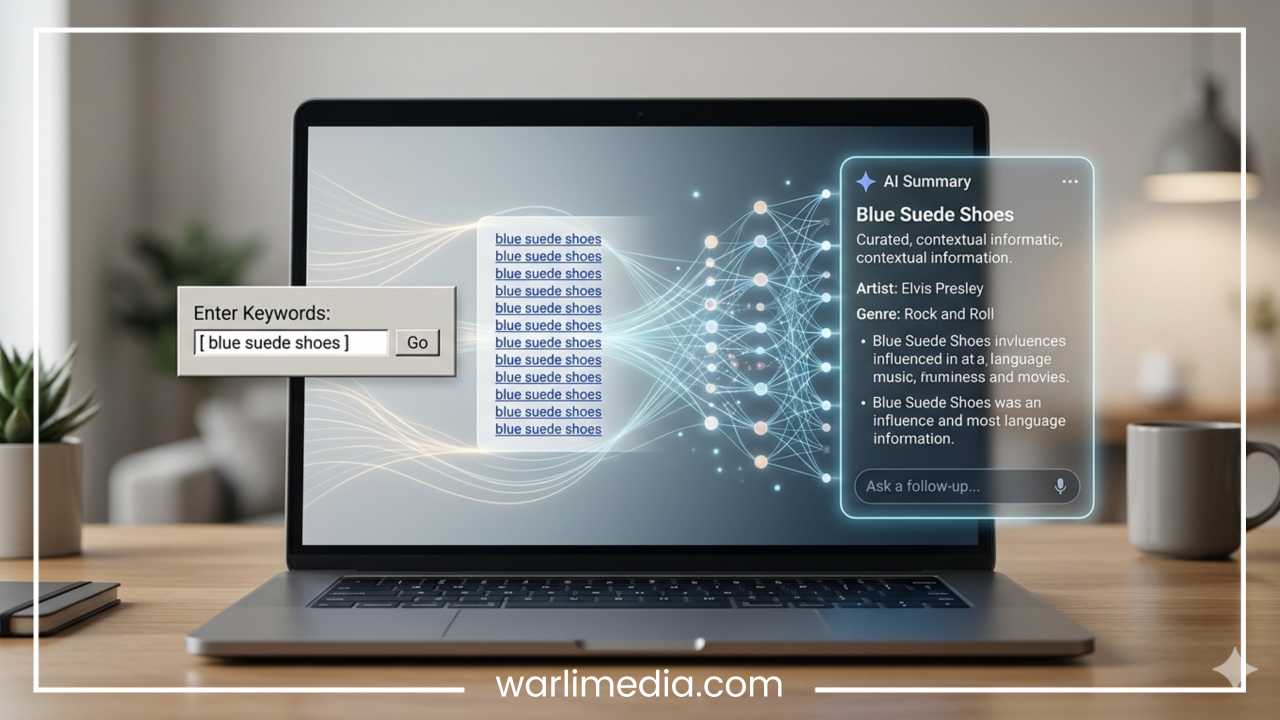
AI Overviews and Zero-Click Searches: Search engines are increasingly providing answers directly on the results page. To thrive here, focus on structured data and providing concise, factual answers that can be featured in these snippets.
Topical Authority: Rather than trying to rank for a single “big” keyword, aim to become the go-to resource for an entire topic. This involves creating a deep web of interlinked content that covers every facet of a subject.
User Experience (UX) Signals: Metrics like dwell time, click-through rate, and “pogo-sticking” (when a user clicks a result then immediately hits the back button) are becoming more influential. Every design choice should serve the user first.
Voice Search: People speak differently than they type. Optimizing for conversational, natural language and question-based queries is essential as voice assistants become more prevalent.
Final Thoughts
SEO is not a one-time task; it is an ongoing process of refinement. The landscape will continue to change, but the three pillars—Technical, On-Page, and Off-Page—will remain the structural core of any successful digital presence.
Building a website that is technically sound, filled with helpful and relevant content, and backed by a reputation for authority is the only sustainable way to grow organic traffic. Do not get distracted by “shortcuts” or the latest “hack.” Focus on the fundamentals.
Start by conducting a technical audit to ensure your foundation is solid. Then, evaluate your content to ensure it truly serves your audience’s intent. Finally, begin building relationships in your industry to earn the trust and authority your brand deserves. By balancing these three pillars, you will build a digital asset that stands the test of time.
Frequently Asked Questions
How long does it take for SEO to start working?
SEO is a long-term strategy, and most businesses start to see measurable results within 4 to 6 months. However, this timeline depends on the competitiveness of your industry, the current technical health of your website, and the quality of your content. While technical fixes can sometimes provide a quick “jump” in rankings, building authority through off-page SEO is a gradual process.
Which SEO pillar is the most important for ranking?
None of the three pillars can succeed in isolation. However, if you are starting a new site, Technical SEO is the most critical first step because it ensures search engines can actually see your pages. Once the technical foundation is set, On-Page SEO becomes the priority to prove relevance, followed by Off-Page SEO to build the authority needed to outrank established competitors.
Can I do SEO without building backlinks?
It is possible to rank for low-competition or very niche long-tail keywords without a strong backlink profile. However, for competitive terms, backlinks are essential. They act as a signal of trust. Without them, search engines may find your content relevant (On-Page) but may not deem it authoritative enough to place on the first page.
Is AI content bad for SEO?
Search engines do not penalize content simply because it was generated by AI. Their focus is on Helpful Content. If AI-generated text is thin, repetitive, or contains factual errors, it will perform poorly. To rank well, AI content should be heavily edited by humans to ensure it meets EEAT standards and provides unique value that isn’t just a copy of existing search results.
What is the difference between On-Page and Technical SEO?
The main difference lies in the “visibility” to the user. On-Page SEO deals with things a user sees and interacts with, such as text, images, and headers. Technical SEO deals with the backend infrastructure, such as server response times, XML sitemaps, and data encryption, which primarily help search engine bots crawl the site more efficiently.
Why did my keyword rankings suddenly drop?
Ranking fluctuations are normal, but a sudden, significant drop is usually caused by one of three things: a search engine algorithm update, a technical issue (like accidentally blocking your site with robots.txt), or a manual penalty if you have engaged in “black hat” tactics like buying links. Regularly auditing your technical health can help you identify these drops early.
How often should I update my SEO content?
There is no fixed rule, but a good practice is to review your top-performing pages every 6 to 12 months. Search intent can shift, and information can become outdated. Refreshing your content with new statistics, updated examples, and improved internal links signals to search engines that your page remains the most current and relevant answer for users.