
What is Indexing? How Search Engines Store & Rank Web Pages
In the modern world, we generate a massive amount of data every second. From the hundreds of millions of websites on the internet to millions of records in corporate databases, the sheer volume of information is staggering. Imagine stepping into a physical library containing billions of unorganized loose pages of text and attempting to find a specific sentence about a particular species of bird. Without a system in place to catalog, sort, and track that information, finding what you need would be practically impossible.
This is where indexing comes into play. Indexing is the process of organizing information so it can be found quickly and efficiently. At its core, an index is a structured map or guide to a larger body of content. Instead of searching through every single piece of data one by one, an index allows a system or a human to jump straight to the exact location of the desired information.
While the term is most frequently discussed today in the context of search engines and search engine optimization, indexing is a foundational concept across multiple fields. In the digital world, search engines use it to display relevant web pages in seconds, and databases use it to execute complex software queries instantly. In the physical world, publishers use back-of-book indexes to guide readers, and financial institutions use market indexes to track the health of the global economy.
This article provides a comprehensive exploration of indexing, with a primary focus on how search engine indexing powers the modern web, alongside an analysis of how indexing functions across databases, traditional media, and global finance.
Read: The Key to Start Up Success
What Does Indexing Mean?
To understand indexing conceptually, think of it as a bridge between raw data collection and efficient data retrieval. When data is unindexed, it exists as a raw, flat file or an unorganized collection. To find something within an unindexed dataset, a system must perform what is known as a full scan, reading every single item from start to finish.
When a system indexes data, it extracts key identifiers, such as keywords, terms, numbers, or tags, and pairs them with pointers that indicate exactly where the original data lives. This structured collection of pointers is the index.
Because the index is highly organized and typically sorted alphabetically or numerically, searching the index takes a fraction of a second. Once the correct term is found within the index, the system follows the pointer directly to the source material. This basic mechanism underpins everything from the index card catalogs used in historical libraries to the algorithms driving the largest digital platforms on earth today.
Read: What is a Brand?
What is Indexing in SEO?
In the context of search engine optimization, indexing refers to the process by which a search engine organizes and stores web pages in a massive database to be fetched during search queries. This database is often referred to as the search engine index.
When you type a phrase into a search engine, you are not actually searching the live internet in real time. Searching billions of active websites across the globe at the exact millisecond a user types a query would cause the internet to grind to a halt. Instead, you are searching the search engine’s pre-built index of the web.
The search engine index functions like a colossal digital library. If a website or specific web page is not stored in this library, it cannot be displayed in search results. Therefore, understanding website indexing is the most fundamental requirement of search engine optimization; a page that cannot be indexed is a page that effectively does not exist to organic search traffic.
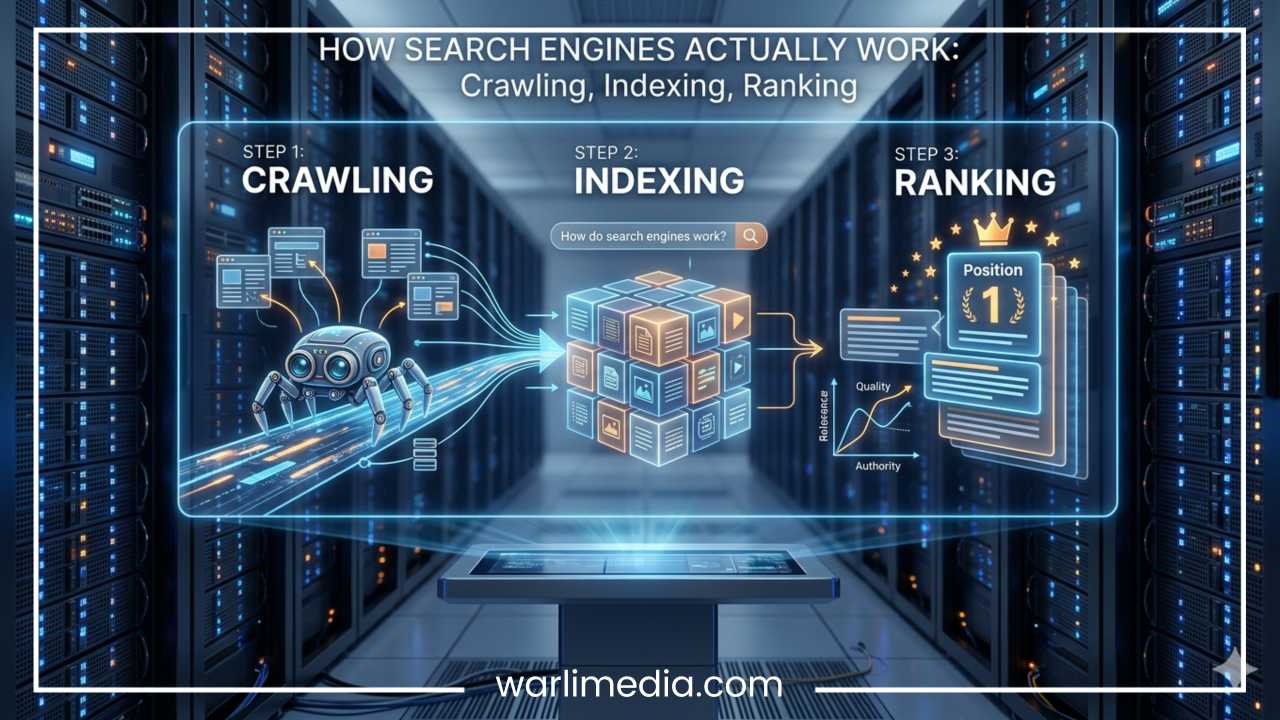
To understand the lifecycle of a web page on a search engine, it helps to look at the three distinct phases that occur before a user sees a search result: crawling, indexing, and ranking.
Crawling: Search engine bots, also known as spiders or crawlers, discover web pages by following links from existing known pages to new pages.
Indexing: The search engine analyzes the crawled pages, processes their content and structure, and stores them in its massive central database.
Ranking: When a user enters a search query, the search engine evaluates the indexed pages using complex algorithms to determine which pages are most relevant and should appear at the top of the results page.
Read: What is Product Marketing?
How Search Engines Index Websites
The process of search engine indexing is highly sophisticated, involving multiple technical stages executed at an immense scale. Search engines use automated software programs, such as Googlebot, to continuously scour the web, evaluate content, and update the central repository.
Crawling
The journey begins with crawling. A search engine bot starts with a list of known web page URLs generated from previous crawls and website sitemaps. As the bot visits these URLs, it identifies all the hyperlinks embedded within the pages and adds those new links to its queue of pages to visit next. This continuous process of discovering new and updated content allows the search engine to expand its awareness of the web.
Rendering
Once a bot identifies a page, it fetches the page code. Modern search engines do not just read raw HTML text; they perform a step called rendering. During rendering, the search engine executes the page’s HTML, CSS, and JavaScript to view the page exactly how a human visitor would on a desktop or mobile device. This ensures that content dynamically generated by scripts is accurately captured and evaluated.
Understanding Content
After rendering the page, the search engine’s algorithms analyze the content to understand what the page is actually about. This analysis involves reading:
Textual content and keywords: Identifying the core topics discussed on the page.
Semantic context: Evaluating the relationships between words to determine the depth and authority of the topic.
Metadata: Reading HTML tags such as title tags, meta descriptions, and header tags to see how the content is structured.
Visual media: Analyzing images, videos, and Alt text to gather additional contextual clues.
Internal and external links: Looking at where the page links out to and how it connects with the broader website ecosystem.
During this phase, the search engine also looks for specific technical signals. For example, it checks for structured data, which is specialized code that provides explicit clues about the meaning of a page, such as a product price or a recipe cook time. It also evaluates canonical tags to ensure that the page is the original version of the content and not an identical duplicate of another page on the web.
Storing in the Index
If the page meets the search engine’s standards for quality and uniqueness, and if it is free of technical directives blocking storage, the page is formally saved into the index. The content is broken down into an inverted index, a database structure that maps individual words and phrases to the specific URLs where they appear. Once stored in this index, the page becomes eligible to be evaluated by ranking algorithms and served to users in response to search queries.
Why Indexing Matters
Without an index, the modern digital economy could not function. The primary reason indexing is critical is visibility. If a business launches a brand-new website, publishes highly valuable blog posts, or lists unique e-commerce products, none of that content will receive organic traffic unless it passes through the indexing process.
For businesses operating in highly competitive landscapes, the speed and accuracy of indexing can directly dictate revenue performance. Consider a breaking news website. If a major news story breaks and the website’s article takes twelve hours to be crawled and indexed, competitors who are indexed within minutes will capture all the initial organic traffic, social shares, and visibility.
Similarly, for e-commerce platforms launching seasonal product lines or holiday sales, fast and comprehensive indexing ensures that product pages appear in front of shoppers at the precise moment purchasing intent is at its highest.
The benefits of a well-indexed website include:
Consistent Search Presence: Ensuring that all valuable marketing and informational assets are discoverable by potential customers.
Higher Organic Traffic Volume: Expanding the total number of keywords and pages that can draw visitors from search results.
Improved Content Reach: Allowing high-quality content to find its intended audience efficiently.
Faster Content Discovery: Ensuring that updates, price changes, and new product listings are reflected in search engines shortly after going live.
Common Indexing Problems
Even if a website is beautifully designed and features exceptional content, various technical issues can prevent search engines from indexing its pages. Diagnosing and resolving these common indexing obstacles is a core component of technical SEO.
Directives That Block Indexing
The most straightforward reason a page is missing from an index is that the website owner accidentally told search engines not to index it. This usually happens via a noindex tag, a piece of code placed in the HTML header of a page telling bots to go away. While useful for private pages, such as user dashboards or checkout pages, leaving a noindex tag active on a public landing page will entirely remove it from search results.
Similarly, a website’s robots.txt file can contain directives that block search engine bots from crawling entire folders or sections of a site. If a bot is blocked from crawling a URL, it will rarely index the content found on that URL.
Duplicate and Thin Content
Search engines strive to provide the best possible experience for users, which means avoiding filling search results with repetitive information. If a website contains multiple pages with identical or highly similar text, the search engine will select only one version to index and exclude the rest as duplicate content.
On the other hand, pages with thin content—meaning pages containing very little text, low-quality automated text, or no original information—are frequently rejected from the index because they do not offer sufficient value to search users.
Crawl Budget Limitations
Search engines do not have infinite resources. They allocate a specific amount of time and computational energy to crawling each individual website, an allocation known as a crawl budget. If a website is massive, poorly structured, or suffers from slow page load speeds, search engine bots may exhaust their crawl budget before discovering or rendering every page. This leaves deep or newly published pages completely unindexed.
Structural and Server Issues
Websites must be easy for automated systems to navigate. If a page has no links pointing to it from other parts of the website, it is known as an orphan page. Because search bots rely on links to navigate, orphan pages are incredibly difficult to discover and index. Additionally, if a website frequently experiences server errors or long response delays, search engine bots will back away to avoid crashing the site, leading to incomplete indexing.
How to Check if Your Pages Are Indexed
Before trying to optimize a website’s visibility, it is important to verify exactly which pages are currently saved in search engine databases. There are several reliable methods to check the indexing status of a website or an individual URL.
Using Google Search Console
The most accurate and comprehensive tool for monitoring indexing status is Google Search Console, a free service provided directly by Google. Within the platform, the Pages report displays a detailed breakdown of how many pages from a website have been successfully indexed and how many have been excluded.
For pages that are excluded, the tool provides specific technical reasons, such as “Excluded by ‘noindex’ tag” or “Not found (404).” Additionally, the URL Inspection Tool allows webmasters to paste a single, specific URL into a search bar to see its real-time indexing status, when it was last crawled, and whether any mobile usability or rendering issues are impacting its eligibility.
The Site Search Operator
For a quick, high-level look at a website’s indexed footprint, you can use a special search command directly in the standard search engine search bar. By typing site:yourwebsite.com into the search box, the search engine will return a list of every page it has stored in its index for that specific domain.
While the number of results returned by a site: search is an estimate rather than a precise count, it is a highly useful diagnostic tool. For example, if a website owner knows their store has exactly 50 products, but a site search returns 5,000 indexed pages, it serves as an immediate warning sign that the site may be generating duplicate URLs or falling victim to a malicious script injection.
How to Improve Indexing
Ensuring that all important web pages are indexed smoothly requires a proactive approach to website management and technical optimization. By implementing the following best practices, website owners can make it as easy as possible for search engines to find, read, and store their content.
Submit an XML Sitemap
An XML sitemap is a structured file that lists every single page on a website that is meant to be indexed, serving as a direct roadmap for search engine bots. By creating an XML sitemap and submitting it directly through platforms like Google Search Console, website owners ensure that crawlers do not have to rely solely on discovering links to find new pages. The sitemap explicitly tells the search engine exactly where the content lives and when it was last modified.
Build a Logical Internal Linking Structure
Search engine bots navigate websites by following links. A shallow, well-organized site architecture ensures that every page is only a few clicks away from the homepage. Using descriptive anchor text within body copy to link from high-authority pages to newer or deeper pages distributes crawl energy throughout the site, ensuring that search engines regularly revisit and re-index older content while quickly discovering new additions.
Optimize Page Speed and Performance
Because search engine bots operate under a strict crawl budget, a fast website directly correlates with better indexing. Optimizing image file sizes, leveraging browser caching, reducing server response times, and minimizing complex JavaScript execution helps pages render rapidly. When a website loads quickly, search bots can crawl more pages per second, maximizing the number of pages that successfully make it into the index during each visit.
Resolve Technical Errors Promptly
Regular technical maintenance is essential to avoid indexing drops. Website owners should regularly audit their sites to find and fix broken links, manage redirect chains, and eliminate server errors. Ensuring that canonical tags are implemented correctly across all pages helps search engines understand which version of a page is the authoritative one, preventing index fragmentation caused by duplicate content variations.
Crawling vs Indexing vs Ranking
Because the terms crawling, indexing, and ranking are frequently used interchangeably in casual digital marketing conversations, it is worth establishing their precise definitions and looking at how they connect to one another.
| Term | Meaning | Operational Phase | Primary System Involved |
| Crawling | Discovering pages by following links and reading code | Discovery Phase | Search engine bots / Spiders |
| Indexing | Storing, analyzing, and organizing web pages in a database | Storage Phase | Central search database |
| Ranking | Evaluating indexed pages to determine search positions | Retrieval Phase | Search engine algorithms |
These three processes function as a linear chain. A web page cannot be indexed unless it has first been discovered and crawled. Likewise, a web page cannot rank for a search phrase unless it has been analyzed and stored within the index.
Problems at any single stage of this chain will break the entire sequence. If a crawler is blocked by a server firewall, crawling fails, which means indexing cannot happen, and ranking becomes impossible. If a page crawls successfully but contains thin, plagiarized content, the search engine will reject it during the indexing phase, meaning it will never be pulled forward by the ranking algorithms when a user performs a search.
What is Database Indexing?
Shifting focus away from search engine optimization, indexing is also a fundamental pillar of computer science and software engineering, particularly within database management systems. A database index is a data structure used to speed up the retrieval of data rows from a database table at the cost of additional write time and storage space.
To understand the necessity of a database index, consider a massive customer database table for an international corporation containing ten million unique customer profiles. If a customer care representative runs an unindexed query to find a customer named John Smith with a specific account number, the database software must start at the very first row of the table and examine all ten million records one by one to find the match. This operation is called a full table scan, and it consumes massive amounts of processing power and time.
In a standard database table without an index, data rows are stored sequentially like a flat list. When you ask the database to find a specific record, the system is forced to perform this full table scan. It must physically read the first row, check if it matches, then move to the second row, check if it matches, and repeat this cycle for every single row in the database until it reaches the final record. If your target record is near the bottom of a ten-million-row table, the database has to execute millions of individual checks, which causes the operation to be slow and resource-heavy.
When an index is created on the customer account number column, the database management system builds a separate, highly organized data structure that holds copies of the account numbers alongside a direct memory pointer to the exact physical location of the full row data.
Instead of reading the main data rows sequentially, the database queries this sorted index first. Because the index is organized, the database can locate the search value in just a few computational steps. Once found, the index provides a direct storage address (a pointer). The database then uses that pointer to jump straight to the exact physical location of the row in the main table, completely bypassing the need to read any of the other rows.
Most relational databases, such as those using SQL, utilize a specialized data structure called a B-Tree for their indexes. A B-Tree balances the data in a hierarchical tree structure, allowing the system to navigate through millions of records using a minimal number of comparisons. Instead of scanning ten million entries, the database can locate the exact account number in just a few computational steps.
However, database indexing involves a deliberate technical tradeoff:
Performance Gains: Data retrieval operations, such as SQL
SELECTqueries, become incredibly fast, transforming wait times from minutes to milliseconds.Storage Costs: The index itself occupies physical storage space disk memory, which grows larger as more columns are indexed.
Write Overhead: Whenever a new row is added, deleted, or updated within the database, the database must rewrite not only the main data table but also recalculate and update all associated indexes. This slows down operations like
INSERTandUPDATE.
Because of these tradeoffs, database administrators must carefully select which columns to index, focusing primarily on columns that are frequently used in search filters and data relationships while avoiding over-indexing columns that undergo constant modifications.
Indexing in Books and Libraries
Long before computers, servers, and automated code scripts existed, human beings developed sophisticated physical systems to manage information overload. The concept of indexing traces its origins directly to traditional print media and physical library curation.
A back-of-book index is an alphabetical list of names, places, concepts, and topics covered within a printed volume, paired with the specific page numbers where those items can be found. It serves exactly the same purpose as a digital index, allowing a reader to skip a manual, page-by-page scan of a 600-page historical text to immediately locate a specific footnote or reference topic. Professional book indexers analyze manuscripts to extract not just literal words, but cross-referenced concepts, building a semantic map of the book’s ideas.
In a broader physical space, libraries use catalog indexing systems to organize millions of physical books, journals, and media assets. Traditional tools like the Dewey Decimal System or the Library of Congress Classification system assign unique, highly structured alphanumeric codes to items based on their core subject matter.
These codes serve as the index address, allowing patrons to query a card catalog or digital terminal and walk directly to the precise shelf and row holding the exact physical item they require.
Financial Indexing Explained
In the world of economics and wealth management, indexing takes on a financial definition, referring to a passive investment strategy tied to a market index. A financial market index is a statistical measure that tracks the performance of a specific basket of stocks, bonds, or other securities designed to represent a particular sector or the broader financial market.
Well-known examples of financial indexes include:
The S&P 500: Tracks the stock performance of 500 of the largest publicly traded companies listed on stock exchanges in the United States, serving as a primary indicator of overall economic health.
The Nasdaq Composite: Focuses heavily on technology, computing, and biotechnology firms, offering a window into the growth of the tech sector.
The Dow Jones Industrial Average: Tracks 30 prominent, blue-chip companies across various traditional industrial sectors.
In financial indexing, instead of hiring an active fund manager to research individual companies, pick specific stocks, and attempt to beat market returns, an investment firm builds an index fund or an Exchange-Traded Fund (ETF) designed to mechanically mirror the exact composition of an index.
For example, an S&P 500 index fund will automatically buy shares in all 500 companies in the exact proportions that they exist within the index. This approach minimizes management fees, eliminates human error, and provides broad diversification, making it one of the most popular long-term wealth accumulation strategies in modern finance.
The Future of Indexing
As we look toward the horizon of information technology, the mechanisms used to index data are undergoing a massive evolution driven by advancements in artificial intelligence, machine learning, and advanced cloud computing infrastructure.
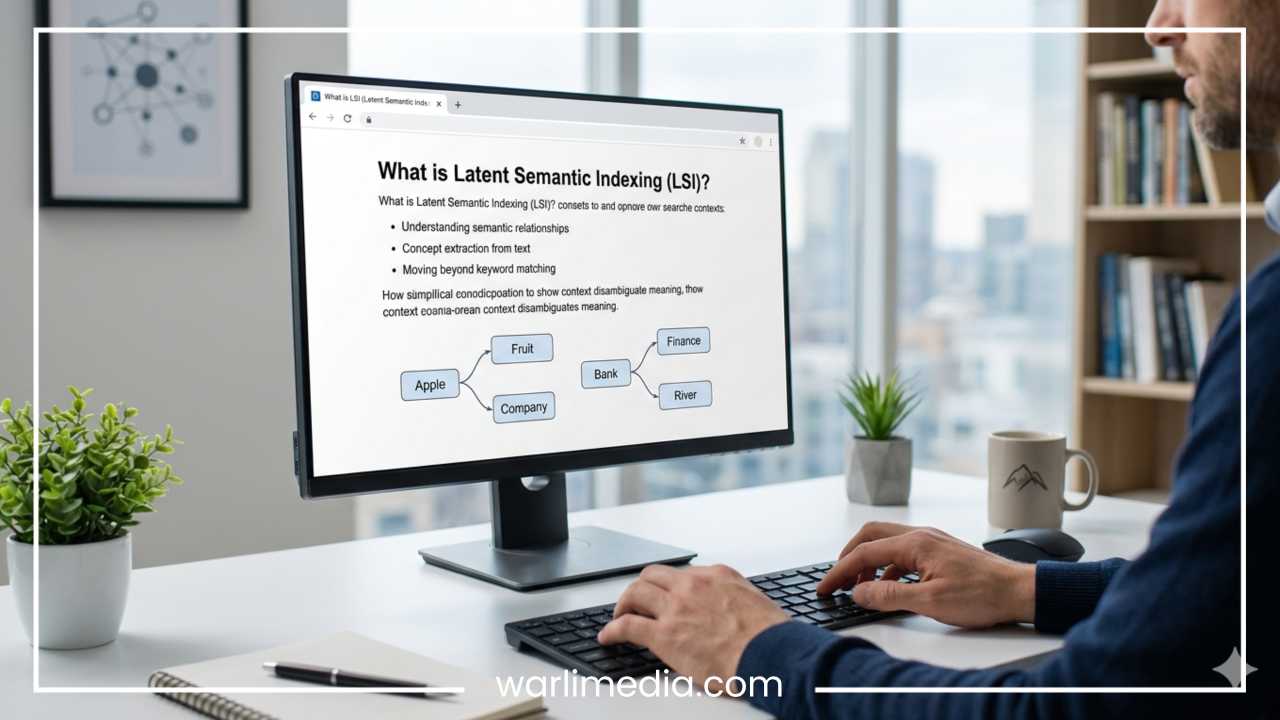
Traditional indexing methods rely primarily on literal keyword matching. If you search for a word, the index points you to documents containing that exact sequence of letters. However, the future belongs to semantic indexing and vector databases.
Using neural networks, modern systems transform text, images, and audio into complex mathematical representations called vectors. These vectors capture the conceptual meaning and contextual relationships of information rather than just the spelling of words. For example, instead of merely matching exact letter strings, a semantic vector index matches the underlying meaning, automatically connecting a query like “fast vehicle” to content describing a “sports car” without requiring an exact word match.
This evolution is fundamentally changing search engine indexing. Instead of matching keywords on a page, search engines can index the deep concepts within content. This allows systems to answer nuanced user queries with incredible accuracy, even if the target web page uses completely different vocabulary to explain the solution.
Furthermore, the rise of real-time indexing models allows streaming data feeds and video content to be analyzed and indexed instantly as they are broadcast, paving the way for hyper-responsive search environments that adapt to global data creation instantly.
Final Thoughts
Whether you are navigating the intricate paths of website optimization, building high-performance enterprise software architectures, researching historical texts, or managing long-term financial portfolios, indexing remains an essential, quiet engine of efficiency. It is the universal solution to data chaos, converting massive, unmanageable oceans of information into structured, actionable knowledge assets.
In the digital landscape, keeping a sharp focus on how indexing works is one of the most valuable competitive advantages a professional or business can cultivate. If information cannot be indexed properly, it becomes difficult to discover, fading out of sight in a world that moves too fast to scan everything manually. By understanding, monitoring, and optimizing the indexing pathways relevant to your field, you ensure that your data, content, and products remain visible, accessible, and ready to perform when needed.
Frequently Asked Questions
How long does it take for Google to index a new website?
The time it takes for Google to index a new website can vary significantly, ranging from a few days to several weeks. For a brand-new domain with no external links, discovery takes longer because search engine bots must find the site through a submitted sitemap or a link from an already indexed page. You can speed up this timeline by creating a Google Search Console account, verifying your domain ownership, and manually submitting your XML sitemap. For established websites with high authority, new content is often crawled and indexed within a few minutes to a few hours.
Why is my website not showing up on Google search results?
If your website is completely missing from Google search results, it is usually due to one of a few technical issues. First, check if your site is indexed by typing site:yourdomain.com into the search bar. If no pages appear, your site might be blocking search engine bots via a noindex directive in your HTML headers or a restrictive rule in your robots.txt file. Other common reasons include server connectivity errors that prevent Googlebot from accessing your code, a lack of internal links pointing to your pages, or, in rare cases, a manual penalty applied by Google for violating their webmaster quality guidelines.
What is the difference between discovered currently not indexed and crawled currently not indexed?
In Google Search Console, these two statuses indicate different stages of the indexation bottleneck:
Discovered – currently not indexed: This means Google knows the URL exists, but the bot has not actually visited or read the page yet. This often happens because crawling the page might have overloaded the site’s server, or because Google has temporarily deprioritized the URL based on the site’s overall quality and available crawl budget.
Crawled – currently not indexed: This means Google successfully visited the URL, read the code, and rendered the content, but explicitly chose not to place it in the search index. This typically occurs if the content is deemed too thin, represents a duplicate version of another page, or does not provide enough unique value for search users.
How do I force Google to index my page immediately?
While you cannot 100 percent force Google’s automated systems, you can request immediate indexation by using the URL Inspection Tool inside Google Search Console. Paste your specific URL into the top search bar, wait for the status report to load, and click the Request Indexing button. This places your URL into a high-priority queue for Googlebot to visit. Another effective method for multi-page updates is updating your XML sitemap and pinging Google, or ensuring the new page is heavily linked from your website’s highest-traffic, already-indexed pages.
Does updating old content help with search engine indexation?
Yes, regularly updating old content signals to search engine bots that your website is actively maintained and contextually relevant. When crawlers notice changes to a page’s modification date or content layout, they re-crawl the page to update their central database index. This can improve your search visibility, as modern search algorithms frequently prioritize fresh, accurate data for specific queries. Combining content updates with structural internal links helps direct crawl energy toward older sections of your digital footprint.
Can database indexing slow down data insertion speeds?
Yes, database indexing introduces a mechanical tradeoff where read performance improves at the expense of write performance. Every time a new row is added, deleted, or altered using commands like INSERT, DELETE, or UPDATE, the database management system must write the raw data to the primary table and simultaneously update all corresponding index trees. If a table is over-indexed with too many index structures, large data modifications can cause noticeable performance lag, which is why database administrators carefully balance which columns actually require indexing.