
10 Surprising Benefits of Organic Search
In the fast-paced world of digital marketing, businesses are often lured by the immediate gratification of paid advertising. The promise of “instant traffic” is a powerful motivator, leading many to pour substantial budgets into Pay-Per-Click (PPC) campaigns and social media ads. However, there is a quieter, more resilient engine driving the internet’s most successful brands: organic search.
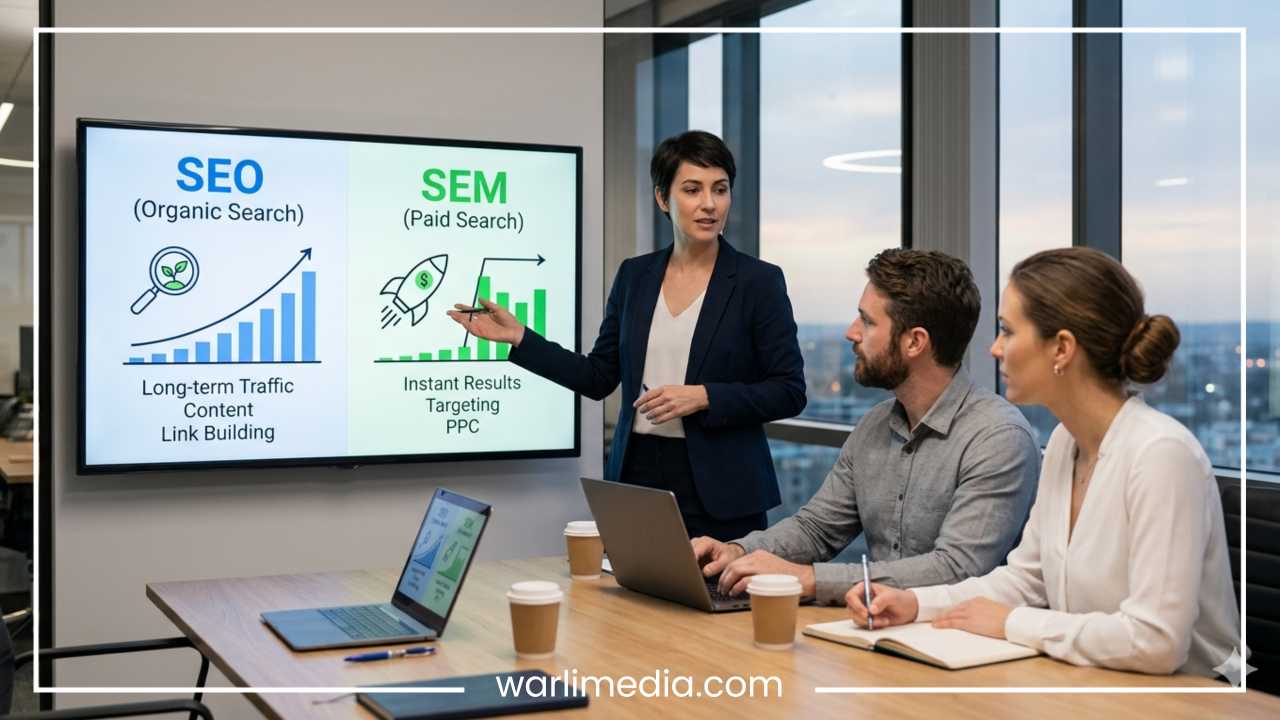
Organic search refers to the non-paid listings that appear on a Search Engine Results Page (SERP). These results are earned, not bought, through a combination of relevant content, technical optimization, and authority-building—collectively known as Search Engine Optimization (SEO). While it is easy to view organic search simply as a way to get “free clicks,” this perspective significantly underestimates its true power.
Read: Improve Your Website’s Crawlability: A Guide for Better SEO
In reality, organic search is the foundation of a sustainable digital presence. It is not merely a traffic source; it is a multi-faceted asset that influences brand perception, consumer behavior, and long-term financial health. As algorithms become more sophisticated, they prioritize the user experience, meaning that a high organic ranking is a badge of quality that resonates throughout a customer’s entire journey. This article explores ten surprising benefits of organic search that go far beyond the standard metrics of clicks and impressions, proving why it remains the most critical investment for any modern business.
1. Higher Trust and Credibility
One of the most profound advantages of organic search is the inherent trust it builds with the consumer. In an era of “ad blindness,” where users have become conditioned to ignore banners and sponsored links, the organic results represent a curated recommendation from the search engine itself. When a user sees your website at the top of the organic results, they don’t just see a link; they see an endorsement of your authority.
The psychological difference between a paid ad and an organic listing is significant. Research consistently shows that a vast majority of search engine users—often estimated between 70% and 80%—ignore paid advertisements altogether, jumping straight to the organic results. This behavior stems from the understanding that anyone with a budget can buy an ad, but only a truly relevant and high-quality site can earn a top spot on the first page of Google.
Read: Local SEO for Businesses: Attract More Customers & Boost Growth
The Click-Through Rate (CTR) reflects this disparity. While a well-performing PPC ad might see a CTR of 2% to 3%, the top organic result often captures upwards of 30% of all clicks for a given query. This trust is cumulative. By consistently appearing for relevant industry terms, a brand cements itself as a credible leader in its field. If a user repeatedly finds your content when searching for answers to their problems, the “halo effect” of the search engine’s perceived neutrality transfers to your brand.
2. Long-Term Cost Efficiency
While organic search requires an upfront investment in time, talent, and content creation, its long-term cost efficiency is unmatched by any paid channel. Paid advertising is an “on-off” switch: the moment you stop paying, your traffic disappears. In contrast, organic search is an investment in an equity-building asset.
Consider the lifecycle of a high-quality, SEO-optimized blog post. You might spend a certain amount of money or hours producing it. In its first month, it may bring in modest traffic. However, as it gains authority and climbs the rankings, it begins to generate a steady stream of visitors every single day without any additional cost per click. Over three years, the cost-per-acquisition (CPA) of that traffic becomes negligible.
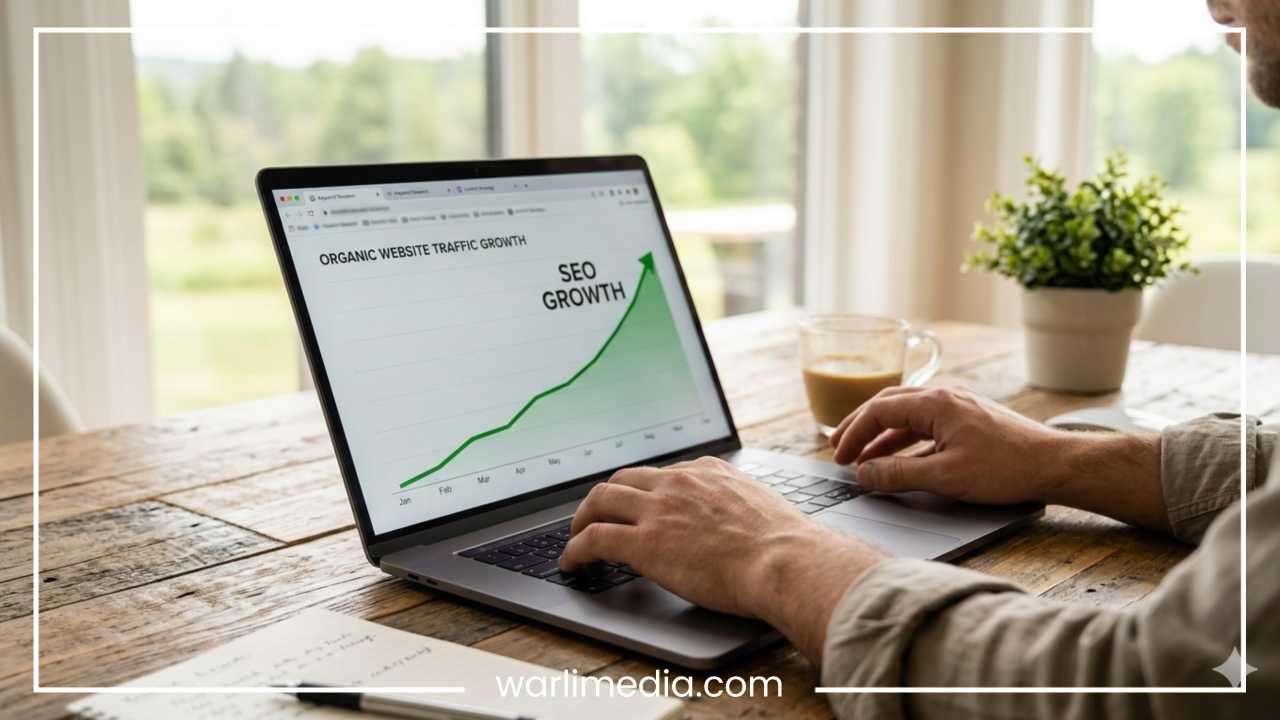
In a hypothetical comparison, a company spending $5,000 a month on PPC may get 2,500 clicks. The moment they stop that $5,000 spend, those 2,500 clicks drop to zero. Conversely, a company that invests that same $5,000 into high-quality organic content and technical SEO might see fewer clicks in the first two months, but by month twelve, they could be receiving 10,000 clicks per month with no additional monthly spend required to maintain that specific volume. Organic search transforms marketing from a recurring expense into a compounding interest account.
Read: Content Optimization & Duplicate Content: SEO Impact
3. Better User Engagement
Organic search visitors are inherently different from social media or display ad visitors. They are proactive rather than reactive. When someone finds your site via organic search, they are actively looking for a solution, a product, or information. This “active intent” results in significantly higher engagement levels.
Data typically shows that organic traffic outperforms other channels in key engagement metrics such as time on site, pages per session, and bounce rate. Because the search engine has done the work of matching the user’s specific query to your specific content, the “fit” is naturally better. Users who arrive organically are more likely to stay and explore because the content directly addresses the need that prompted their search.
Furthermore, the process of optimizing for organic search actually forces a business to create better content. To rank well, you must satisfy “search intent.” This means providing comprehensive answers, clear navigation, and valuable insights. By focusing on what it takes to rank organically, you are essentially building a website that is tailor-made for high engagement, creating a virtuous cycle where better engagement leads to better rankings, which in turn brings in more engaged users.
4. Brand Authority and Awareness
For many businesses, the goal of marketing is to become synonymous with their niche. Organic search is the most effective tool for achieving this level of brand authority. Constant visibility on the SERPs ensures that your brand name is associated with the topics and solutions your customers care about most.
Beyond the standard blue links, modern organic search offers features like Featured Snippets (the “Position Zero” answer boxes), Knowledge Panels, and “People Also Ask” sections. Capturing these features does more than just drive traffic; it positions your brand as the definitive source of truth. When Google highlights your content as the direct answer to a question, it provides a level of third-party validation that no traditional advertisement can replicate.
This awareness extends to the “top of the funnel.” Many users may not be ready to buy today, but they are researching. If they see your brand appearing for every research-based query they perform, you are building “mental availability.” When the time eventually comes to make a purchase, your brand is already the established authority in their mind. You haven’t just reached them; you have educated them.
5. Higher Conversion Rates
A common misconception is that organic search is only for “top-of-funnel” awareness, while paid ads are for “bottom-of-funnel” conversions. In reality, organic traffic often boasts higher conversion rates because of the trust and intent factors mentioned previously.
Organic visitors often come to a site via “long-tail” keywords—highly specific phrases like “best eco-friendly running shoes for marathon training” rather than just “shoes.” These specific queries indicate a user who is much further along in the buying journey. When your organic content meets that specific need with a detailed product guide or a helpful review, the transition from “researcher” to “buyer” is seamless.
Furthermore, because organic content is often educational and helpful rather than “salesy,” it lowers the consumer’s natural defenses. A well-written “how-to” guide that naturally incorporates a product solution feels like a helpful recommendation, whereas a “Buy Now” ad can feel like an intrusion. By providing value first through organic content, you earn the right to ask for the sale, leading to a more loyal customer base and a higher lifetime value.
6. Sustainable Traffic
One of the greatest risks in digital marketing is “platform dependency.” If a social media platform changes its algorithm or an advertising network increases its prices, a business relying solely on those channels can see its lead generation vanish overnight. Organic search provides a level of sustainability and stability that protects a business against these fluctuations.
Content that is optimized for organic search—often called “evergreen content”—can stay relevant for years. A tutorial written three years ago can continue to be a top traffic driver today if it remains the best answer to a user’s question. This creates a compounding effect. Each new piece of content you add to your site doesn’t just replace the old; it builds upon it.
This sustainability is particularly valuable during economic downturns. When marketing budgets are slashed, companies that have invested in organic SEO continue to receive traffic and leads because their previous work continues to perform. It is a “safety net” for your business, ensuring that you have a consistent flow of potential customers regardless of your current advertising spend.
7. Better Data and Insights
Organic search is one of the most powerful market research tools available. Through tools like Google Search Console and various keyword research platforms, businesses can gain an unfiltered look into the minds of their customers. You can see exactly what language they use, what questions they are asking, and what problems they are trying to solve.
This data is far more honest than survey data. While people might tell a surveyor what they think the surveyor wants to hear, their search queries reveal their true intentions and anxieties. By analyzing organic search patterns, a business can identify emerging trends before they become mainstream. For example, if you notice an uptick in searches for a specific feature your product doesn’t have, that is a direct signal for your product development team.
Furthermore, organic data allows you to refine your overall marketing strategy. If you find that a specific blog post is attracting a high volume of organic traffic but isn’t converting, you have discovered a gap in your messaging or user experience. This insight allows for data-driven decisions that improve not just your SEO, but your entire business model.
8. Competitive Advantage
In the digital landscape, the “real estate” on the first page of search results is limited. There are only ten organic spots. By claiming these spots, you are effectively pushing your competitors further down the page or even off the first page entirely. This creates a significant barrier to entry.
SEO is a “winner-takes-all” or “winner-takes-most” environment. Once a site establishes strong authority and secures top rankings for high-value keywords, it becomes increasingly difficult for a competitor to dislodge them. It requires the competitor to not only match your current content but to exceed it and wait for the search engine to recognize that improvement—a process that can take months or years.
This advantage is not just for large corporations. Small businesses can use organic search to outmaneuver much larger brands by targeting “niche” or “local” keywords. A local hardware store may never outrank a global retailer for the word “tools,” but they can absolutely dominate the search results for “best lawn repair services in [City Name].” This allows smaller players to carve out a dominant territory that is difficult for bigger, more generalized competitors to invade.
9. Improved Customer Experience
Modern SEO is no longer about “tricking” a search engine; it is about providing the best possible experience for a human user. Google’s algorithms now prioritize factors such as page load speed, mobile-friendliness, secure connections (HTTPS), and intuitive site structure—all of which are core components of a good User Experience (UX).
When you invest in organic search, you are essentially forced to improve your website’s performance. You cannot rank well if your site is slow or if it doesn’t work on a smartphone. By adhering to standards like Google’s Core Web Vitals, you ensure that every visitor—whether they came from a search engine, an email link, or a business card—has a smooth, frustration-free experience.
This focus on UX has a direct impact on your bottom line. A faster, more responsive site reduces bounce rates and encourages users to stay longer and buy more. In this way, the technical requirements of organic search act as a quality control mechanism for your digital presence, ensuring that your “digital storefront” is always in top condition.
10. Supports Other Marketing Channels
Organic search does not exist in a vacuum; it is a force multiplier for every other marketing effort you undertake. The high-quality content created for SEO purposes can be repurposed across numerous channels, increasing the ROI of your content creation budget.
For instance, an in-depth organic guide can be broken down into a series of social media posts, featured in an email newsletter, or used as a script for a video. Because the content was designed to answer real questions (based on keyword research), you know it is material that your audience actually wants to consume.
Furthermore, a strong organic presence supports paid efforts. If a user sees a PPC ad for your brand and then sees your brand again in the organic results, the “double exposure” increases the likelihood of a click. It also aids in “retargeting” campaigns; organic search brings high-intent visitors to your site, whom you can then follow up with via targeted ads on other platforms. This synergy ensures that your marketing strategy is a cohesive ecosystem where each part strengthens the whole.
Final Thoughts
The benefits of organic search extend far beyond a mere increase in website traffic. It is a fundamental pillar of modern business that builds trust, lowers long-term costs, and provides a deep understanding of customer behavior. By earning your place at the top of the search results, you are not just capturing clicks; you are building an authoritative, sustainable, and user-centric brand that can weather the shifts of the digital economy.
Organic search is not a “quick fix,” but rather a long-term investment that pays dividends in credibility, engagement, and conversion. As the digital marketplace becomes increasingly crowded, the ability to be found organically is what separates the fleeting trends from the enduring market leaders.
Now is the time to evaluate your organic strategy. Are you treating SEO as a technical chore, or are you embracing it as a primary driver of brand value? By shifting your focus toward creating high-quality, intent-driven content and a superior technical experience, you can unlock these ten surprising benefits and secure your brand’s future in the digital age.