
Why Personal Experience Is the New SEO Superpower (and How to Use It)
The Death of Generic SEO Content
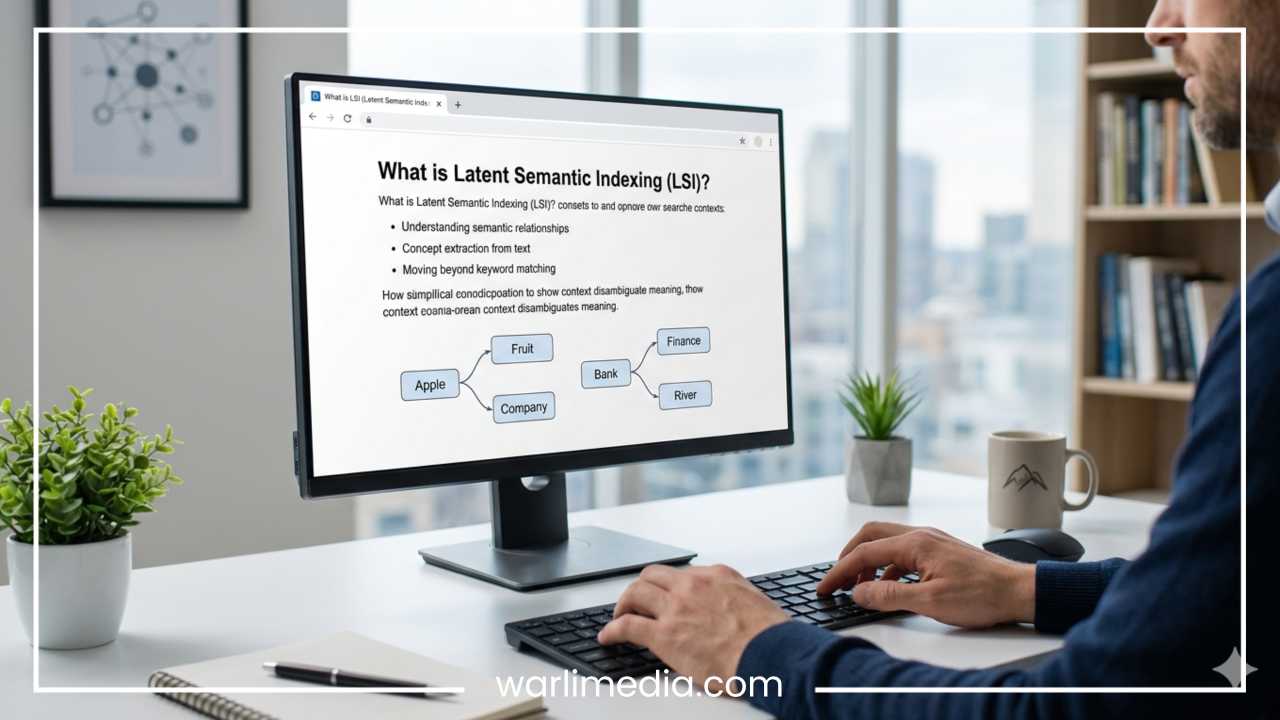
For nearly two decades, the world of Search Engine Optimization was defined by a mechanical, almost clinical approach to content creation. Digital marketers spent their days obsessing over keyword density, latent semantic indexing, and the precise placement of H2 tags. If you wanted to rank for a term like “best digital cameras,” the formula was simple: look at the top five results, synthesize their points, make your article slightly longer, and ensure your keyword appeared every two hundred words.
This era created a massive influx of what we now call “skyscraper content”—massive, towering pillars of information that were technically comprehensive but ultimately hollow. These articles were written by researchers, not practitioners. They were summaries of summaries, a digital game of telephone where the original insight was diluted with every new iteration.
Read: Blog Shmog By Robert W. Bly
Today, that era is officially dead.
The internet has reached a saturation point of generic information. With the advent of sophisticated large language models, the cost of producing “average” content has dropped to near zero. Anyone can generate a three-thousand-word guide on a topic they know nothing about in a matter of seconds. Consequently, search engines have been forced to pivot. They no longer reward the mere presence of information; they reward the presence of insight.
Google doesn’t just want answers anymore; it wants evidence of lived experience. The search landscape has shifted from “Who can summarize this topic the best?” to “Who has actually done this?” Personal experience is no longer just a stylistic choice for bloggers—it is the ultimate ranking advantage and the new superpower of SEO.
Read: Business Blogs Don’t Have to Fail
The Shift in Google’s Search Philosophy
To understand why experience matters now, we have to look at the evolution of search quality. In the early days, Google relied on backlinks as a proxy for authority. Then, it moved toward content depth and “helpfulness.” However, the most significant shift occurred with the expansion of the E-E-A-T framework.
Originally, Google’s Search Quality Rater Guidelines focused on E-A-T: Expertise, Authoritativeness, and Trustworthiness. This was designed to ensure that if a user searched for medical advice, they found a doctor, not a hobbyist. But as the web became more cluttered, Google realized that “Expertise” (often defined by credentials or formal education) didn’t cover everything. Sometimes, a person with a degree isn’t the best source; sometimes, the best source is the person who just spent six months using a product or living through a specific situation.
Read: Growing Your Business with a Business Blog
By adding the extra “E” for Experience, Google signaled a paradigm shift.
Experience refers to the extent to which the content creator has first-hand or life experience in the topic. If you are writing a review of a car, have you actually driven it? If you are writing a guide on how to recover from a marathon injury, have you actually run a marathon or suffered that injury?
This shift is a direct response to the “AI-ification” of the web. Generic, AI-generated content can simulate expertise by pulling from databases, but it cannot simulate experience because it has no physical presence or history. By prioritizing experience, search engines are creating a moat around human-centric content that machines cannot easily cross.
What Personal Experience Means in SEO Context
“Personal experience” is often misunderstood as mere storytelling or anecdotal fluff. In a professional SEO context, it is much more rigorous. It is the proof of interaction with a subject matter. It isn’t just saying “I think this tool is good”; it is showing why it is good through specific, inimitable evidence.
There are several layers to what constitutes experience in the eyes of a search engine and a user:
First-hand Product Usage: This involves original photography, specific pros and cons that aren’t listed on the manufacturer’s spec sheet, and observations about long-term durability.
Real Case Studies: Instead of saying “SEO takes time,” you provide a breakdown of a specific project, including the exact months it took to see results and the specific hurdles faced.
Personal Experiments and Results: This is the “I tried X so you don’t have to” approach. It involves setting a hypothesis, documenting the process, and sharing the data—even if the experiment failed.
Unique Insights from Doing: A professional carpenter knows things about wood grain that a researcher reading a textbook will never grasp. These “nuggets” of practical wisdom are the hallmarks of experience.
Mistakes and Failures: This is perhaps the most important trust signal. Genuine practitioners talk about what went wrong. Generic content only focuses on the “perfect” path because it lacks the scars of actual practice.
In short, experience is the difference between a travel guide written by someone who looked at Google Maps and a guide written by someone who actually got lost in the backstreets of Kyoto.
Why Personal Experience Boosts Rankings
The benefits of injecting personal experience into your content extend far beyond satisfying a guideline. Experience acts as a catalyst for several key ranking factors that search engines use to determine quality.
Higher Engagement and Retention
When a reader lands on a page and sees a “stock” introduction, they often bounce. However, when they see a personal photo, a specific data point, or an “In my experience…” disclaimer, they stop skimming and start reading. This increases time on page and scroll depth. These signals tell search engines that the user has found something of value, reinforcing the page’s position in the rankings.
Lower Bounce Rates
Generic content often fails to satisfy the “searcher’s task.” If five different articles all say the same thing, the user will keep clicking back to the search results to find something different. Experience-driven content provides a unique perspective that ends the search.
Natural Backlink Acquisition
In the modern web, people don’t link to generic summaries; they link to original research, unique opinions, and documented results. If you run an experiment and publish the findings, other writers will cite you as the primary source. This “source-based” link building is the most sustainable way to grow domain authority.
Differentiation from AI
As AI content floods the SERPs (Search Engine Results Pages), users are developing a “sixth sense” for machine-written text. It feels repetitive, overly polite, and devoid of personality. Experience-driven content stands out like a beacon of authenticity. It satisfies the search intent by providing the “best” answer, which is often the most human one.
How Google Detects Experience Signals
A common question among SEOs is: “How can an algorithm actually know if I have experience?” While we don’t know the exact weight of every signal, we can infer how Google’s systems evaluate quality through their documentation and patent filings.
Uniqueness vs. Consensus
Google’s systems are incredibly good at identifying “information gain.” If your article contains the same five tips as every other article on page one, your information gain score is low. If you include a sixth tip that is backed by a personal screenshot or a specific anecdote not found elsewhere, your content is flagged as uniquely valuable.
Specificity and Granularity
Vague language is a hallmark of low-experience content. Experience-led content uses specific numbers, names, dates, and technical nuances. Instead of saying “the software is fast,” an experienced user says, “The rendering time for a 4K video was 12 minutes on my M2 MacBook Air, which is 4 minutes faster than the previous model.” That level of detail is hard to fake at scale.
Visual Proof
The inclusion of original images, videos, and data visualizations is a massive signal. Stock photos provide zero SEO value in terms of experience. Original photos of a product being unboxed, or a screen recording of a specific workflow, prove that the author actually had the “thing” in their hands.
Author Entities
Google maps content to “entities”—people, brands, and organizations. If an author has a history of writing about a specific topic across various platforms, Google builds a profile of that person as an experienced authority. This is why “About the Author” pages and social signals are more important than ever.
Examples of Experience-Driven Content vs. Generic Content
To truly understand the power of this shift, consider a side-by-side comparison of two articles aiming to rank for “How to grow organic tomatoes.”
The Generic Approach:
Headline: 10 Tips for Growing Great Tomatoes.
Content: “Tomatoes need plenty of sunlight. Ensure they get 6–8 hours a day. Use good soil and water them regularly. Watch out for pests like aphids.”
The Problem: This information is available in three seconds via a basic search. There is no reason for a user to spend time on this page or for Google to rank it above a thousand other identical pages.
The Experience-Driven Approach:
Headline: I Spent 3 Summers Failing at Tomatoes—Here is the One Secret That Actually Worked.
Content: “I used to think 8 hours of sun was enough, but in my zone 7b garden, the afternoon heat was actually scorching the leaves. I started using a 30% shade cloth between 2:00 PM and 4:00 PM, and my yield doubled. Here is a photo of my soil mix—I found that adding crushed eggshells didn’t help, but fish emulsion changed everything.”
The Result: This content is irreplaceable. It offers a “secret,” it identifies a specific geographical context (zone 7b), it debunks a common myth (eggshells), and it provides a specific, actionable solution (shade cloth). This is content that builds a community and earns high rankings.
Types of Content Where Personal Experience Wins Most
While experience is valuable everywhere, it is mandatory in certain “experience-sensitive” niches.
Product Reviews
The “affiliate marketing” boom led to thousands of sites reviewing products they never touched. Google has cracked down on this via numerous “Product Review Updates.” Today, if you want to rank for reviews, you must show the product in use.
Tutorials and How-To Guides
The best tutorials are written by people who have encountered the bugs, the edge cases, and the “weird” errors that happen in real life. A guide that says “Now, click the blue button—but wait, if it’s grayed out, here is how to fix it” is infinitely more valuable than a manual.
Finance and Money Advice
In the “Your Money or Your Life” (YMYL) category, trust is everything. A personal story about how someone paid off $50,000 in debt is more engaging and often more helpful than a generic list of “5 Ways to Save Money.”
Health and Wellness
While medical expertise is required for health claims, personal experience plays a huge role in “patient-led” content. Someone sharing their actual journey through a specific diet or recovery process provides emotional support and practical “day-to-day” tips that a clinical study might miss.
How to Inject Personal Experience Into Any Article
You don’t need to be a world-class adventurer to write experience-led content. You simply need to change your workflow from “researching” to “documenting.”
Add “What I Did” Sections
Every article should have a section where the author steps out from behind the curtain. Use phrases like:
“When I tried this for the first time…”
“My initial results were…”
“I was surprised to find that…”
Include Real Results and Data
Don’t just say a strategy works. Show a spreadsheet. Show a screenshot of your analytics. Show a “before and after” photo. Even if the numbers are small, they are real, and that reality carries weight.
Share the Limitations
Generic content tries to be the “ultimate” guide for everyone. Experienced writers know that nothing works for everyone. By saying, “This strategy is great for small businesses, but it will likely fail for enterprises,” you actually increase your authority by showing you understand the nuances of the field.
Use Timeline-Based Storytelling
Structure parts of your content around a timeline. “Day 1 vs. Day 30” is one of the most effective ways to demonstrate experience. It shows the reader that you committed the time required to truly understand the topic.
Replace General Claims with Specific Observations
Instead of saying “This coffee maker is easy to clean,” say “The grounds basket rinses clean in under five seconds, but the milk frother requires a dedicated pipe cleaner to remove residue.”
The Role of AI in This New SEO Era
It is a mistake to think that the rise of experience-driven SEO means the end of AI. Rather, it redefines the role of AI in the content creator’s toolkit.
The winning strategy for the future is AI + Human Experience.
AI is excellent at the “boring” parts of SEO: generating outlines, suggesting titles, checking for grammatical errors, and summarizing long transcripts. However, AI is the “floor,” not the “ceiling.” If you use AI to write your entire article, you are producing a commodity that has no competitive advantage.
The “Experience Layer” is what you add to the AI’s output. You can use AI to draft the basic structure of a guide on “How to Paint a Room,” but you must be the one to add the tip about how the specific brand of tape you used pulled the paint off the baseboards.
Think of AI as the scaffolding and your personal experience as the architecture and interior design. One is necessary for the structure, but the other is why people want to live there.
Future of SEO: Experience-Led Content Ecosystems
Looking ahead, we are moving toward a “Creator-Led” SEO environment. We are already seeing this with the rise of “hidden gems” in search results—forum posts from Reddit or Quora appearing at the top of the SERPs. Why? Because those platforms are built entirely on personal experience.
The future of SEO will involve:
Author Identity: Your reputation as a creator will be as important as your website’s domain authority.
Multimodal Experience: Experience will be documented through a mix of text, video, and audio. A blog post might be the hub, but the “proof” will live in an embedded video of the author performing the task.
Topical Authority through Practice: Instead of writing 100 articles on 100 different topics, successful sites will write 100 articles on one topic, documented from 100 different angles of experience.
The goal is no longer to be a “site about X,” but to be “the person who does X.”
Final Thoughts: Experience Is the New Ranking Currency
The evolution of SEO from keyword matching to experience-led storytelling represents a “maturing” of the internet. We have moved past the novelty of having information at our fingertips; we are now in the age where we need to know which information we can actually trust.
Personal experience is the most powerful tool in your SEO arsenal because it is the one thing that cannot be scraped, spun, or generated by a machine. It is your unique fingerprint on the digital world. By shifting your focus from “What can I say about this topic?” to “What have I done with this topic?”, you move from being a commodity to being a necessity.
In an ocean of generic, AI-generated noise, the voice of the practitioner is the only thing that will continue to ring true. Experience isn’t just a part of SEO anymore—it is the very foundation upon which all future search success will be built.