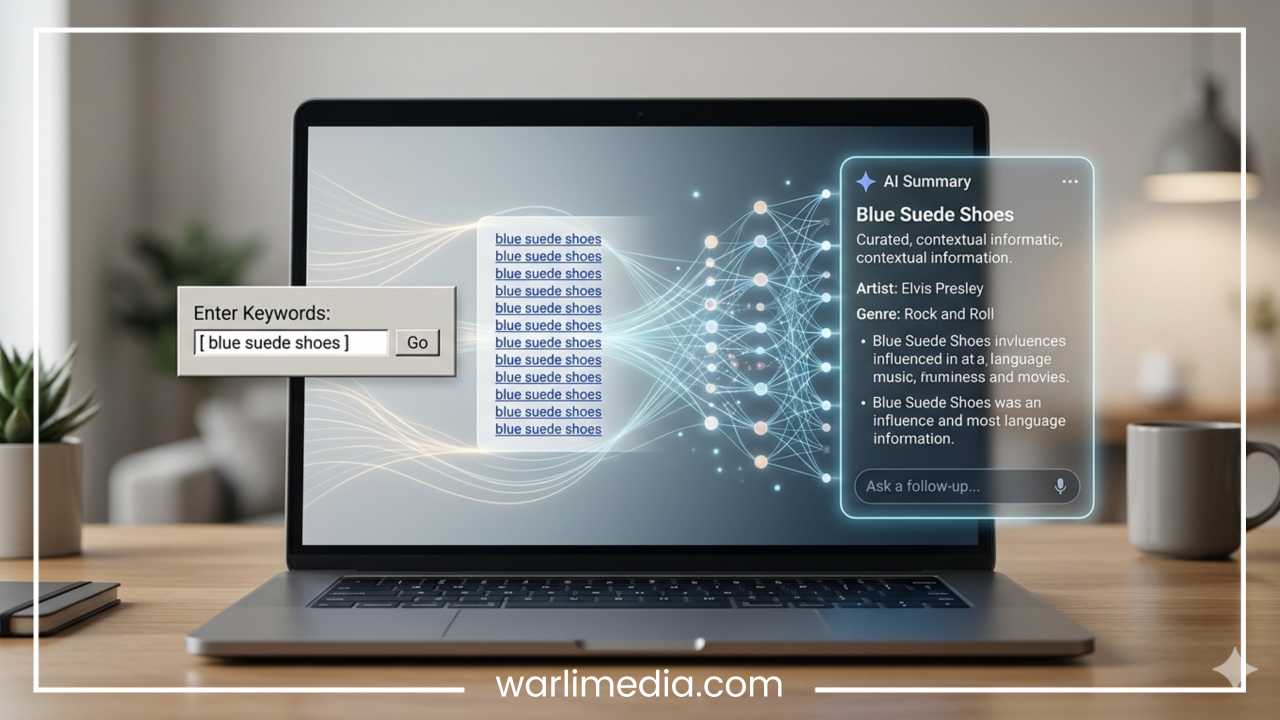

Optimizing for Search Generative Experience (SGE): Complete SEO Guide
The landscape of digital discovery is undergoing its most significant transformation since the inception of the commercial internet. For decades, Search Engine Optimization (SEO) was a game of “blue links.” Success was measured by the ability to secure a top position on the first page of search results, driving traffic through a linear relationship between a user’s query and a website’s snippet. However, the emergence of generative artificial intelligence is fundamentally altering this dynamic.
We are shifting from a traditional search model—where the engine acts as a librarian pointing you to a book—to an engine that acts as an expert consultant, synthesizing information from across the web to provide a comprehensive, immediate answer. This shift is led by Google’s evolution toward an AI-driven interface. As AI becomes deeply integrated into the search experience, the goal for marketers, SEOs, and content creators is no longer just “ranking.” It is about “inclusion.”
Read: How to Encourage Comments on Your Business Blog
Adapting to this new reality requires more than just technical tweaks. It demands a holistic reassessment of how we produce and structure information. If the search engine is now summarizing the web, your content must be the most authoritative, clear, and extractable source for that summary. This article explores the mechanics of this transition and provides a comprehensive roadmap for optimizing content in the age of the Search Generative Experience.
Read: Don’t Miss Out: The Ultimate Guide to RSS Feeds
What is Search Generative Experience (SGE)?
Search Generative Experience, often referred to as SGE, represents a paradigm shift in how information is retrieved and displayed. At its core, SGE is an AI-powered enhancement to the standard search engine results page (SERP). Unlike the traditional list of links, SGE utilizes large language models (LLMs) to generate a cohesive “snapshot” or overview that directly answers a user’s query within the search interface.
The Mechanics of the AI Snapshot
When a user types a complex query, SGE analyzes multiple high-quality sources simultaneously. It then synthesizes this information into a multi-paragraph response. This snapshot appears at the very top of the search results, often pushing organic listings further down the page. This is not merely a “featured snippet” on steroids; it is a dynamic, synthesized response that understands nuance and context.
Read: How to Target Your Business Blog Audience
Key Components of the SGE Interface
AI Snapshot / Overview: The primary AI-generated block that provides a direct answer to the query.
Source Citations: Accompanying the text are “link cards” or citations that show exactly which websites provided the information for the AI’s answer.
Follow-up Questions: A conversational interface that allows users to ask deeper questions without re-typing their original query, maintaining the context of the initial search.
Conversational Mode: Users can engage in a back-and-forth dialogue with the engine to refine results, such as filtering products by price or finding specific sub-topics within a broader theme.
SGE does not replace traditional search; it sits atop it. While the AI provides the overview, the familiar list of organic results remains below, though its role has changed from being the primary destination to being the supporting evidence for the AI’s synthesis.
How SGE Changes Traditional SEO
The introduction of SGE marks the end of the “keyword-to-page” era and the beginning of the “intent-to-entity” era. The traditional funnel of a user searching for a term and clicking the first result is being disrupted by several factors.
The Rise of Zero-Click Searches
One of the most significant impacts of SGE is the potential increase in zero-click searches. If a user can get a complete, high-quality answer—such as a product comparison or a step-by-step tutorial—directly from the AI snapshot, they may never feel the need to click through to a website. This forces SEOs to focus on “value-add” content that goes beyond simple factual answers which an AI can easily summarize.
Reduced Visibility for Single-Page Rankings
In the old model, ranking #1 for a high-volume keyword was the ultimate prize. In SGE, the AI snapshot takes up the “above the fold” real estate on both desktop and mobile. Even if you rank first organically, you are now physically positioned below an AI block that may already have answered the user’s question using information from your competitors.
The Shift from Keywords to Intent and Context
Standard SEO relied heavily on matching specific keywords. SGE, powered by advanced natural language processing, focuses on the “why” behind the search. It looks for topical authority and brand trust. The engine is no longer just looking for the page with the most backlinks; it is looking for the most reliable entity that can provide a comprehensive perspective on a topic. Depth of content and clear, authoritative signals (E-E-A-T) are now more critical than ever for maintaining visibility within the AI’s citations.
How SGE Selects and Uses Content
To optimize for SGE, one must understand how the AI decides which sources to cite in its snapshot. While the exact algorithms remain proprietary, several signals have emerged as primary drivers for inclusion.
Topical Relevance and Semantic Mapping
SGE does not look at pages in isolation. It looks at how a page fits into a broader topic. It prioritizes websites that demonstrate a deep understanding of a subject matter. If your site covers every angle of a topic—from beginner guides to advanced troubleshooting—the AI is more likely to view you as a primary source for its synthesis.
The Critical Role of E-E-A-T
Experience, Expertise, Authoritativeness, and Trustworthiness (E-E-A-T) are the cornerstones of SGE selection. Because the AI is “speaking” to the user, it must rely on sources that are demonstrably accurate. Content authored by recognized experts with clear credentials and a history of factual accuracy will always be prioritized over anonymous or generic content.
Extractability and AI-Readiness
For an AI to use your content, it must be able to “parse” it easily. This means your content should be structured in a way that the AI can quickly identify key facts, steps, or definitions. Websites that use clean HTML, structured data (Schema), and clear headings make it much easier for the AI to “read” and include them in the snapshot citations.
Preference for Multi-Source Synthesis
SGE rarely relies on a single source. It cross-references information. If your content aligns with the consensus of other authoritative sites while providing a unique perspective or additional data, you increase your chances of being featured as a confirming source in the AI’s response.
Core Optimization Strategies for SGE
Optimizing for SGE requires a blend of traditional SEO excellence and a new focus on “information density.”
1. Build Topical Authority
Stop thinking about individual keywords and start thinking about content clusters. A content cluster consists of a “Pillar Page” (a comprehensive overview of a broad topic) and “Supporting Pages” (detailed looks at specific sub-topics).
Action: Audit your content to identify gaps. If you have a guide on “Digital Marketing,” ensure you also have deep-dive articles on “Email Segmentation,” “Attribution Modeling,” and “Ad Copy Psychology” all interlinked.
2. Strengthen E-E-A-T
You must prove to the AI that you are a credible source.
Experience: Share first-hand accounts, original case studies, and personal photos/videos that prove you have actually done what you are writing about.
Expertise: Use detailed author bios that link to professional profiles or other published works.
Authoritativeness: Earn mentions and links from other high-authority sites in your niche.
Trustworthiness: Ensure your site has clear contact information, a privacy policy, and factual citations for every claim.
3. Write for Semantic Search
SGE is conversational. Your content should mirror the way people ask questions.
Direct Answers: Start sections with a clear, concise answer to a common question before diving into the details.
Natural Language: Use terms related to your primary topic (LSI keywords) naturally throughout the text. If you are writing about “Healthy Diets,” the AI expects to see terms like “macronutrients,” “metabolism,” and “whole foods.”
4. Optimize Content Structure
Make your content “skimmable” for both humans and AI.
Headings: Use H1, H2, and H3 tags to create a logical hierarchy.
Bullet Points and Lists: These are highly “extractable” and frequently appear in AI snapshots.
Short Paragraphs: Limit paragraphs to 3-4 sentences to improve readability and AI parsing.
5. Improve Content Depth
Surface-level content will not survive in an SGE world.
Detailed Comparisons: Instead of just listing features, explain why one option is better for a specific type of user.
FAQs: Include a robust FAQ section at the end of your articles to capture “long-tail” conversational queries that SGE often addresses.
Technical SEO for SGE
While content is the heart of SGE, technical SEO is the nervous system that delivers that content to the AI.
Structured Data (Schema Markup)
Schema markup is a language used to tell search engines exactly what is on a page. For SGE, this is vital.
Organization Schema: Defines who you are.
Product Schema: Gives specific details like price, availability, and reviews.
FAQ and HowTo Schema: These are the most critical for SGE, as they provide structured answers that the AI can directly pull into the snapshot.
Page Speed and Mobile Optimization
SGE is a resource-intensive feature. Google prioritizes fast-loading pages to ensure the overall search experience remains fluid. If your page takes too long to load or isn’t mobile-friendly, the AI may skip your content in favor of a more technically sound competitor.
Clean HTML and Crawlability
If your site relies heavily on JavaScript to render content, search bots might struggle to “see” the text quickly. Ensure your core content is available in the initial HTML or uses Server-Side Rendering (SSR). This ensures that the AI’s “crawler” can ingest your information without delay.
Internal Linking for Topic Mapping
Internal links act as a roadmap for search engines. By linking related articles together, you help the AI understand the relationship between different entities and topics on your site, reinforcing your topical authority.
Content Formats That Perform Well in SGE
Certain formats are naturally “SGE-friendly” because they provide the structured data and direct answers that generative models crave.
Definitions and Explainer Content: Creating “What is [X]?” sections that are 50–60 words long helps you land in the definition portion of an AI snapshot.
Step-by-Step Guides: Using numbered lists for processes (e.g., “How to change a tire”) makes it easy for the AI to summarize the task.
Comparison Articles: Tables and side-by-side lists comparing two products or services are highly valuable for “consideration-stage” AI queries.
Data-Backed Insights: Original research and statistics are gold. AI models love to cite specific numbers and original findings to add “weight” to their summaries.
Direct Answer Sections: Incorporate a “Key Takeaways” or “Summary” box at the top of long-form articles.
Keyword Strategy in the SGE Era
The way we research keywords must evolve. We are moving away from chasing “head terms” and toward capturing “user journeys.”
Focus on Informational Intent
SGE is most active for informational queries. Instead of targeting “best running shoes,” target “what are the best running shoes for flat feet on trail runs?” These long-tail, specific queries are exactly what SGE aims to solve.
Problem-Solving Queries
Identify the specific problems your audience faces. Create content that answers “how do I fix…” or “why is my…” These queries trigger SGE frequently because they require a synthesized explanation.
Mapping the User Journey
Users will start with a broad query in SGE and use the “Follow-up” feature to get more specific. Your keyword strategy should account for this.
Awareness: Broad topic (e.g., “Sustainable Gardening”).
Consideration: Specific sub-topic (e.g., “Best compost for vegetable gardens”).
Decision: Transactional/Comparison (e.g., “Compost A vs. Compost B for tomatoes”).
Measuring Performance in SGE
Standard metrics like “Average Position” are becoming less reliable as the SERP becomes more dynamic. We need a new set of Key Performance Indicators (KPIs).
Impression Share in AI Overviews
Since SGE snapshots occupy the top of the page, appearing in the citations (the link cards) is the new “Position 1.” You should track how often your brand appears within these AI-generated sections.
Brand Mentions and Sentiment
In an SGE world, being mentioned by name within the AI’s text is a massive win for brand awareness. Monitor how the AI describes your brand—is it being cited as an “industry leader” or an “affordable alternative”?
Click-Through Rate (CTR) from Citations
Traditional CTR models will change. A click from an SGE citation is often a “high-intent” click because the user has already read a summary and wants to dive deeper into your specific expertise.
Search Console and Analytics Shifts
Expect to see a dip in “total clicks” for simple informational queries, but watch for an increase in “engaged sessions” and “time on page.” Users who click through from an AI summary are usually looking for the comprehensive detail that the AI couldn’t provide.
Future of SEO in an SGE World
The future of SEO is not about outsmarting an algorithm; it is about becoming an indispensable part of the user’s information ecosystem.
Search Experience Optimization
SEO is evolving into “Search Experience Optimization.” This means looking at the entire journey—from the first AI-generated answer to the final conversion on your site. The goal is to provide a seamless, authoritative, and helpful experience at every touchpoint.
The Power of Branding
As AI synthesizes information, brand recognition becomes a powerful trust signal. If the AI sees your brand mentioned across multiple reputable sources, it is more likely to include you in its snapshot. Offline PR, social media presence, and community engagement now directly impact your search visibility.
The Hybrid Search Interface
We are entering an era of hybrid search. Users will toggle between AI snapshots for quick answers and traditional organic links for deep research. Success will come to those who can capture both: the AI citation for the “quick win” and the organic ranking for the “deep dive.”
Final Thoughts
The Search Generative Experience is not the end of SEO; it is its maturation. The era of “gaming the system” with thin content and keyword stuffing is over. In its place is a more sophisticated landscape that rewards depth, structure, and genuine expertise.
To win in the SGE era, you must stop building pages for search engines and start building knowledge for users. By focusing on topical authority, strengthening your E-E-A-T, and structuring your content for maximum extractability, you can ensure that your brand remains a vital part of the conversation. The search engine of the future is an expert, and to stay relevant, you must become the expert’s most trusted source.
🧭 SGE Optimization Checklist
Topical Authority: Have you covered the “Pillar” and “Cluster” topics comprehensively?
Direct Answers: Does your content provide a clear answer to the primary query within the first 200 words?
E-E-A-T: Is the author’s expertise clear? Are there links to credible sources and original data?
Structure: Are you using H2/H3 tags and bulleted lists to make facts easy to extract?
Schema Markup: Is FAQ, HowTo, and Organization schema correctly implemented?
Readability: Is the tone natural and conversational, matching how a user would speak?
Technical Health: Does the page load in under 2 seconds and render perfectly on mobile?
FAQ: Frequently Asked Questions about SGE
Will SGE kill organic traffic?
SGE will likely reduce traffic for “simple” queries (e.g., “What time is it in London?”). However, for complex, high-value queries, it provides a new way to get discovered via citations. Traffic may decrease in volume but increase in quality.
How do I get my site into the AI Snapshot?
Focus on being the “best” answer. Use clear definitions, structured lists, and high-quality Schema markup. Ensure your site has high topical authority in your niche.
Does SGE use the same ranking factors as traditional search?
Yes, but with a heavier emphasis on E-E-A-T and semantic relevance. Backlinks still matter, but they matter more when they come from sites within the same topical cluster.
Should I stop targeting short-tail keywords?
No, but you should shift your focus. Short-tail keywords will trigger SGE snapshots. To be included, your page needs to be the authoritative “hub” for that topic.