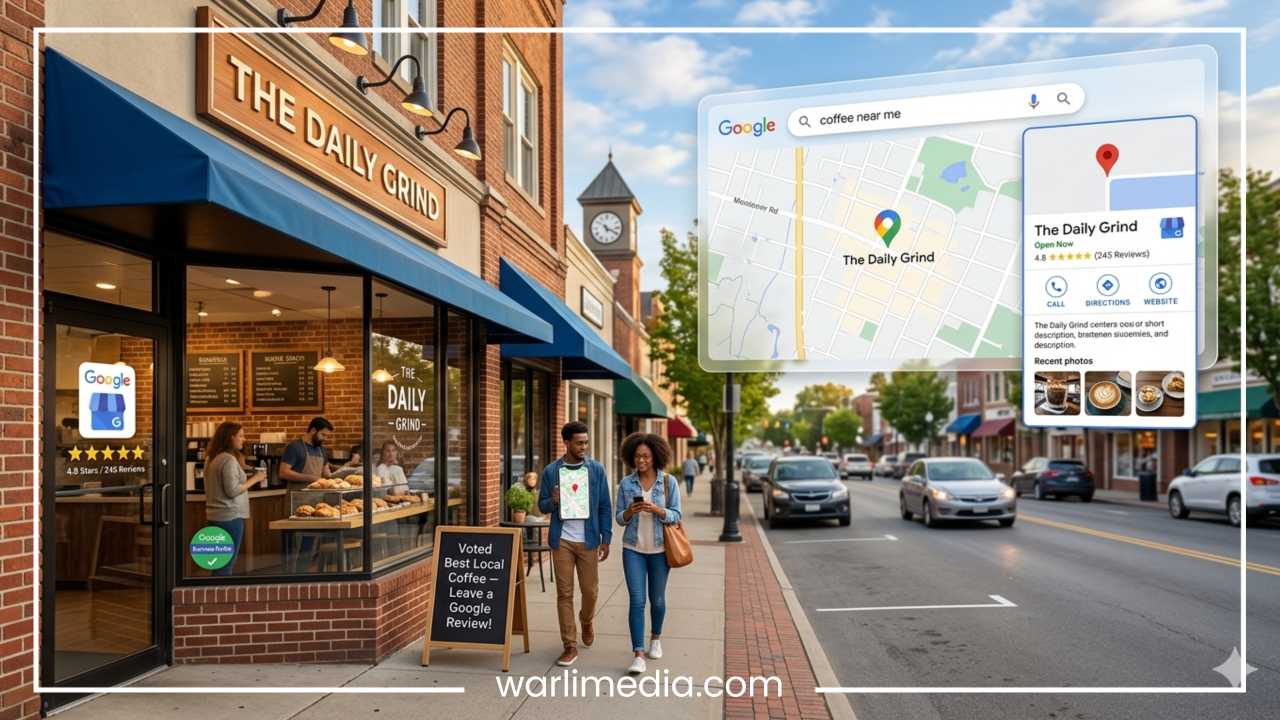

What Is Local SEO? A Complete Guide to Local Search Optimization
Every single day, millions of people turn to search engines to find immediate solutions to their everyday needs. Whether someone is walking down a busy street looking for a quick caffeine fix or sitting at a kitchen table dealing with a burst pipe, their first instinct is almost always to grab a smartphone and search. They type in phrases like “coffee shop near me” or “emergency plumber in Mumbai.” These searches are not just casual inquiries; they represent high-intent consumers looking to spend money with a local business in the immediate future.
Statistically, the impact of these searches is staggering. Studies show that roughly forty-six percent of all Google searches have local intent. This means nearly half of the massive volume of daily web traffic is directed toward finding physical brick-and-mortar storefronts, local service providers, or regional professionals. If a business does not appear in these hyper-localized search results, it essentially does not exist to a massive segment of its potential customer base.
Traditional Search Engine Optimization focuses on improving a website’s visibility on a global or national scale. However, for a local business, competing with massive national brands is neither practical nor profitable. This is where local search optimization becomes indispensable. By tailoring online visibility to specific geographic areas, businesses ensure they are front and center at the exact moment a nearby customer is ready to buy.
Read: Boost Your Business With a Blog
Understanding Local Search Engine Optimization
Local Search Engine Optimization, commonly referred to as Local SEO, is the strategic process of optimizing an organization’s online presence to attract more business from relevant local searches. These searches take place across various search engines, but they are predominantly focused on Google and its accompanying applications like Google Maps. The primary objective is to make sure that when a consumer searches for a product or service within a specific city, neighborhood, or radius, your business emerges as a top recommendation.
To understand how this operates in practice, it helps to look at the anatomy of a local search query. Consider a user who inputs a search phrase like “dentist in Mumbai,” “best restaurants near me,” or “car repair shop in Surat.” These queries contain explicit or implicit geographical markers. Google recognizes that the user is not looking for a general essay on dental health or a nationwide automotive franchise blog. Instead, the user wants a physical location they can visit or a service professional who can travel to their location.
When these queries are executed, search engines display a specialized set of results tailored to the user’s physical location or the location specified in the search bar. These results are prominently featured across standard search results pages and dedicated map applications. For a business, appearing at the top of these listings means capturing the attention of consumers who are already at the bottom of the sales funnel, dramatically increasing the likelihood of foot traffic, phone inquiries, and direct conversions.
Read: How to Submit Your Website to Search Engines
How Local SEO Works
Google utilizes a distinct, highly sophisticated algorithm to determine which businesses should be featured when a user performs a search with local intent. While traditional search algorithms focus heavily on textual content and global backlink profiles, the local search ecosystem relies on a specialized framework designed to deliver immediate, geographically accurate answers.
Google Local Pack
The most valuable real estate on a local search results page is the Google Local Pack, often referred to as the Map Pack. This is a prominent box that appears at the very top of Google’s search results, displaying a map alongside a curated list of three physical businesses relevant to the search query. The Local Pack provides users with immediate access to essential data, including the business name, star ratings, physical address, phone number, operational hours, and a direct link to directions or the company website. Because this feature bypasses traditional organic listings and sits at the top of the viewport, it receives a massive share of the total clicks for local queries.
Local Search Results
Directly beneath the Local Pack are the traditional organic local search results. These listings resemble standard search engine results but are heavily filtered based on geographic relevance. Website pages that have been optimized with local content, structured data, and regional keywords populate this section. It serves as an excellent opportunity for businesses to claim a second spot on the first page of results, capturing users who prefer to browse website content rather than clicking directly on a map listing.
Google Business Profile
The foundational pillar of the entire local search system is the Google Business Profile. This is a free, comprehensive listing provided by Google that serves as a core repository of information about a business. Google relies on the accuracy and depth of this profile to understand what a business offers, where it is located, and how it serves its community. A fully optimized profile includes accurate opening hours, a clear business name, specific service categories, customer reviews, high-resolution photographs, and a detailed list of services or products.
When a user executes a search, Google evaluates the available data and matches results based on three core pillars:
Relevance: How well a business profile or website matches the specific intent of the user’s search query.
Distance: The physical proximity of the business to the searcher, or to the geographical location specified in the query.
Prominence: How well-known or well-established the business is, calculated through reviews, inbound links, mentions across the web, and overall digital authority.
Read: 6 Proven Ways to Find Anyone’s Email Address
Why Local SEO Is Important for Businesses
Implementing a robust local optimization strategy provides transformative benefits for businesses operating within specific geographic territories. It acts as an equalizer, allowing independent operators to outshine larger corporations by capitalizing on their physical proximity to the target audience.
Increased Visibility
The most immediate benefit of local optimization is a substantial surge in targeted online visibility. Instead of casting a wide, expensive, and inefficient net across the entire internet, a business can focus its visibility precisely on the population most likely to visit their establishment. This ensures that marketing efforts are directed entirely toward a qualified audience that is actively looking for immediate, local solutions.
More Website Traffic
When a website ranks well for local keywords, it attracts a highly targeted stream of visitors. These are not casual web browsers looking for general information; they are localized users who have specific requirements. This type of high-intent traffic yields significantly higher conversion rates compared to global traffic, as the visitors already have a defined need and a preference for local proximity.
More Phone Calls and Store Visits
Local search optimization directly bridges the gap between the digital world and physical interactions. A well-optimized presence makes it incredibly simple for users to tap a button to call your office or click a link to generate driving directions on their mobile devices. This streamlined user experience translates directly into an increase in foot traffic, scheduled appointments, and immediate phone inquiries.
Builds Trust and Credibility
Consumer trust is the ultimate currency in digital commerce. Local listings heavily feature user-generated reviews and star ratings. When a business consistently maintains a complete, accurate profile filled with positive feedback and active responses from ownership, it establishes a high degree of credibility. Consumers feel significantly more comfortable engaging with a business that displays transparent customer feedback and accurate operational details.
Cost-Effective Marketing
Compared to traditional advertising channels like print media, billboards, or untargeted digital ads, local optimization offers an exceptionally high return on investment. Claiming a Google Business Profile and optimizing local website content costs very little, yet it places a business in front of consumers at the exact moment they are looking to buy. This inbound methodology eliminates the waste associated with disruptive, outbound advertising strategies.
This strategy is vital across a diverse array of industries, including:
Local Restaurants: Attracting hungry diners who are searching for specific cuisines nearby.
Real Estate Agents: Connecting with buyers and sellers looking for localized neighborhood expertise.
Medical Clinics: Helping patients find nearby specialized care, dental practices, or urgent care facilities.
Home Service Providers: Ensuring plumbers, electricians, and roofers are found by homeowners experiencing immediate household crises.
Difference Between SEO and Local SEO
While traditional SEO and Local SEO share the overarching goal of improving search engine visibility, their underlying strategies, target audiences, and optimization mechanisms differ significantly.
| SEO | Local SEO |
| Targets global, national, or international audiences without geographic limits. | Targets highly specific cities, neighborhoods, or regional radiuses. |
| Focuses heavily on website content, technical structure, and global rankings. | Focuses heavily on Google Maps visibility, Local Packs, and map directory rankings. |
| Utilizes broad, informational, or transactional keywords without geographic intent. | Utilizes location-specific modifiers and “near me” keyword phrases. |
| Prioritizes high-authority contextual backlinks from global web domains. | Prioritizes local citations, regional directory listings, and customer reviews. |
Understanding these distinctions helps clarify which businesses require a localized approach. A digital e-commerce store selling software globally needs traditional SEO to rank for broad keywords. Conversely, physical retail storefronts, service-area businesses like pest control or landscaping, and local professionals such as lawyers or accountants must prioritize local optimization to capture the specific regional markets where they physically operate.
Key Local SEO Ranking Factors
To successfully climb the local search rankings, it is essential to understand the core elements that Google’s algorithm analyzes to determine a business’s position.
Google Business Profile Optimization
Your Google Business Profile serves as the foundation of your local presence. Google prioritizes profiles that are completely filled out, verified, and regularly updated. This means choosing the exact primary and secondary business categories, providing an accurate description of offerings, uploading high-quality photos regularly, listing specific services, and utilizing update posts to share timely information with searchers.
NAP Consistency
NAP stands for Name, Address, and Phone number. Google crawls thousands of directories, websites, and social media platforms to cross-reference your business information. If your business is listed as “Main Street Auto” on your website, but appears as “Main St. Automotive” on a directory, or lists an outdated phone number on another platform, search engine algorithms become confused. Inconsistency signals a lack of reliability, which can negatively impact rankings. Total alignment across all digital assets is required.
Customer Reviews
The volume, frequency, and sentiment of customer reviews play a massive role in the local algorithm. A steady stream of authentic, positive reviews tells Google that your business is legitimate, active, and trusted by the community. Furthermore, the way a business responds to these reviews—both positive and negative—demonstrates active engagement and customer care, which further influences overall prominence scores.
Website Optimization
A business website must be technically sound and structured for local context. This involves creating dedicated landing pages for separate physical locations, weaving local keywords naturally into meta tags and headers, ensuring the site is fully responsive on mobile devices, and maintaining fast load speeds. Additionally, implementing local schema markup helps search engine crawlers accurately parse and index your location and operational data.
Local Backlinks
Backlinks remain a powerful ranking signal, but for local optimization, the geographic relevance of the link often outweighs the pure domain authority. Earning links from respected local institutions—such as regional news websites, local business associations, chambers of commerce, and community event pages—proves to Google that your business is deeply rooted and recognized within that specific geographic area.
User Engagement
Google monitors how users interact with your listings. Signals such as the number of users who click to call your business, request driving directions, visit your website from the Local Pack, or spend time reading your business updates all contribute to an assessment of user engagement. High engagement rates indicate that your listing is helpful, prompting Google to elevate your visibility in subsequent searches.
How to Optimize Your Google Business Profile
Optimizing your Google Business Profile is a step-by-step process that requires ongoing maintenance and careful attention to detail.
Claim and Verify Your Profile
The first step is to visit the official Google Business Profile platform and search for your business. If a listing already exists, you can claim ownership; if not, you must create a new one from scratch. Google will then require verification to prove you are the legitimate owner. This is typically completed via a phone call, text message, video verification, or a physical postcard sent to the business address.
Complete Business Information
Once verified, fill out every single available data field. Ensure your business name matches your real-world branding perfectly without adding unnecessary keywords. Select a precise primary category that defines your core business, and use secondary categories to capture additional services. Clearly state your physical address or outline your designated service areas, and input your exact operational hours, making sure to update them for holidays or seasonal shifts.
Add Photos and Videos
Visual content significantly boosts user interaction. Upload clear, high-resolution photographs of your storefront, the interior layout, your team members in action, and examples of completed work or products. This transparency builds immediate familiarity and comfort for potential customers before they ever step foot in your establishment.
Collect and Manage Reviews
Develop a proactive system for gathering customer feedback. Train your staff to invite happy customers to leave a review, send follow-up emails with direct review links, or place clear signs within your physical space. When reviews arrive, reply to them promptly and professionally. Thank those who leave positive remarks, and address negative feedback calmly, offering to resolve the issue offline to show prospects that you value customer satisfaction.
Publish Google Updates
Treat your profile like a localized social media channel by regularly publishing updates. Use the built-in posting features to share details about seasonal promotions, upcoming community events, or the launch of new products and services. This consistent activity shows both users and search algorithms that your business is operating dynamically.
Local SEO Keyword Research
Keyword research for local markets differs from global keyword research because it focuses heavily on intent and geographic modifiers rather than raw, massive search volumes.
For example, a broad keyword like “digital marketing agency” has high global volume but immense competition. A localized alternative like “digital marketing agency in Ahmedabad” targets a highly specific pool of local businesses ready to hire a regional partner.
There are three primary types of local keywords to target:
Location Keywords
These keywords explicitly include the name of a specific city, neighborhood, or region. Examples include terms like “boutique hotel in South Delhi” or “real estate agent in Bandra.” These phrases are highly effective because they target users who know exactly where they want to conduct business.
Near Me Keywords
Phrases containing “near me” or “closest to me” rely entirely on the user’s real-time GPS coordinates or implicit location settings. Examples include “salon near me” or “gas station closest to me.” While you cannot explicitly stuff the phrase “near me” into your website text naturally, optimizing your site for your actual physical city and ensuring your Google Business Profile is accurate allows Google to automatically serve your business for these queries.
Service and Location Keywords
These combine a specific offering with a geographic marker. For instance, “AC repair in Mumbai” or “injury lawyer in Bengaluru.” These are exceptionally high-value keywords because they combine an immediate service need with a clear location, catching consumers at the peak of their buying cycle.
To uncover these terms, businesses can utilize a variety of tools:
Google Keyword Planner: Excellent for identifying regional search volumes and competitive trends.
Google Search Suggestions: Typing a primary service into Google and observing the autocomplete suggestions provides direct insight into real user search behavior.
Google Trends: Helpful for understanding seasonal shifts in local search behavior over time.
Advanced SEO Platforms: Tools that allow users to filter keyword data down to specific cities or postal codes to discover hyper-local search volume.
Local SEO Strategies That Work
To build a sustainable presence that outpaces regional competitors, you must implement actionable, comprehensive strategies across your entire digital footprint.
Create Location-Based Website Pages
If your business operates in multiple cities or serves distinct neighborhoods, avoid forcing all that information onto a single homepage. Instead, build dedicated, unique landing pages for each location, such as your website domain followed by specific paths like “/dentist-mumbai” or “/plumber-pune.” Each page should feature unique content, localized testimonials, specific team bios, local contact numbers, and relevant geographic details.
Build Local Citations
Citations are mentions of your business name, address, and phone number on external websites and business directories. Focus on securing listings on major global platforms, prominent national directories, and highly specialized industry portals. The critical requirement is ensuring that the data matches your primary website details perfectly to build trust with search engine crawlers.
Earn Local Reviews
A high volume of stellar reviews acts as social proof and a powerful ranking signal. Implement automated email follow-ups, SMS requests shortly after a service completion, or print QR codes on receipts that link directly to your profile’s review section. The easier you make the process for the customer, the faster your review profile will grow.
Create Local Content
Establish your authority by writing content that addresses local topics, community interests, or regional challenges. For example, a home contractor might publish an article titled “Guide to home renovation in Bangalore,” or a hospitality business could create a guide on the “Best restaurants in Delhi.” This localized content signals to search engines that your website is highly relevant to the geographic area you serve.
Optimize for Voice Search
With the proliferation of mobile virtual assistants and smart speakers, voice searches are increasing rapidly. People speak differently than they type; they use conversational, full-sentence questions. Instead of typing “pharmacy open late,” a user might ask, “Where is the nearest pharmacy?” Structure your content to answer these natural, conversational questions directly, utilizing clear FAQ sections on your website.
Use Local Schema Markup
Schema markup is a form of structured data added to your website’s code that helps search engines understand the exact context of your information. By applying specific local business schema, you provide search engines with structured details about your physical address, operating hours, price ranges, and social media links, allowing them to index your site with greater accuracy.
Common Local SEO Mistakes to Avoid
Many businesses sabotage their local optimization efforts by falling into easily avoidable traps that trigger algorithm penalties or alienate potential customers.
Incorrect Business Information
Allowing outdated phone numbers, wrong addresses, or conflicting business names to persist across the internet creates a terrible user experience and destroys search engine trust. Make it a priority to perform regular audits of your digital presence to ensure absolute accuracy.
Keyword Stuffing
Attempting to manipulate search engines by awkwardly forcing keywords or city names into your content or business name ruins readability. A phrase like “Best dentist dentist dentist Mumbai” looks unprofessional to users and is quickly flagged and penalized by modern search engine algorithms that value natural language.
Fake Reviews
Purchasing artificial reviews or having employees post fabricated positive feedback is a dangerous practice. Search engines are highly adept at detecting unnatural review patterns, and getting caught can lead to severe penalties, public warning badges on your profile, or total removal from the search index.
Ignoring Reviews
Failing to respond to user feedback sends a message to both prospective customers and search algorithms that your business is unengaged. Leaving negative feedback unaddressed can severely damage your digital reputation, whereas a thoughtful, professional response can often salvage a customer relationship and demonstrate strong values to onlookers.
Duplicate Google Business Profiles
Creating multiple listings for a single physical location to capture more search visibility creates immediate confusion within Google’s database. This practice typically results in the suspension of all associated profiles, erasing your hard-earned visibility overnight.
Not Optimizing Mobile Experience
Because the vast majority of local searches are performed on smartphones while users are on the move, a website that loads slowly, displays poorly on small screens, or features difficult navigation will suffer from high bounce rates and diminished rankings.
Best Local SEO Tools
Managing a comprehensive local optimization strategy is significantly easier when you leverage specialized tools designed to track performance, automate listings, and analyze competition.
Free Tools
Google Business Profile: The absolute essential dashboard for managing your direct presence on Google Search and Maps.
Google Search Console: Excellent for monitoring how your website performs in organic results, tracking local keyword impressions, and identifying indexing issues.
Google Analytics: Crucial for tracking user behavior once they arrive on your site from local listings, measuring conversions, and understanding traffic sources.
Google Keyword Planner: A foundational tool for discovering localized search volumes and variations of core search terms.
Paid Tools
Semrush: Offers comprehensive localized keyword research, position tracking down to the city level, and deep competitor analysis tools.
Ahrefs: Exceptional for auditing local backlink profiles, discovering content opportunities, and monitoring organic search health.
BrightLocal: A specialized platform tailored for tracking local map rankings, auditing citations, and systematically managing customer reviews.
Moz Local: Focuses heavily on automated citation distribution, ensuring your business data is pushed accurately to major data aggregators and directories.
Local SEO for Different Types of Businesses
Different industries must emphasize unique aspects of local optimization to align with how their specific customers behave online.
Restaurants
For dining establishments, the visual and immediate components are vital. Prioritize high-quality food photography, keep an updated digital menu integrated directly into your business profile, and encourage customers to leave reviews detailing specific dishes to capture culinary-specific searches.
Healthcare Businesses
Medical practices, clinics, and individual practitioners must build deep trust. Maintain separate, verified profiles for individual doctors, secure patient reviews that comply with regional privacy regulations, and clearly outline accepted insurance providers and medical specialties.
Real Estate
Real estate professionals depend heavily on neighborhood expertise. Focus on creating highly localized content guides for specific neighborhoods, optimization of location landing pages, and capturing reviews that highlight your communication and market knowledge.
Home Services
Contractors, plumbers, and technicians operate as service-area businesses. It is essential to accurately define your operational radius or service zip codes within your profile, display high-quality before-and-after photos of your craftsmanship, and maintain rapid response times to customer inquiries.
Retail Stores
Physical shops need to bridge the gap between digital discovery and in-store foot traffic. Utilize local inventory features to showcase available products directly on your search profiles, provide clear parking or access information, and promote in-store events or exclusive local sales.
Future of Local SEO
The landscape of local search is continuously shifting as technology evolves and consumer habits adapt to new digital interfaces.
AI-Powered Search
Search engines are increasingly integrating advanced artificial intelligence models directly into their primary interfaces. Rather than simply returning a list of links, search engines are shifting toward generating comprehensive, synthesized answers that draw details instantly from business descriptions, websites, and user reviews to deliver highly specific recommendations.
Search Generative Experiences
The evolution of generative search experiences means that users can ask complex, multi-layered questions like, “Find an outdoor pet-friendly restaurant in south Delhi that serves vegetarian options and has good parking.” Algorithms will instantly parse deeply nested local data to construct a tailored response, making deep content optimization and accurate profile attributes more critical than ever.
Voice and Conversational Search
As voice-activated technology becomes integrated into vehicles, wearable tech, and smart homes, the volume of conversational queries will continue to grow. Businesses must ensure their digital content is written in a natural, conversational tone that addresses the contextual questions users ask when speaking naturally.
Hyper-Personalization
Search algorithms are becoming highly sophisticated at predicting intent based on a user’s past behaviors, immediate context, and real-time movements. This means local search results will become incredibly personalized, rewarding businesses that maintain high user engagement scores, flawless reputation metrics, and stellar user experiences across all devices.
Final Thoughts: Why Local SEO Matters
Local SEO is no longer an optional marketing luxury; it is an foundational requirement for any business that relies on attracting nearby customers. By systematically optimizing your Google Business Profile, ensuring flawless consistency of your business data, earning authentic customer reviews, and crafting high-quality localized website content, you position your brand exactly where your audience is looking.
The digital marketplace favors organizations that make themselves easy to find, trust, and contact. Investing in your local digital visibility sets up a powerful foundation for sustainable growth, reliable foot traffic, and long-term community presence. Start optimizing your local presence today to make it easier for customers to find your business.
Frequently Asked Questions
How do I optimize my Google Business Profile for multiple locations?
To optimize a Google Business Profile for multiple locations, you should manage all listings from a single Google Business Manager account. Avoid creating duplicate names; instead, keep the core business name consistent while utilizing the specific geographic address for each separate location. Create dedicated location pages on your primary website for each physical store, and link each individual Google Business Profile directly to its corresponding location landing page.
Why is my business not showing up on Google Maps search results?
If your business is not appearing on Google Maps, it is typically due to a lack of verification, proximity issues, or algorithmic penalties. First, ensure your Google Business Profile is fully verified and that your operational status is set to active. Next, check for NAP (Name, Address, Phone number) inconsistencies across the web, as conflicting data can cause Google to lose trust in your listing and lower its visibility.
How long does it take for Local SEO strategies to show results?
Generally, a well-implemented local search optimization strategy takes between three to six months to yield noticeable results. While claiming a Google Business Profile and correcting immediate NAP errors can lead to minor improvements within a few weeks, building authority through local backlinks, earning consistent customer reviews, and ranking in the highly competitive Google Local Pack requires sustained, long-term effort.
Can I do Local SEO for a business without a physical storefront?
Yes, service-area businesses that operate without a physical storefront can—and should—utilize local search optimization. When setting up your Google Business Profile, you can choose to hide your physical home or warehouse address and instead specify the exact geographic service areas (cities, counties, or zip codes) that your team covers.
What is the difference between local citations and directory listings?
A directory listing is a specific page on a business portal (like Yelp or the Chamber of Commerce) that profiles your company. A local citation is any online mention of your business Name, Address, and Phone number (NAP) across the internet, whether it appears in a structured directory, a local news article, a blog post, or a social media profile.
How do negative online reviews affect my local search rankings?
While a few negative reviews will not destroy your rankings, a low overall star rating or a sudden surge of negative feedback signals a poor user experience to Google, which can decrease your prominence score. More importantly, how you respond to negative reviews affects conversions; addressing complaints professionally shows prospective customers that your business is trustworthy and responsive.