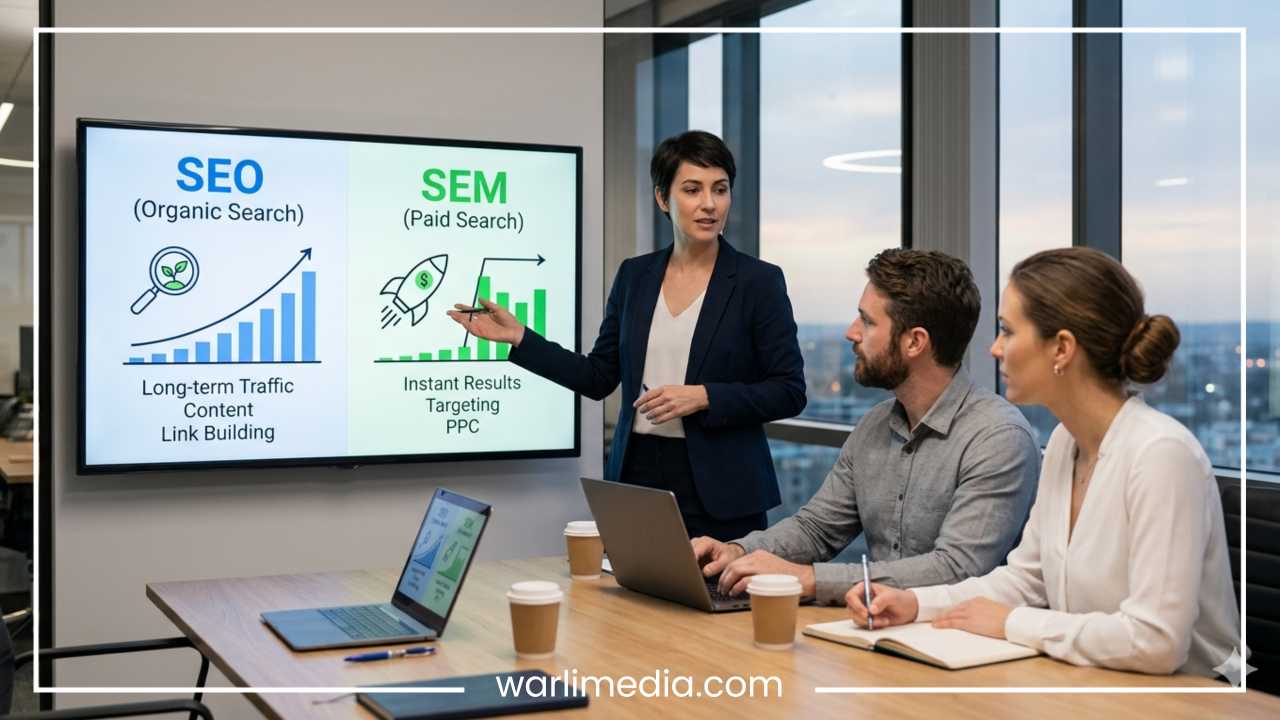

SEO vs. PPC: Which One Should You Choose First?
The digital landscape is a vast, competitive arena where visibility is the primary currency. For any business looking to establish an online presence, the question is rarely if they should market on search engines, but how. This brings us to the ultimate debate in digital marketing: Search Engine Optimization (SEO) versus Pay-Per-Click (PPC) advertising. Both strategies aim to place your brand in front of potential customers at the exact moment they are searching for solutions, yet they operate on fundamentally different mechanics, timelines, and cost structures.
SEO is the art and science of earning a spot in the organic search results through relevance and authority. PPC, on the other hand, is the process of buying that visibility through a bidding system, typically appearing at the very top or bottom of the search engine results page (SERP). Businesses often find themselves at a crossroads, struggling to decide where to allocate their limited marketing budget. Should you invest in the slow-burn, long-term dividends of SEO, or the immediate, high-octane results of PPC?
Read: The Ultimate Guide to Dofollow Backlinks: How to Earn Them Ethically
The purpose of this article is to deconstruct both strategies, compare their strengths and weaknesses, and provide a comprehensive framework to help you decide which one to prioritize based on your specific business goals, budget, and industry landscape. By the end of this guide, you will have a clear roadmap for your search engine strategy.
Understanding SEO
Search Engine Optimization (SEO) is the practice of increasing the quantity and quality of traffic to your website through organic search engine results. Unlike paid advertising, you cannot pay a search engine like Google to rank your page higher in organic results; instead, you must prove that your content is the most relevant, authoritative, and user-friendly answer to a searcher’s query.
Key Components of SEO
To understand how SEO works, it is helpful to break it down into three primary pillars:
1. On-Page SEO
This involves optimizing individual web pages to rank higher. It includes keyword research—identifying the terms your audience uses—and incorporating those terms into high-quality content, title tags, meta descriptions, and headers. On-page SEO is about telling search engines exactly what your page is about.
2. Off-Page SEO
This refers to actions taken outside of your own website to impact your rankings. The most critical element here is backlinking. When reputable websites link to your content, it acts as a “vote of confidence,” signaling to search engines that your site is a trusted authority.
3. Technical SEO
This focuses on the backend of your website. Search engines prioritize sites that load quickly, are mobile-responsive, and have a clear site architecture. Technical SEO ensures that search engine “crawlers” can easily index your site and that users have a seamless experience.
Read: What is Google Tag Manager
The Pros of SEO
The primary advantage of SEO is long-term sustainability. Once you achieve a high ranking for a valuable keyword, you can maintain that position with relatively low ongoing maintenance, leading to a consistent stream of traffic without a direct cost-per-click.
Furthermore, SEO builds credibility and trust. Many users instinctively skip over the “Ad” section and head straight for organic results, perceiving them as more legitimate and less biased. Over time, SEO is arguably the most cost-effective digital marketing strategy because the cost of acquisition typically drops as your organic authority grows.
The Cons of SEO
The most significant drawback is the time to see results. It can take months, or even a year for a new website to rank for competitive keywords. SEO is a marathon, not a sprint. Additionally, it requires ongoing optimization; you cannot “set it and forget it” because competitors are always trying to outrank you. Finally, your success is beholden to algorithm changes. A single update from Google can shift rankings overnight, requiring quick adaptation.
Read: Understanding SEO Ranking Issues vs. Algorithm Changes
Understanding PPC
Pay-Per-Click (PPC) is a model of internet marketing where advertisers pay a fee each time one of their ads is clicked. Essentially, it is a way of buying visits to your site, rather than attempting to “earn” those visits organically. The most popular platform for this is Google Ads, followed by Bing Ads and various social media advertising platforms.
Key Components of PPC
PPC is built on a foundation of precision and speed. Its main components include:
1. Ad Platforms and Bidding
In a PPC campaign, you participate in an auction. You bid a certain amount—your “maximum CPC” (Cost Per Click)—to show your ad for specific keywords. However, the highest bidder doesn’t always win; search engines also consider the “Quality Score,” which measures the relevance of your ad and landing page.
2. Keyword Targeting and Match Types
PPC allows for granular control over who sees your ads. You can use “Exact Match” to show ads only to people searching for a specific phrase, or “Broad Match” to reach a wider audience. You can also use “Negative Keywords” to prevent your ads from showing up for irrelevant searches, saving you money.
3. Ad Copy and Landing Pages
Success in PPC depends heavily on the “hook.” Your ad copy must be compelling enough to earn a click, and your landing page must be optimized to convert that visitor into a lead or sale immediately.
The Pros of PPC
The most obvious benefit of PPC is immediate visibility. You can launch a campaign today and be at the top of page one within hours. This makes it incredibly effective for highly targeted traffic; you can filter your audience by geography, demographics, time of day, and even the type of device they are using. Additionally, PPC offers flexible budget control. You can set a daily limit of $5 or $5,000, and you can pause or stop your campaign at any moment.
The Cons of PPC
PPC can become costly very quickly, especially in competitive industries like legal, insurance, or enterprise software, where a single click can cost upwards of $50. Another major disadvantage is that traffic stops the moment you stop paying. Unlike SEO, which has a residual effect, PPC offers no momentum; if your budget runs out, your visibility disappears. It also requires a high level of expertise; without proper management, it is easy to waste a significant amount of money on “junk” clicks that don’t convert.
Key Differences Between SEO and PPC
Choosing between SEO and PPC requires a deep understanding of how they differ in execution and impact. While both live within the search engine ecosystem, their DNA is entirely different.
Time to Results
This is the most stark contrast. PPC is like a light switch; you turn it on, and the traffic flows. This makes it ideal for product launches, seasonal promotions, or businesses that need revenue now. SEO is like planting a fruit tree. You have to prepare the soil, plant the seed, and water it for a long time before you see any fruit. However, once that tree matures, it provides fruit year after year.
Cost Structure
The cost of PPC is linear and immediate. If you want 1,000 visitors and your CPC is $1, you must pay $1,000. If you want 2,000 visitors, you pay $2,000. SEO has a higher upfront cost in terms of content creation and technical work, but the “per-click” cost eventually trends toward zero. In the long run, organic traffic is “free,” though it is more accurate to say it is “pre-paid” through your investment in quality content and site maintenance.
Control and Flexibility
PPC offers an unparalleled level of control. If you notice a certain keyword isn’t converting, you can stop bidding on it instantly. If you want to test two different headlines to see which performs better, you can run an A/B test and get statistically significant data in a few days. SEO is much less predictable. You can optimize for a keyword, but you cannot force Google to rank you for it. Furthermore, changes to SEO take time to be indexed and reflected in the rankings, making it a less agile strategy for testing.
Credibility and Trust
Data consistently shows that savvy internet users trust organic results more than paid advertisements. There is an inherent psychological “seal of approval” that comes with an organic ranking; users feel that Google has “vetted” the site and found it to be the best resource. While PPC ads are effective, they are always marked with an “Ad” label, which can lead to “ad blindness” among certain demographics.
Data and Analytics
PPC provides a wealth of immediate data. You can see exactly which keywords led to a sale and which led to a “bounce.” This granular tracking allows for precise ROI calculations. SEO data is more opaque. With the rise of “not provided” keyword data in Google Analytics, it is harder to attribute specific organic sales to specific keywords. SEO analytics focus more on broader trends like total organic sessions, backlink growth, and average position.
Factors to Consider When Choosing First
Before deciding which path to take, you must perform an honest audit of your current business situation. There is no one-size-fits-all answer; the “right” choice depends on several variables.
Business Goals
What are you trying to achieve in the next 90 days? If your primary goal is brand awareness or establishing yourself as a thought leader in a niche, SEO is the superior choice. If your goal is direct response—selling a specific product, generating sign-ups for a webinar, or capturing leads for a service—PPC is often the better starting point because of its conversion-centric nature.
Budget Constraints
PPC requires a constant flow of cash. If you have a small, one-time marketing budget, spending it all on PPC might get you a few sales, but once the money is gone, you are back at square one. In this case, investing that money into evergreen content (SEO) might be wiser as it creates a lasting asset. Conversely, if you have a healthy monthly budget and need to prove the viability of a product quickly, PPC is the most efficient use of funds.
Competition Level
In some industries, the organic search results are dominated by giants like Amazon, Wikipedia, or major media outlets. Trying to outrank them as a newcomer could take years. In high-competition niches, PPC allows you to “jump the line” and appear alongside the industry leaders immediately. However, if your industry is less digital-savvy, a dedicated SEO push could help you dominate the organic rankings relatively quickly.
Timeline
How much “runway” does your business have? If you are a startup that needs to show growth to investors by next month, you cannot afford to wait for SEO. If you are an established business looking to reduce your customer acquisition costs over the next two years, SEO should be your priority.
Existing Website and Content
If you already have a website with a decent amount of content and some backlink history, you might be closer to SEO success than you think. A few technical tweaks and keyword updates could yield results quickly. However, if you have a brand-new domain with zero authority, you are starting from scratch, making PPC a necessary bridge to get traffic while your SEO matures.
When to Choose SEO First
Choosing SEO as your primary focus is a commitment to building a sustainable, high-authority brand. It is the best route for businesses that want to own their audience rather than “renting” it from search engines.
Ideal Scenarios for SEO-First
Informational/Educational Sites: if your business model relies on blogs, news, or providing information (like a health resource or a DIY guide), SEO is your lifeblood.
Low Budget, High Time: if you have more time than money, you can write content, network for backlinks, and optimize your site yourself.
Niche Markets: In specialized niches with low keyword competition, you can often reach the first page of Google within a few months of consistent effort.
Strategies for Maximizing Early SEO
To see results faster, focus on Long-Tail Keywords. Instead of trying to rank for “shoes” (highly competitive), try to rank for “best waterproof hiking boots for wide feet.” These terms have lower search volume but much higher intent and lower competition. Additionally, focus on Technical Health first. Ensuring your site is lightning-fast and mobile-friendly provides a solid foundation that makes all your future content perform better.
When to Choose PPC First
PPC is the ultimate tool for market validation and rapid scaling. It is the “gasoline” you pour on a fire to make it roar instantly.
Ideal Scenarios for PPC-First
New Product Launches: When you have a new invention or service that no one knows about yet, PPC allows you to find your audience immediately.
E-commerce and Seasonal Sales: If you are running a Black Friday sale or selling holiday-specific items, you don’t have time for SEO to kick in.
High-Ticket Items: If a single sale is worth thousands of dollars, paying $20 for a click is a very reasonable investment.
Strategies for Maximizing PPC ROI
Don’t just send traffic to your homepage. Create Dedicated Landing Pages that match the intent of the keyword perfectly. If someone searches for “emergency plumber,” the landing page should have a giant “Call Now” button and a list of emergency services. Also, use Remarketing. Most people don’t buy on the first visit. PPC allows you to show ads specifically to people who have already visited your site, significantly increasing the likelihood of a conversion.
Combining SEO and PPC: The Power of Synergy
While this article asks which you should choose first, the most successful digital marketing strategies eventually use both. In fact, SEO and PPC work better together than they do in isolation.
One of the greatest benefits of running PPC alongside SEO is Data Sharing. PPC gives you instant feedback on which keywords have the highest conversion rates. You can then take those winning keywords and prioritize them in your SEO content strategy. This eliminates the guesswork of SEO.
Furthermore, having both a paid ad and an organic listing on the same SERP creates a “Double Presence” effect. It increases your brand’s perceived authority and significantly boosts the total click-through rate (CTR) for your site. If a user sees your name twice, they are much more likely to believe you are a leader in that space.
Finally, PPC can fill the gaps. If your SEO is performing well for some keywords but lagging for others, you can use PPC to maintain visibility for those “weak” spots while you work on improving their organic rankings.
Case Studies and Examples
Case Study 1: The Local Service Provider (SEO First)
A local landscaping company in a mid-sized city had a limited budget of $500 per month. They initially considered PPC, but realized the cost-per-click for “landscaping near me” was over $10. Their $500 would have vanished in a few days with only 50 clicks. Instead, they invested in SEO. They created local landing pages for every suburb they served and started a blog about “Best grass types for [City Name].” Within six months, they ranked in the top three for several local terms. A year later, they were receiving 300+ organic visitors a month for “free,” which translated into a steady stream of leads that far exceeded what a $500 PPC budget could have ever provided.
Case Study 2: The SaaS Startup (PPC First)
A new software startup created an AI-driven project management tool. They needed users immediately to test their features and gather feedback for their Series A funding round. SEO would have taken too long. They launched a targeted PPC campaign on Google and LinkedIn, focusing on keywords like “AI task automation.” By spending $5,000 in the first month, they acquired 200 trial users. This immediate data allowed them to improve the product and show investors real growth metrics. Once they secured funding, they used their PPC data to hire a content team to begin their long-term SEO strategy.
Final Thoughts: The Decision Matrix
Deciding whether to choose SEO or PPC first boils down to a balance of Resource vs. Urgency.
If you have a short-term need for revenue, a competitive market, or a new product, start with PPC. It provides the control and speed necessary to get a business off the ground. Use it to test your messaging and find out what your customers actually want.
If you have a limited ongoing budget, a long-term vision, or a content-heavy business model, start with SEO. It is the only way to build an asset that grows in value over time and eventually provides “free” leads.
The Hybrid Framework
Phase 1: Launch a small PPC campaign to identify high-converting keywords and generate immediate cash flow.
Phase 2: Use that keyword data to build your SEO foundation (Technical SEO and core content).
Phase 3: Gradually scale back PPC on keywords where you achieve organic dominance, and reallocate those funds to test new markets or bid on even more competitive terms.
In the end, search engine marketing is not a zero-sum game. The most successful businesses are those that use PPC to win the battle of today, while using SEO to win the war of tomorrow. Monitor your results, stay adaptable to algorithm changes, and always let the data guide your next move.