
Is SEO Dead? The Truth About Search
Every few years, a familiar eulogy echoes through the digital marketing world: “SEO is dead.” It usually follows a major Google algorithm update or the emergence of a disruptive new technology. Today, however, the whispers have turned into a roar. With the meteoric rise of generative AI, the proliferation of zero-click searches, and a fundamental shift in how younger generations find information, the panic feels more justified than ever.
If you define SEO as the simple act of “ranking a blue link on page one of Google for a specific keyword,” then yes, that version of SEO is dying. But if you define SEO as the art and science of ensuring your brand is found when and where people are looking for answers, then SEO is more alive—and more complex—than it has ever been.
Read: Avoiding Link Building Penalties: Strategies for White-Hat SEO
The landscape is no longer a monolith. We have moved from the era of “Search Engine Optimization” into the era of “Search Everywhere Optimization.”
Why Everyone Thinks SEO Is Dead
The “SEO is dead” narrative isn’t just clickbait; it is born from visible shifts in the digital ecosystem. Several factors have converged to create a sense of impending doom for traditional publishers and SEO professionals.
The Rise of AI Answers
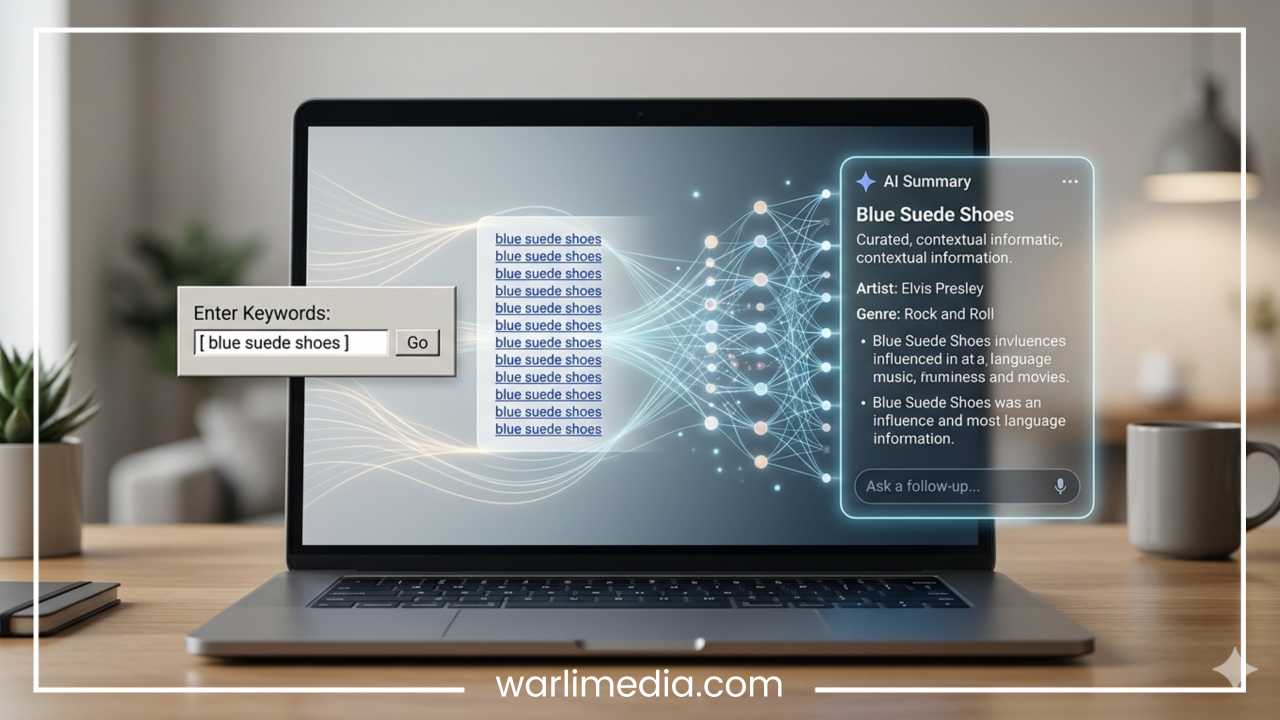
For two decades, search engines acted as librarians, pointing you toward books (websites) where you could find information. Now, search engines are becoming professors. Tools like Google’s AI Overviews and chat-based interfaces like ChatGPT or Perplexity provide the answer directly on the results page. When a user asks, “How do I remove a red wine stain?” and receives a perfect four-step AI summary, they have no reason to click through to a cleaning blog.
Read: SEO 101: Learn SEO Basics
Declining Organic Traffic
Many long-standing websites have reported significant drops in organic traffic despite maintaining their rankings. This “traffic erosion” is often the result of the SERP (Search Engine Results Page) becoming increasingly crowded with ads, shopping widgets, and AI summaries.
Zero-Click Searches
Data suggests that a staggering percentage of searches now end without a single click to a third-party website. Google is increasingly keeping users within its own ecosystem. This has led many to wonder: if the search engine provides the answer itself, what is the incentive for creators to provide the data?
What SEO Used to Be: A Quick Context
To understand where we are going, we must look at where we started. In the early days, SEO was a game of technical manipulation.
The Keyword Stuffing Era: There was a time when you could rank for “best coffee beans” simply by writing the phrase five hundred times in white text on a white background. It was a battle of density.
Backlink Obsession: For years, SEO was almost entirely a numbers game. The person with the most links—regardless of where they came from—usually won. This led to a massive industry of link farms and “black hat” tactics.
The Guaranteed Funnel: Ranking #1 was a virtual guarantee of wealth. If you held the top spot for a high-volume keyword, the traffic was consistent, predictable, and lucrative.
Google as the Sole Gatekeeper: Ten years ago, “search” was synonymous with “Google.” If you weren’t on Google, you didn’t exist.
Today, that linear path—keyword research, content creation, backlink building, traffic—has been shattered. The landscape is fragmented, and the “gatekeeper” has plenty of competition.
Read: The Ultimate Guide to Backlink Analysis for SEO
The Rise of AI Search & Generative Engines
The biggest disruptor in the history of search is Generative AI. This technology has shifted the paradigm from “searching” to “answering.”
Google’s AI Overviews
Google has integrated generative AI directly into its search results. These overviews synthesize information from across the web to provide a cohesive answer. For the user, it’s a win. For the publisher, it’s a challenge. Your content might be used to train the AI or form the basis of the answer, but the user may never see your brand name.
Chat-Based Search
Platforms like ChatGPT, Claude, and Perplexity are changing user expectations. Users are moving away from fragmented keyword queries (e.g., “best hiking boots 2024”) and toward conversational, multi-step queries (e.g., “I’m hiking the Appalachian Trail in July; what boots should I get if I have wide feet and a $200 budget?”).
Introducing Answer Engine Optimization (AEO)
As these platforms grow, a new discipline is emerging: Answer Engine Optimization. AEO isn’t about ranking #1; it’s about being the source of truth that the AI cites. If a LLM (Large Language Model) summarizes your article as the definitive guide on a topic, you gain a new type of authority that transcends a traditional click.
The Zero-Click Search Problem
The “Zero-Click” phenomenon is perhaps the most frustrating hurdle for modern marketers. When Google provides a featured snippet, a flight tracker, a currency converter, or a weather report directly on the page, the user’s journey ends there.
The Impact on Publishers
Informational sites—those that answer “what is” or “how to” questions—are feeling the brunt of this. If your business model relies solely on ad impressions from high-volume, low-intent informational traffic, your “SEO” is indeed in trouble.
Visibility vs. Clicks
However, there is a silver lining. Even in a zero-click environment, brand impressions matter. If a user sees your company name cited as the source in an AI Overview, that builds “top-of-mind” awareness. When that user is eventually ready to make a purchase or seek professional services, they are more likely to navigate directly to your site. We are moving from a “click-first” economy to a “trust-first” economy.
Search Is No Longer Just Google
The most significant change in recent years is the decentralization of search. Google is no longer the starting point for every journey.
YouTube: As the world’s second-largest search engine, YouTube is where people go to “see” how things work. For DIY, educational, and entertainment queries, video is the dominant format.
TikTok: For Gen Z and increasingly Millennials, TikTok is a primary search engine. Whether it’s looking for restaurant recommendations, fashion trends, or travel tips, users prefer short-form video and “social proof” over a list of blog posts.
Amazon: If someone wants to buy a product, they often bypass Google entirely and go straight to Amazon. Product SEO is its own ecosystem with its own rules.
Reddit & Quora: People are increasingly appending the word “Reddit” to their Google searches. Why? Because they want human experiences and unfiltered opinions, not SEO-optimized marketing copy.
LinkedIn: For B2B professionals, LinkedIn has become a powerful discovery engine for thought leadership and industry-specific insights.
Search Everywhere Optimization means appearing in all these places. A modern SEO strategy must include a video strategy, a social discovery strategy, and a community presence.
How User Behavior Has Changed
The way humans interact with technology has evolved. We are more impatient, more conversational, and more visual.
Conversational Queries
The rise of voice search (Siri, Alexa) and AI chatbots has made search queries longer and more natural. SEO is no longer about matching “cheap car insurance”; it’s about answering “What is the cheapest car insurance for a 22-year-old with one speeding ticket in Ohio?”
Trust in Creators over Corporations
Users are increasingly skeptical of “faceless” websites. They want to hear from experts, enthusiasts, and real people. This shift has given rise to the “influencer SEO” or “creator SEO” movement, where the identity of the author is just as important as the content itself.
Mobile and Multimedia Preference
If a page takes three seconds to load on mobile, the user is gone. If the page is a wall of text without a video or summary, the user is likely to bounce. The demand for “snackable” and “scannable” content is at an all-time high.
What Still Works in SEO: The Core Fundamentals
Despite the chaos, the bedrock of SEO remains remarkably stable. Google’s goal hasn’t changed: they want to provide the most relevant, helpful answer to the user’s query.
High-Quality, Original Content
AI can summarize existing information, but it cannot (yet) conduct an original experiment, interview a world-class expert, or provide a unique first-hand account of an event. Originality is the ultimate defense against AI commoditization.
Search Intent Matching
Understanding why someone is searching is more important than what they are typing. Does the user want to buy, to learn, or to find a specific website? If your content doesn’t match the intent, it will never rank, regardless of your technical setup.
Technical SEO
Site speed, mobile-friendliness, secure connections (HTTPS), and proper structured data (Schema) are the “ante” to get into the game. Without a solid technical foundation, search engines cannot crawl or understand your site.
Topical Authority
Google prefers to rank sites that are experts in a specific niche. Rather than writing about everything, winning sites focus on “topic clusters.” By covering a single subject from every possible angle, you prove to search engines that you are an authority worth citing.
What No Longer Works (The Cleanup Phase)
The “death” of SEO is actually just the death of bad habits. Several tactics that used to be effective are now actively harmful.
Thin Affiliate Content: The “top 10 best [products]” articles that just rehash Amazon reviews are being decimated. If you don’t have hands-on experience with the product, Google (and users) don’t want you.
Mass AI-Generated Spam: Using AI to churn out 1,000 mediocre articles a day is a recipe for a site-wide penalty. AI is a tool for drafting, not a replacement for thinking.
Exact-Match Keyword Obsession: Search engines are now smart enough to understand synonyms and context. Over-optimizing for a specific phrase makes your writing sound robotic and hurts the user experience.
Clickbait Without Value: The “curiosity gap” only works if the content delivers. High bounce rates tell search engines that your page didn’t satisfy the user, leading to a quick drop in rankings.
The Rise of E-E-A-T and Brand Authority
Google’s Quality Rater Guidelines emphasize four letters: E-E-A-T (Experience, Expertise, Authoritativeness, and Trustworthiness).
Experience is the New Frontier
This is the most recent addition to the acronym. Google wants to see that the author has actually done what they are writing about. This is why “day in the life” content, case studies, and original photography are so powerful. AI doesn’t have “experience.” Humans do.
The Power of Personal Branding
An article written by “Admin” or “Staff” carries much less weight than an article written by a recognized industry expert with a verified LinkedIn profile and a history of contributing to reputable sites. In the future, SEO will be as much about PR and brand building as it is about keywords.
Content Strategy: From Articles to Ecosystems
To survive in this new era, we must stop thinking in terms of “blog posts” and start thinking in terms of content ecosystems.
The “Create Once, Distribute Everywhere” Model
A single piece of long-form research should be the “trunk” of your content tree. From that trunk, you can grow:
An in-depth article (for Google)
A series of short-form videos (for TikTok/Reels)
A detailed video essay (for YouTube)
A summary thread (for X/Twitter)
An infographic (for Pinterest/LinkedIn)
This ensures that regardless of which platform your audience uses to search, they encounter your brand.
Multimedia Integration
Content is no longer just text. Integrating audio clips, video embeds, and interactive calculators into your articles makes them “sticky.” The longer a user stays on your page and interacts with your brand, the more value you provide, which signals quality to search engines.
SEO + Social + AI = The New Growth Engine
The modern marketer doesn’t choose between SEO and Social Media; they use them as a unified engine.
SEO brings Intent: Search captures people who are actively looking for a solution.
Social brings Discovery: Platforms like Instagram and TikTok introduce your brand to people who didn’t know they needed you yet.
AI brings Amplification: AI tools allow you to scale your production, personalize your messaging, and analyze data to see what’s working.
When these three work together, you create a “flywheel” effect. A viral video leads to more branded searches on Google, which boosts your authority, which leads to more traffic, which you can then use to grow your social following.
Who Is Winning? (The New Hierarchy)
The Winners:
Niche Experts: People who go deep on a specific, narrow topic.
Strong Brands: Companies with “direct-to-site” traffic that don’t rely solely on Google.
Community Leaders: Those who own their audience via newsletters, forums, or private groups.
SaaS Companies: Brands that offer a utility or tool that people search for by name.
The Losers:
Generic Lifestyle Blogs: Sites that write about everything and nothing.
Content Farms: Sites that prioritize quantity over quality.
Arbitrage Sites: Sites that exist only to capture search traffic and redirect it elsewhere for a fee without adding value.
The Future of SEO (The Next 3–5 Years)
Looking ahead, we can expect several major shifts:
AI Agents
We will soon move from “AI Search” to “AI Agents.” These agents will browse the web on behalf of the user, filtering out the noise and presenting only the most relevant options. SEO will involve optimizing for these agents—ensuring your data is structured in a way that an AI can easily digest and recommend.
Hyper-Personalization
Search results will become increasingly tailored to the individual. Two people searching for “best workout plan” will see completely different results based on their past behavior, fitness level, and location.
The Rise of “Invisible SEO”
A large portion of SEO will happen “under the hood.” It will be about being mentioned in the training data of LLMs, being discussed in private Discord servers, and being the brand that people ask for by name in a voice query.
Final Verdict: Is SEO Dead?
SEO is not dead. It is undergoing a metamorphosis.
The era of “tricking” a search engine into giving you traffic is over. The era of “being the most helpful, authoritative, and present brand in your space” is just beginning.
If you are waiting for things to go back to the way they were, you will be left behind. But if you embrace the shift—if you prioritize E-E-A-T, diversify your platforms, and focus on providing genuine value—you will find that there is more opportunity than ever.
SEO is no longer about ranking pages; it’s about owning attention across the internet. As long as people are curious and looking for answers, there will be a need for optimization. The search engines might change, the devices might change, and the formats might change, but the fundamental human desire for information remains constant.
Stay curious, stay adaptable, and stop worrying about the “death” of SEO. Instead, start building a brand that is worth finding.
Summary Checklist: How to Adapt
Focus on E-E-A-T: Put your experts front and center.
Optimize for Intent, Not Just Keywords: Answer the “why.”
Go Multi-Platform: Don’t let Google be your only source of traffic.
Embrace Video: If you aren’t on YouTube or TikTok, you’re missing half the search market.
Prioritize User Experience: Make your site fast, clean, and helpful.
Be “AI-Ready”: Use structured data so AI models can understand your content.
Build a Brand: Aim for more direct traffic and less reliance on the algorithm.