
The Ultimate Guide to Backlinks: What They Are and Why They Matter for SEO
Imagine launching a beautiful, modern website. You have spent weeks crafting the perfect copy, optimizing your page load speeds, and designing a flawless user experience. Yet, weeks go by, and your traffic numbers remain flat. Your site sits on page five of the Google search results, practically invisible to the world.
This is the frustrating reality for millions of website owners. In the hyper-competitive landscape of search engine optimization (SEO), great content is no longer enough to guarantee visibility. Search engines like Google face the monumental task of organizing billions of web pages and deciding which ones deserve the coveted top spots. To do this efficiently, they rely heavily on third-party validation.
This is where backlinks come into play. In the digital ecosystem, backlinks serve as the ultimate currency of trust and authority. Without them, even the most comprehensive, well-written article can struggle to gain traction against established competitors. Understanding what backlinks are, how they function, and how to acquire them ethically is the defining factor between a website that languishes in obscurity and one that dominates the search engine results pages (SERPs).
In this comprehensive guide, you will learn everything you need to know about backlinks. We will break down the core definitions, explore the underlying mechanics of how search engines evaluate these links, identify the different types of backlinks you can acquire, and outline actionable, ethical strategies to build a robust link profile that drives sustainable organic traffic.
Read: Social Media and Your Ecommerce Business
What is a Backlink?
To understand search engine optimization, you must first master the fundamental concept of the backlink. At its simplest, a backlink is created when one website links to another website. If Website A publishes an article and includes a hyperlink that directs readers to an article on Website B, Website B has just received a backlink from Website A.
Backlinks are known by several different names in the digital marketing industry, including “inbound links,” “incoming links,” or “external links.” It is important to distinguish these from internal links. Internal links connect different pages within the very same website, helping users navigate your platform and distributing internal authority. External links, or backlinks, represent a bridge built between two completely independent web entities.
To better grasp this concept, consider a few real-world analogies:
Votes of Confidence: Think of the internet as a massive, ongoing election. Every time a website links to you, they are casting a digital vote in your favor, telling search engines that your content is valuable, accurate, and worthy of attention.
Peer Recommendations: Imagine you are moving to a new city and looking for a reliable mechanic. If five independent locals all recommend the exact same repair shop, you will naturally trust that shop before you ever step foot inside. A backlink is a digital recommendation.
Academic Citations: In scientific and academic publishing, researchers write papers and cite previous studies to back up their claims. The more a specific research paper is cited by other scientists, the more authoritative and groundbreaking that paper is considered within the scientific community. Backlinks function exactly like these academic citations, but for the World Wide Web.
When a reputable website links to you, they are effectively putting their own reputation on the line to vouch for your credibility. This act of digital cross-referencing is the foundational architecture upon which the modern web is built.
Read: HTML Editors Vs. Web Developers
Why Backlinks Matter in SEO
When search engines crawl the web, they do not just look at the words on your page; they look at how the rest of the web interacts with your page. Backlinks are critical because they form the backbone of search engine ranking algorithms, acting as primary signals for both authority and trust.
To understand why backlinks hold such immense power, we must look back at the origins of modern search. Before Google, early search engines ranked web pages primarily based on the frequency of keywords on a page. This led to immense manipulation, as webmasters stuffed pages with hidden text to trick the engines. Google revolutionized the industry by introducing PageRank, an algorithm developed by Larry Page and Sergey Brin. PageRank assumed that the importance of a website could be judged by the number of other sites linking to it.
While Google’s algorithm has become infinitely more sophisticated over the decades, the core reliance on links remains intact. When a search engine discovers a link pointing to your site, it interprets that link as an editorial endorsement. If hundreds of high-quality websites endorse your content, search engines deduce that your site must contain high-quality information, leading to a significant boost in your organic visibility.
This process introduces the concept of “link equity,” which is often colloquially referred to in the SEO world as “link juice.” Think of link equity as a measurable fluid of authority. Every website possesses a certain amount of authority based on its age, reputation, and its own backlink profile. When that site links to you, a portion of its authority flows through the hyperlink and pours into your website. This transferred equity raises your site’s perceived power, making it easier for all your individual pages to rank for competitive keywords.
However, modern ranking systems are incredibly discerning. The relationship between Google and backlinks has shifted from a pure numbers game to a sophisticated evaluation of quality over quantity. In the early days of SEO, a website could achieve the number one spot simply by generating thousands of automated, low-quality links from spammy forums or directories.
Today, that approach will result in severe algorithmic or manual penalties. A single backlink from a highly respected, globally recognized publication like The New York Times or an industry-leading resource like Harvard Business Review can carry more weight and drive more ranking power than ten thousand low-quality links from obscure, irrelevant blogs. Search engines prioritize the integrity of the linking site, ensuring that authority cannot be easily manufactured or bought.
Read: Understanding the Role of the Association in Your Provision of Merchandise
Types of Backlinks
Not all backlinks are created equal. When building a backlink profile, you will encounter several different types of hyperlinks, each distinguished by specific HTML attributes and editorial contexts. Search engines treat these types differently, and understanding their nuances is vital for execution.
Dofollow Backlinks
A “dofollow” link is a standard hyperlink that does not contain any restrictive attributes. By default, every link created on the internet is a dofollow link unless specified otherwise. These are the golden geese of SEO. When a search engine crawler encounters a dofollow link, it actively follows the path to the target URL and passes link equity from the source site to the destination site. Winning dofollow links from authoritative websites is the primary objective of any serious link-building campaign.
Nofollow Backlinks
A “nofollow” link contains a specific HTML attribute: rel="nofollow". This tag explicitly instructs search engine bots not to pass link equity or authority to the destination page. Google introduced this attribute to combat comment spam and manipulative link schemes.
While nofollow links do not directly boost your search rankings through link equity, they are far from worthless. They still drive direct referral traffic from users who click the link, introduce your brand to new audiences, and contribute to a natural, diversified link profile. A completely natural link profile will always contain a healthy mixture of both dofollow and nofollow links.
UGC Links
In recent years, search engines have evolved the nofollow attribute to provide more granular context. One of these specialized attributes is the User-Generated Content (UGC) link, denoted by rel="ugc". This attribute should be applied to links created within sections of a website where users can freely post content without editorial oversight.
Common examples include discussion forums, community bulletin boards, and the comment sections of blog posts. While UGC links have limited or no direct SEO ranking value, they protect webmasters from being penalized for spam posted by random visitors while still allowing search engines to understand the relationship between the sites.
Sponsored Links
Another variation of the specialized link attribute is the sponsored link, written as rel="sponsored". This tag is used to identify links that are the result of a commercial agreement, such as paid advertisements, sponsored blog posts, affiliate marketing partnerships, or any placement where money, goods, or services changed hands in exchange for the link.
Search engines strictly require the use of the sponsored attribute for paid placements to keep their organic ranking signals clean. Failing to mark paid links with this attribute can result in severe search penalties for both the buyer and the seller.
Editorial Backlinks
Editorial backlinks are the absolute highest tier of links you can receive. These occur completely naturally when a journalist, writer, or blogger finds your content organically and decides to use it as a reference, citation, or helpful resource within their own writing.
There is no payment, no explicit exchange, and no pitching involved; the content creator simply links to your site because it genuinely enhances the value of their own article. Editorial links are always dofollow, carry immense link equity, and serve as the ultimate validation of a website’s authority.
What Makes a Good Backlink?
To maximize the impact of your SEO efforts, you must learn to look at links through the eyes of a search engine. A high-quality backlink can skyrocket your rankings, while a poorly sourced link can have zero impact or even harm your site. Several core factors determine the overall value of a backlink.
Domain Authority and Site Credibility
The overall strength of the website giving you the link is paramount. Websites that have built decades of trust, host thousands of pages of stellar content, and possess millions of high-quality links of their own have a massive reservoir of authority. When they link to you, the amount of link equity transferred is substantial. Getting a link from an established, highly credible domain is worth infinitely more than getting a link from a brand-new website with zero history.
Relevance of the Niche
Relevance is the cornerstone of modern search engine algorithms. Search engines analyze whether the content of the linking website aligns logically with the content of your website. For instance, if you run a website that sells organic dog food, a backlink from a highly respected veterinary blog or a pet care magazine is incredibly valuable.
Conversely, if that same organic dog food site receives a link from an automotive repair shop website, search engines will find the connection confusing and unnatural. Even if the automotive site has high domain authority, the lack of topical relevance dramatically diminishes the value of the link.
Placement of the Link
Where a link lives on a page matters immensely. Search engines assign the highest value to contextual links found naturally within the main body text of an article. A link embedded deep inside a well-written paragraph indicates that it is a fundamental part of the discussion.
On the other hand, links buried in the global footer of a website, tucked away in a sidebar widget, or hidden within author bio boxes carry significantly less weight. These peripheral placements are often automated or templated, making them far less meaningful to search engines.
Anchor Text Importance
Anchor text is the clickable, visible text that masks a hyperlink. Search engines use anchor text to gain immediate context about what the destination page is about.
However, anchor text must remain natural. If every single backlink pointing to your page uses the exact same target keyword phrase, search engines will flags this as an artificial, manipulative link-building footprint. A healthy anchor text distribution includes brand names, generic phrases like “click here,” and partial-match variations.
Contextual Relevance and Traffic Quality
Beyond the broad niche of the website, search engines look at the immediate context surrounding the link. The sentences before and after the hyperlink should be topically coherent with your target page. Furthermore, the traffic quality of the linking site is a major trust indicator. If the website linking to you receives real, sustained organic traffic from human visitors, it proves that the site is active, healthy, and trusted by users, which in turn elevates the value of the link they pass to you.
How Search Engines Evaluate Backlinks
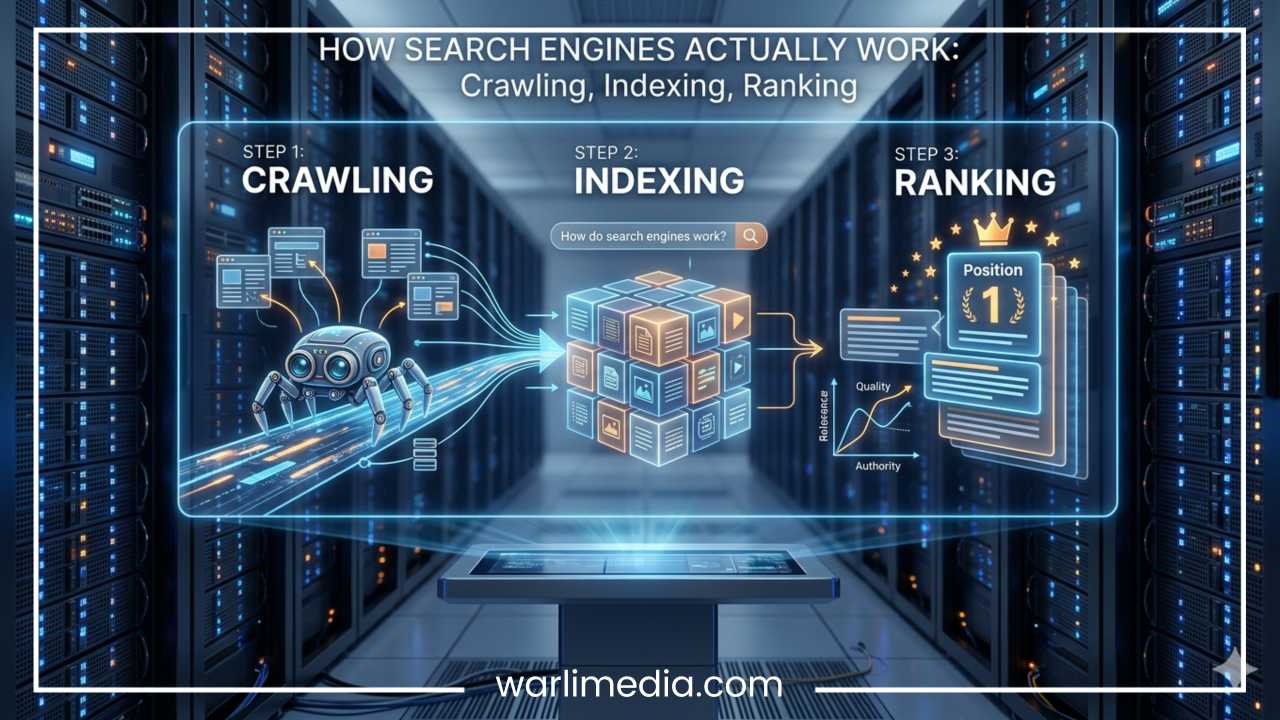
The process by which search engines discover, parse, and score backlinks is a marvel of data engineering. It begins with continuous crawling and indexing. Search engines deploy automated software programs called bots, spiders, or crawlers to navigate the vast expanse of the web.
These crawlers move from one page to another by following hyperlinks. When a crawler visits an established website and finds a new link pointing to your site, it discovers your URL, follows the path, indexes your content, and logs the backlink relationship in a massive link-graph database.
Once a link is discovered, search engines apply complex trust signals to evaluate its integrity. One of the primary concepts used is the “neighborhood” principle. The algorithm maps out groups of trusted websites that are known to be reputable (such as major news networks, universities, and government portals).
If your website is linked to by sites that are closely connected to this trusted core, you are considered part of a “good neighborhood.” If your site is only linked to by spammy gambling forums or low-quality link directories, you are placed in a “bad neighborhood,” which severely devalues your visibility.
Spam detection systems run alongside these trust evaluations. Search engines use highly advanced pattern-recognition models to identify manipulative behaviors. These systems check for link diversity to ensure your links are coming from a wide variety of unique domains, rather than a single site repeating the same link thousands of times.
They also monitor your link velocity, which is the speed at which your website acquires backlinks over time. A natural website grows its link profile gradually as more people discover its content. If a small, obscure blog suddenly acquires thousands of backlinks over the course of forty-eight hours, spam detection filters will immediately flag this unnatural pattern for investigation, stripping away the value of those links or penalizing the domain entirely.
How to Get Backlinks
Acquiring high-quality backlinks requires a deliberate blend of creativity, relationship building, and strategic outreach. Because search engines demand natural, earned links, you must employ ethical tactics that provide genuine value to the web ecosystem.
Creating High-Quality, Link-Worthy Content
The absolute foundation of any successful link-building strategy is creating content that people naturally want to link to. This is often referred to in the industry as creating “link bait.” If your content is generic or identical to what is already available on page one of the search results, no one will have a reason to reference it.
To build link-worthy content, focus on assets that provide unique utility:
Proprietary Research and Data: Conduct original surveys, analyze industry data, and publish the findings. Journalists and bloggers frequently search for statistics to back up their claims and will link to you as the primary source.
Infographics and Visual Assets: Complex data can be difficult to digest. By turning statistics or complicated processes into beautiful, easily shareable infographics, you create an asset that other blogs will gladly embed on their sites, providing a backlink in return.
Comprehensive, Definitive Guides: Write the absolute best, most exhaustive resource on a specific topic within your niche, leaving no stone unturned.
Guest Posting
Guest posting remains an exceptionally reliable method for building early authority. This strategy involves reaching out to reputable websites within your niche and offering to write a high-quality article for their audience completely free of charge. In exchange for your free, expertly written content, the host website will allow you to include a contextual link back to your own site within the body of the text or the author biography. The key to successful guest posting is targeting sites with real traffic and avoiding low-quality blogs that exist solely to publish guest articles.
The Skyscraper Technique
Popularized by the SEO industry, the Skyscraper Technique is a systematic way to steal your competitors’ link share. First, find a piece of content within your niche that has already acquired a massive number of backlinks from various websites. Next, analyze that content thoroughly to identify its weaknesses. Is it outdated? Is it lacking visual examples? Is it too brief?
Your goal is to create a version of that content that is vastly superior—longer, more accurate, beautifully designed, and updated with current information. Once your “skyscraper” asset is live, use backlink analysis tools to find every single website that linked to the original, inferior piece of content. Reach out to those webmasters politely, show them your superior resource, and suggest that they update their link to point to your far more valuable article.
Broken Link Building
Broken link building is a highly effective, value-first outreach strategy. Over time, websites change, domain names expire, and articles are deleted, leaving behind “broken links” (links that lead to dead 404 error pages). This degrades the user experience of the hosting site and harms their SEO.
By using specialized tools, you can scan authoritative websites in your niche to find these broken external links. When you discover one that relates to your industry, check if you have an article on your site that covers the same topic (or write one specifically to match).
Reach out to the site owner, inform them gently of the broken link on their page, and offer your active URL as a perfect replacement. Because you are helping them fix an error on their site, their likelihood of agreeing to link to you is remarkably high.
Digital PR and Strategic Outreach
Digital PR focuses on earning mentions and links from major news publications, journalists, and massive media outlets. You can monitor platforms where journalists actively post requests for expert commentary, quotes, or insights on specific stories they are currently writing.
By responding promptly with articulate, authoritative quotes, you can land placements in massive mainstream publications that include high-authority editorial backlinks. Additionally, conducting targeted email outreach to bloggers and editors to share your original research or tools can build long-term relationships that lead to ongoing link placements.
Business Listings, Citations, and Social Sharing
For local businesses, building foundational citations is a vital first step. Submitting your website to trusted directories like Yelp, YellowPages, TripAdvisor, and industry-specific association portals establishes geographic and operational validity.
While these directories often provide nofollow links, they confirm your business’s existence to search engines. Similarly, sharing your content across social media platforms introduces your assets to a wider audience. While social media links do not directly transfer link equity, the massive visibility they generate increases the odds that a blogger or content creator will stumble across your site and give you a natural editorial backlink later on.
Common Backlink Mistakes to Avoid
The desire to rank quickly on search engines often tempts webmasters to cut corners. However, engaging in manipulative shortcuts can trigger harsh algorithmic filters or manual actions from Google that remove your website from the search index entirely. To safeguard your digital asset, steer clear of these dangerous pitfalls.
Buying Spammy Links
Purchasing links on open marketplaces, gig platforms, or through unsolicited emails is a direct violation of search engine guidelines. These paid links are incredibly easy for modern AI-driven algorithms to identify. They are typically placed on low-quality sites with no real traffic, and search engines will simply ignore them or penalize your entire domain for attempting to game the system.
Over-Optimized Anchor Text
When building links, uniformity is your enemy. If you are trying to rank for the keyword “best vintage watches,” and every single inbound link pointing to your site uses that exact phrase as the anchor text, it looks completely automated. Real humans link to things using varied wording, such as the company name, the URL itself, or contextual phrases. Keep your anchor text profile diverse and natural.
Private Blog Networks (PBNs) and Link Farms
A Private Blog Network (PBN) is a cluster of websites built by an individual or agency solely for the purpose of linking to a primary website to spoof authority. These networks often utilize expired domains that still possess historical authority.
Link farms are massive directories or networks designed to cross-link with one another to artificially inflate metrics. Search engines spend millions of dollars updating their algorithms to detect and neutralize PBNs and link farms. When a network is caught, every single website receiving links from that network experiences a catastrophic drop in organic traffic.
Ignoring Relevance and Chasing Random Spikes
Acquiring links from irrelevant niches just because the site has a high authority score is a waste of time and a red flag to search engines. Always prioritize industry alignment. Furthermore, aim for steady, sustainable link growth. Avoid sudden, massive spikes in your backlink count followed by periods of complete stagnation, as this pattern signals artificial link generation rather than genuine, organic popularity.
Tools to Check Backlinks
To execute a successful SEO campaign, you must have visibility into your own link profile as well as those of your competitors. Fortunately, the digital marketing industry offers several exceptional tools designed to map out the link graph of the internet.
Leading SEO Platforms
Ahrefs: Renowned for having one of the most powerful web crawlers in the world, Ahrefs maintains a massive live database of backlinks. It provides comprehensive insights into domain metrics, anchor text distribution, and link growth tracking.
SEMrush: An all-in-one marketing suite that offers excellent backlink analytics, allowing you to run deep competitive comparisons and easily identify where your top-ranking competitors are sourcing their links.
Moz: Creators of the widely recognized “Domain Authority” (DA) metric, Moz offers excellent link-checking capabilities and a streamlined link-intersections tool to find link opportunities your competitors share.
Google Search Console: This is a completely free tool provided directly by Google. It gives you a first-hand look at exactly which backlinks Google’s crawlers have logged for your site, showcasing your top linked pages and most common anchor text.
Key Metrics to Track
When utilizing these tools, focus your analysis on four critical areas:
Do Backlinks Still Matter?
As search engines become smarter, a common question echoes through the digital marketing community: Do backlinks still matter? With search algorithms integrating advanced artificial intelligence, natural language processing, and a heavier emphasis on user experience, some believe that the power of the humble hyperlink is waning.
The definitive answer is yes—backlinks remain one of the most critical ranking factors in search engine optimization. While it is true that search engines have evolved past a reliance on raw link counts, the fundamental need for external validation has not changed.
Modern search engine guidelines place an immense emphasis on a concept known as E-E-A-T: Experience, Expertise, Authoritativeness, and Trustworthiness. Search engines want to ensure that the content they serve to users is authored by genuine experts, especially in niches that impact health, finance, or safety.
How does an AI-driven algorithm measure abstract concepts like authoritativeness and trust? It looks to the community. When industry leaders, academic institutions, and trusted journalistic outlets link to your content, they are providing tangible proof of your E-E-A-T.
The relationship between content quality and backlinks has become entirely symbiotic. Excellent content cannot rank well without the structural authority that backlinks provide, and you cannot earn high-quality backlinks if your content is mediocre. Quality has completely triumphed over quantity. A website with fifty hyper-relevant, authoritative backlinks can easily outrank a competitor with thousands of low-grade automated links.
The Future of Backlinks
As we look toward the horizon of digital search, the mechanics of link building are shifting. The rise of AI-driven search experiences means that search engines are moving away from treating the web as a collection of isolated pages and moving toward an “entity-based” model of SEO.
An entity-based approach means search engines seek to understand real-world concepts, brands, people, and their relationships to one another. Within this framework, a backlink is no longer just a pathway for a crawler; it is a declaration of a relationship between two entities.
This evolution means that the value of traditional spam links is rapidly plummeting to zero. Search engine algorithms can instantly recognize and neutralize artificial links, making old-school, technical link building largely obsolete.
In contrast, the future of link acquisition belongs to digital PR and brand authority. The lines between public relations and search engine optimization have permanently blurred. Earning mentions on prominent podcasts, being quoted as a thought leader in major media publications, and cultivating a highly respected brand identity are the modern drivers of link equity. Search engines are even learning to recognize unlinked brand mentions, giving authority credit to websites that are talked about across the web, even if a direct HTML hyperlink was not included. To survive and thrive in the future of SEO, you must treat link building as an exercise in genuine brand building.
Final Thoughts
Backlinks remain the undisputed cornerstones of search engine visibility. They are the digital infrastructure that search engines rely upon to separate authority from noise, and trust from spam. From standard dofollow links that pass crucial link equity to natural editorial citations earned through sheer content excellence, every high-quality backlink you acquire serves as a powerful endorsement of your brand’s credibility.
Building a powerful backlink profile is not a project with a defined start and end date; it is an ongoing, long-term commitment. Attempting to trick search engines with manipulative shortcuts, paid spam networks, or over-optimized anchor text will only lead to catastrophic search penalties and lost visibility.
The path to sustainable organic growth requires an ethical, value-first mindset. Focus your energy on creating truly exceptional, original content that serves your audience’s deepest needs. Build genuine relationships within your industry, leverage clever tactics like broken link building or the Skyscraper Technique, and treat every piece of outreach as an opportunity to add value to the internet. By combining great content with an authoritative, ethically constructed backlink profile, you will build a resilient digital presence that commands top rankings and drives sustainable traffic for years to come.
Frequently Asked Questions About Backlinks
How can I get high-quality backlinks to a brand-new website with zero traffic?
When starting a brand-new website, you face a catch-22: you need traffic to get noticed, but you need backlinks to get traffic. The most effective strategy to break this loop is direct, value-first outreach.
Instead of waiting for people to discover your site, actively seek out established blogs in your industry and offer to write high-quality guest posts for them. This allows you to leverage their pre-existing audience while earning a contextual backlink.
Additionally, focus on creating original, statistic-heavy resources or unique data sets. Bloggers and journalists are always searching for data points to cite in their own articles, and they will link to your new site if you are the primary source of that data.
What is the difference between dofollow and nofollow backlinks for SEO rankings?
The primary difference lies in how search engines distribute authority, commonly known as link equity. A dofollow backlink acts as a direct vote of confidence, instructing search engines to crawl the link and pass ranking power from the referring site to your page.
A nofollow backlink contains a specific HTML tag (rel="nofollow") that tells search engines not to pass ranking authority or link equity.
While dofollow links directly improve your keyword rankings, nofollow links are still incredibly valuable for driving direct referral traffic, building brand awareness, and creating a natural, well-diversified link profile that looks organic to search engine algorithms.
How do I identify and remove toxic backlinks that could harm my search visibility?
To protect your website from negative SEO or algorithmic penalties, you should regularly audit your backlink profile using tools like Ahrefs, SEMrush, or Google Search Console. Look for suspicious patterns, such as a sudden influx of links from foreign-language sites, adult content portals, or low-quality link directories that have no relevance to your industry.
If you find harmful, spammy links pointing to your site, your first step should be to contact the webmaster of the hosting site and politely ask them to remove the link.
If they do not respond, you can compile a list of these toxic URLs into a text file and submit it to Google via the Disavow Tool within Google Search Console. This explicitly asks Google to ignore those specific links when calculating your site’s ranking authority.
Are paid links safe or will buying backlinks trigger a Google penalty?
Buying backlinks is a direct violation of Google’s search guidelines. Search engines employ highly sophisticated, AI-driven spam detection systems that are specifically trained to recognize the patterns of paid link placements. These patterns include links coming from sites that openly advertise guest posting services, pages with an unnatural mix of completely unrelated outbound links, or sudden spikes in backlink volume.
If you get caught buying links, your website can suffer a manual action or an algorithmic penalty, resulting in a severe drop in organic traffic or complete removal from the search index. The only safe way to acquire links is to earn them through high-quality content creation, digital PR, and ethical outreach.
Why is anchor text optimization important for building a natural link profile?
Anchor text is the clickable text that masks a hyperlink, and it tells search engines exactly what the destination page is about. If a website links to you using the phrase “best organic skincare,” search engines use that text to better understand and rank your page for that specific search term.
However, over-optimizing your anchor text can be dangerous. If 90% of the websites linking to you use the exact same commercial keyword phrase, it flags a highly artificial, manipulative footprint.
A healthy, natural link profile contains a varied distribution of anchor text, including your brand name, raw URLs, generic phrases like “click here,” and broad, partial-match variations of your target topics.
Can internal links compensate for a lack of external backlinks?
Internal links—links that connect different pages within the same website—are vital for organizing your site’s architecture, helping search engine bots index your content, and keeping users engaged on your platform. They help distribute existing authority from your top-performing pages to your newer articles.
However, internal links cannot fully substitute for external backlinks. External backlinks represent independent, third-party validation from the rest of the web.
Without external backlinks to pour new link equity and authority into your domain, your site’s overall ranking potential remains capped, making it incredibly difficult to rank for highly competitive search phrases.