What is a Search Engine Results Page (SERP)? Complete Guide
The digital landscape is governed by a single, critical destination: the Search Engine Results Page, commonly known as a SERP. Every time a user types a query into a search bar and hits enter, they are presented with a unique, dynamically generated list of results. For businesses, bloggers, and digital marketers, these pages represent the ultimate battlefield for attention, authority, and revenue.
In the early days of the internet, a search result was simple—a list of ten blue links pointing to various websites. Today, however, the SERP is a complex, multi-faceted ecosystem. It is an evolving interface that combines traditional links with artificial intelligence summaries, video carousels, interactive maps, and shopping carousels. Understanding what a SERP is and how it functions is no longer just a technical requirement for IT professionals; it is a foundational pillar of modern communication and commerce.
Visibility on these pages dictates whether a brand thrives or fades into obscurity. Because search engine algorithms are constantly evolving, the nature of the SERP changes almost daily. Ranking in the top position today requires more than just good keywords; it requires a deep understanding of user intent, technical optimization, and the various features that engines use to satisfy user needs directly on the page.
Read: How to Market Your Business With Pinterest?
What is a SERP?
The acronym SERP stands for Search Engine Results Page. Formally defined, it is the web page displayed by a search engine in response to a query by a user. While we often focus on Google due to its massive market share, every search engine—including Bing, Yahoo, and DuckDuckGo—generates its own version of a SERP.
The process behind the scenes is near-instantaneous. When you enter a query, the search engine doesn’t “search the live web” in real-time. Instead, it searches its massive index of previously discovered pages to find the most relevant matches. The resulting page is a curated experience designed to provide the best possible answer to the user’s specific question.
It is important to note that SERPs are not static. Two people searching for the exact same term may see entirely different pages. This variation occurs because SERPs are highly personalized and influenced by several factors:
Keyword: The specific words and phrases used.
Location: Local results for “coffee shop” will differ in New York versus London.
Device: Mobile SERPs often prioritize local maps and shorter snippets compared to desktop views.
Search History: Previous interactions can influence what the engine thinks you are looking for.
Intent: Whether the engine perceives you are looking to buy something or just learn a fact.
Organic Results
Organic results are the listings that appear because of their relevance to the search term, rather than being paid for. These are the “earned” spots. Search engines use complex algorithms to determine which pages deserve to be at the top based on hundreds of ranking factors, such as content quality, site speed, and backlinks.
Paid Ads
Paid results, often labeled as “Sponsored” or “Ad,” typically appear at the very top or bottom of the page. These are generated through platforms like Google Ads, where businesses bid on specific keywords to gain immediate visibility. While organic results take time to build, paid ads offer a shortcut to the top of the SERP.
SERP Features
Beyond the standard links, SERP features are specialized elements like “People Also Ask” boxes, image grids, and “Position Zero” snippets. These are designed to provide information quickly, sometimes allowing users to get what they need without ever clicking through to a website.
Read: How to Build Stronger Blogging Relationships for Your Business
How Search Engines Generate SERPs
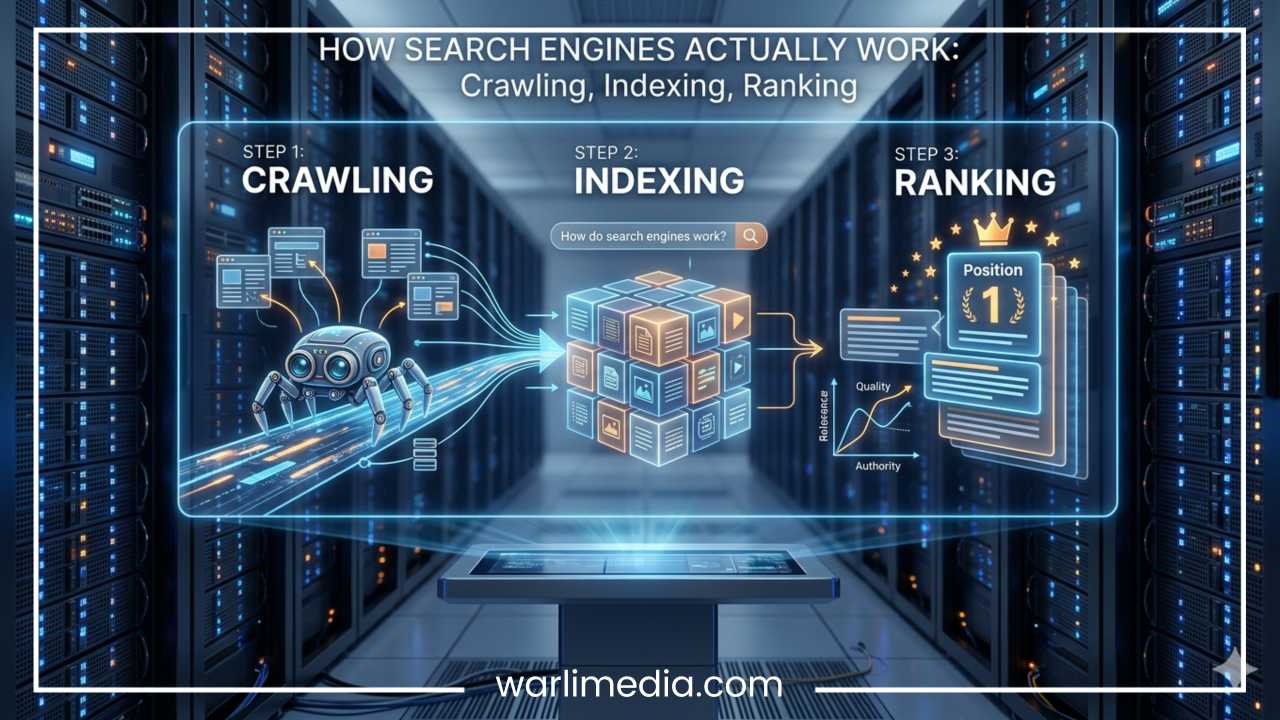
The journey of a web page from a draft to a search result involves three primary stages: crawling, indexing, and ranking. Understanding this “behind-the-curtain” process is essential for anyone looking to master SEO.
Crawling
Crawling is the discovery stage. Search engines use automated programs known as bots or spiders to scour the internet for new and updated content. These bots follow links from one page to another, constantly expanding their reach. If a page isn’t linked to from anywhere else and isn’t submitted via a sitemap, the bot may never find it, and it will never appear on a SERP.
Indexing
Once a page is crawled, the search engine attempts to understand what the page is about. This process is called indexing. The engine analyzes the text, images, and video files on the page to categorize it in its massive database. Think of the index as a giant library where the search engine stores every web page it has ever found so it can retrieve it later.
Ranking
Ranking is the final and most complex step. When a user types a query, the search engine’s algorithm sifts through the index to find the most relevant pages. It then orders them based on perceived quality and utility.
Modern search algorithms are incredibly sophisticated. They do not just look for the keyword used; they look for:
Relevance: Does the content actually answer the user’s question?
Authority: Is the website a trusted source on this topic?
Freshness: Is the information up to date?
User Experience: Does the site load quickly? Is it easy to navigate on a phone?
By balancing these signals, the algorithm decides whether a page should be result number one or result number one hundred.
Read: Tips for Improved Customer Care Communication
Main Components of a SERP
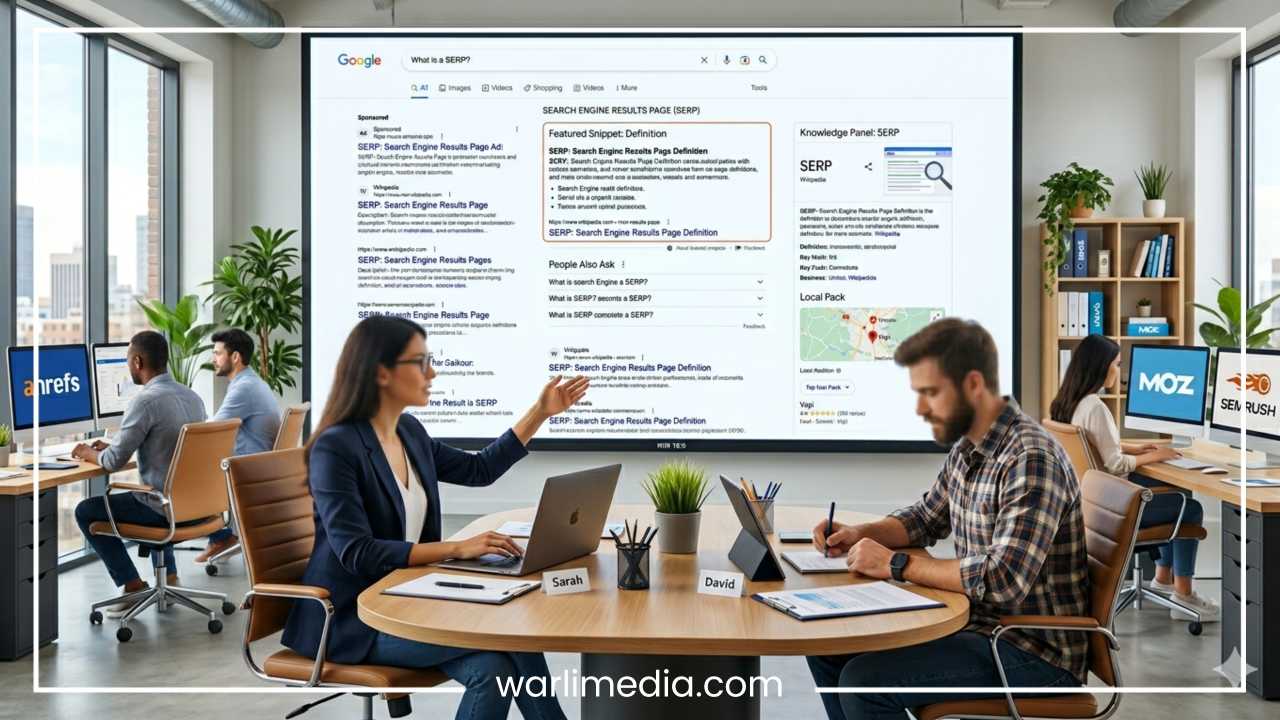
A modern SERP is a mosaic of different elements. To optimize for visibility, you must understand each component and how it occupies digital real estate.
Organic Search Results
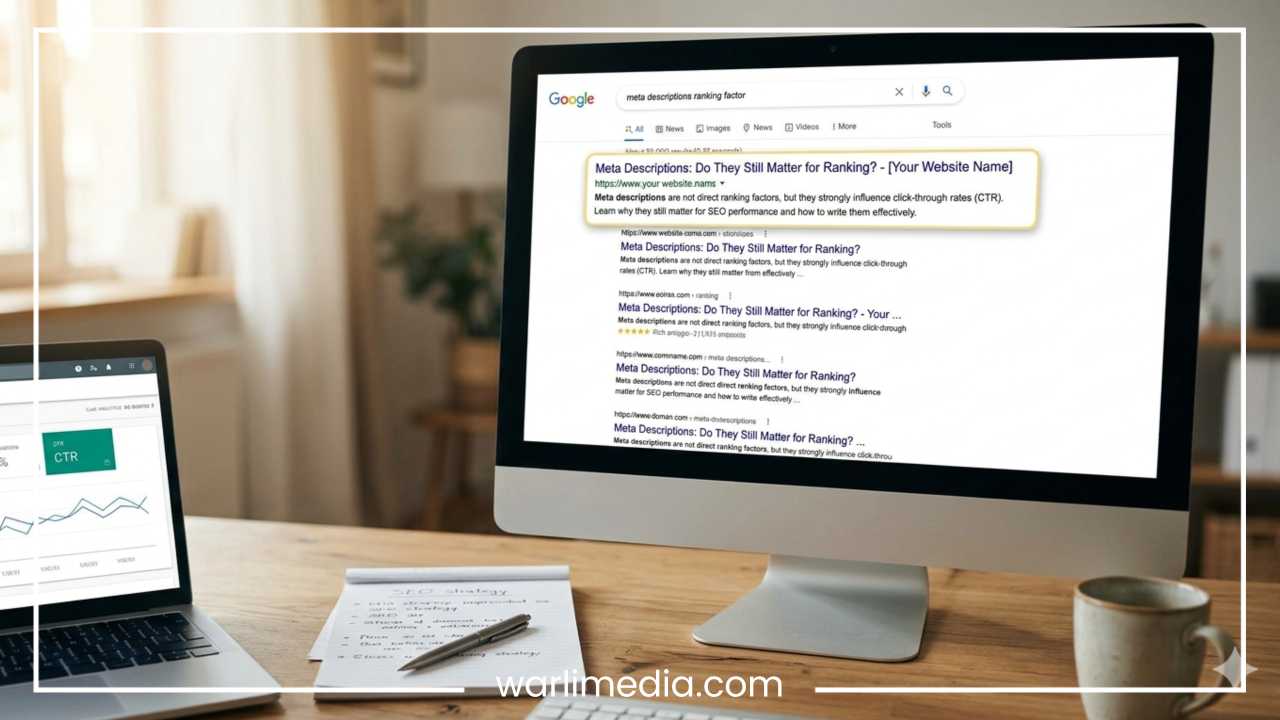
This remains the core of the SERP. A standard organic listing consists of three primary parts:
The Title Tag: The clickable blue headline that tells users what the page is about.
The URL (Breadcrumb): The web address or path to the page, often shown in a simplified format to show site hierarchy.
The Meta Description: A short summary (usually under 160 characters) that encourages users to click by explaining the value of the page.
Paid Search Ads
Paid listings are the primary revenue driver for search engines. They are identified by a Sponsored tag. These are part of Pay-Per-Click (PPC) marketing, where advertisers only pay when someone actually interacts with the ad. These results are highly targeted based on the user’s search history and current query.
Featured Snippets
Also known as Position Zero, the featured snippet is a box that appears at the top of the organic results. It provides a direct answer to a query in the form of a paragraph, a bulleted list, or a table. Winning this spot is highly coveted because it places your brand above the traditional number-one ranking.
AI Overviews and Generative Results
The newest evolution in search is the AI-generated summary. Using large language models, search engines now provide a synthesized answer drawn from multiple sources at the top of the page. This feature aims to answer complex questions quickly, though it has sparked significant discussion about the impact on website click-through rates.
People Also Ask (PAA)
The PAA box is an interactive feature that shows a list of questions related to the user’s initial query. When a user clicks a question, it expands to show a snippet of an answer and a link to the source. This is a prime example of semantic search, where the engine tries to predict what else the user might want to know.
Knowledge Panel
When you search for a specific entity—like a famous person, a major corporation, or a historical event—a Knowledge Panel often appears on the right side of the screen (on desktop). This panel pulls data from trusted sources like Wikipedia and official websites to provide a comprehensive overview of the subject, including dates, key figures, and social media profiles.
Local Pack
For queries with local intent (e.g., “plumber near me” or “best pizza”), search engines display a map and a list of three local businesses. This Local Pack is vital for brick-and-mortar stores, as it includes ratings, contact info, and directions.
Multimedia Results
SERPs are increasingly visual. Depending on the query, you may see:
Image Results: A row or grid of pictures that can be expanded.
Video Carousels: A scrollable list of videos, often from YouTube, with “key moments” highlighted so users can jump to the exact part of the video they need.
News Results: A “Top Stories” section for trending topics, highlighting recent articles from authoritative news outlets.
Shopping Results: Product images, prices, and store names for users looking to make a purchase.
Types of Search Intent Behind SERPs
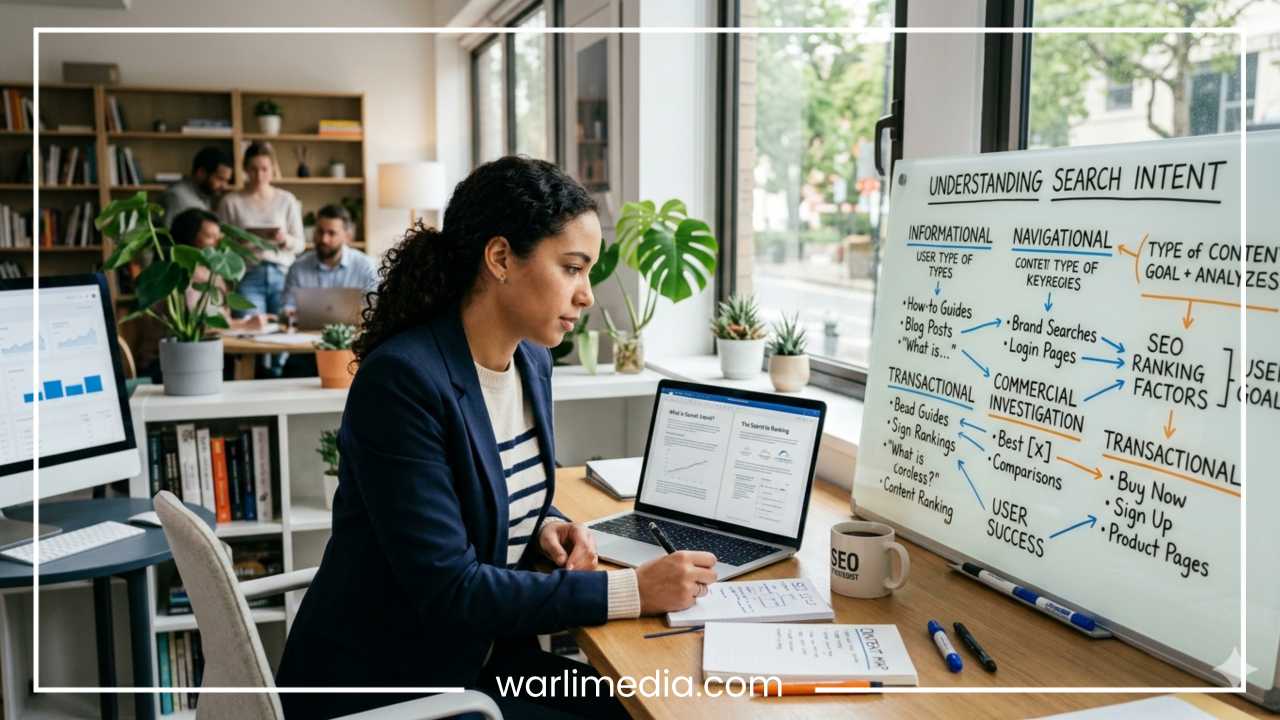
Search engines have become experts at psychology. They don’t just look at the words; they look for the “why” behind the search. This is known as Search Intent. The layout of the SERP will change dramatically based on which intent the algorithm detects.
Informational Intent
The user wants to learn something or find an answer to a specific question.
Query Example: “How to bake sourdough bread” or “What is photosynthesis.”
SERP Layout: Likely to include a Featured Snippet (list or paragraph), a Video Carousel, and a People Also Ask box.
Navigational Intent
The user is looking for a specific website, brand, or physical location they already know.
Query Example: “Facebook login,” “Nike official site,” or “Reddit.”
SERP Layout: The official site will be at the very top, often with Sitelinks (links to specific pages within the site) to help the user navigate quickly.
Transactional Intent
The user is in “buying mode” and is ready to make a purchase.
Query Example: “Buy iPhone 15 Pro,” “Cheap flights to Paris,” or “Hulu subscription.”
SERP Layout: This page will be dominated by Shopping Ads at the top and highly optimized e-commerce product pages in the organic section.
Commercial Investigation
The user is considering a purchase but needs more information, reviews, or comparisons before committing.
Query Example: “Best CRM software,” “iPhone vs Samsung,” or “Top rated vacuum cleaners.”
SERP Layout: You will likely see review sites, “Best of” lists, comparison tables, and perhaps a video review carousel.
Why SERPs Matter for SEO
If your website isn’t on the first page of the SERP, it effectively doesn’t exist for the vast majority of users. Studies consistently show that the first three organic results receive more than 50% of all clicks.
Visibility and Traffic
The higher you rank, the more people see your brand. However, “visibility” is changing. With the rise of SERP features, appearing in a Featured Snippet or the Local Pack can be just as valuable—if not more so—than a traditional link.
Click-Through Rate (CTR)
CTR is the percentage of people who see your result and click on it. Factors like a compelling title, a clear meta description, and the presence of Rich Snippets (like star ratings or price info) can significantly boost your CTR.
Brand Authority
There is a psychological component to SERPs. Users tend to trust the websites that search engines place at the top. Being consistently visible for relevant industry terms builds long-term brand authority and trust.
The Challenge of Zero-Click Searches
A zero-click search occurs when the user finds their answer directly on the SERP (via a snippet or AI overview) and leaves without clicking any links. While this is great for the user, it is a challenge for marketers. The strategy now involves providing enough value on the SERP to build brand awareness, even if a click doesn’t happen immediately.
Common SERP Features and SEO Value
To stay competitive, you must optimize for more than just text. SERP features are the “upgrades” that make a result stand out.
Rich Snippets: These add extra information to a standard listing, such as review stars, cooking times for recipes, or event dates. They are powered by Structured Data (Schema markup) in the site’s code.
FAQ Results: A list of questions and answers that appear under an organic result. These take up more vertical space, pushing competitors further down the page.
Sitelinks: Additional links to subpages of your site that appear under your main URL. These help users find exactly what they need faster and increase your site’s footprint on the page.
Video Carousel: A horizontal row of videos. Optimizing your YouTube descriptions and using video schema can help you land here.
Top Stories: Reserved for news-worthy content. Appearing here requires your site to be indexed in News and have high topical authority.
Reviews: Star ratings and summary info that help users gauge the quality of a product or service at a glance.
How to Rank Higher on SERPs
Ranking well is a marathon, not a sprint. It requires a holistic approach that combines technical skill with creative content.
Keyword Research and Intent Mapping
Before writing a single word, you must know what your audience is searching for. Use tools to find keywords with healthy search volume. More importantly, look at the current SERP for that keyword. If the results are all videos, you should probably create a video. If they are all long-form guides, you need to write a better guide.
High-Quality Content (E-E-A-T)
Content is still king, but the definition of quality has sharpened. Search engines look for E-E-A-T: Experience, Expertise, Authoritativeness, and Trustworthiness. Your content should be comprehensive, well-researched, and provide a better answer than anything currently on page one.
Technical SEO and Mobile Optimization
If your site is slow or broken on mobile, you will be penalized. Ensure your Core Web Vitals are healthy. This includes fast loading times, visual stability, and quick interactivity. With mobile-first indexing, the mobile version of your site is the primary version used for ranking.
Structured Data (Schema)
To win SERP features like Rich Snippets or FAQ boxes, you must speak the search engine’s language. Structured data is a piece of code you add to your site that tells the engine exactly what it’s looking at (e.g., “this is a recipe” or “this is a product price”).
Backlinks and Authority
A backlink is a vote of confidence from another website. If high-authority sites link to you, engines view your content as more trustworthy. Focus on “white-hat” link-building through guest posting, PR, and creating original research or infographics that others want to cite.
Improving Click-Through Rate
Even if you are at position #4, you can get more traffic than position #2 by having a better title and meta description. Use power words, include your primary keyword, and create a sense of urgency or curiosity without resorting to “clickbait.”
SERP Tracking and SEO Tools
Because SERPs change constantly, you cannot simply check your rankings once and forget about them. You need data to guide your strategy.
Google Search Console
This is a essential free tool that shows you which keywords are driving traffic to your site, your average position, and your CTR. It also alerts you to technical errors and indexing issues.
SEMrush and Ahrefs
These are the industry standards for competitive analysis. They allow you to see what your competitors are ranking for, analyze their backlink profiles, and track your progress across thousands of keywords.
Rank Tracking Tools
Specialized tools like Moz, Wincher, or AccuRanker provide daily updates on your keyword positions across different geographic locations and devices, allowing for granular performance monitoring.
Future of SERPs
The SERP of tomorrow will look very different from the SERP of today. We are moving toward an era of Assisted Search.
Generative AI and SGE
Artificial Intelligence is being integrated directly into the search experience. Instead of searching and clicking, users will increasingly engage in a dialogue with the search engine. This means SEOs will need to focus on being the “cited source” within these AI summaries.
Voice and Visual Search
As smart speakers and visual tools like Google Lens become more popular, queries are becoming more conversational and visual. Optimizing for “natural language” and high-quality, descriptive images will become a necessity.
Personalization and Privacy
Search engines are trying to balance personalized results with increasing demands for user privacy. The future will likely see more “on-device” processing and a shift toward interest-based cohorts rather than individual tracking.
Final Thoughts
The Search Engine Results Page is the most important gateway on the internet. It is where questions meet answers and where customers meet brands. While the features, layouts, and algorithms will continue to shift, the core objective remains the same: providing the most relevant, helpful information to the user as quickly as possible.
To succeed in this environment, you must be adaptable. SEO is no longer just about keywords; it is about understanding the entire anatomy of the SERP and optimizing for every available pixel. By focusing on user intent, technical excellence, and high-quality content, you can ensure that when your audience goes searching, it’s your brand they find. Improving your SEO strategy today is the best way to secure your visibility tomorrow.
Frequently Asked Questions (FAQ)
To further assist you in navigating the complexities of search results, we have compiled a list of common questions that address specific “long-tail” queries often searched by marketers and business owners.
What is the difference between a SERP and a search engine?
A search engine is the software or tool used to find information (such as Google, Bing, or DuckDuckGo). The SERP is the specific page that the engine displays after you hit the search button. In simple terms, the search engine is the librarian, and the SERP is the list of books they recommend for your specific question.
Why does my website rank differently on mobile vs desktop?
Search engines prioritize mobile-friendly websites because the majority of global web traffic now comes from mobile devices. If your site is not optimized for small screens, or if it loads slowly on cellular data, a search engine might rank you lower on a mobile SERP than on a desktop SERP. Additionally, the Local Pack feature is much more prominent on mobile devices to help users find immediate solutions while they are on the go.
How do I get my website to show up in the “People Also Ask” section?
To appear in the PAA box, you should structure your content to answer specific questions directly. Using “What is,” “How to,” and “Why does” headings followed by a concise, factual answer (about 40–50 words) helps search engines identify your text as a high-quality answer. Implementing FAQ schema on your page also increases the likelihood of being featured.
What is a zero-click search and is it bad for my SEO?
A zero-click search occurs when a user finds the answer they need directly on the SERP (like a weather report or a dictionary definition) without clicking a link. While this can reduce traffic to your site, it is not necessarily “bad.” Being the source of a featured snippet or an AI overview builds massive brand authority and trust, which can lead to higher-quality traffic later in the customer journey.
Can I pay to be in a Featured Snippet?
No. Featured Snippets are purely organic. While you can pay to have your website appear in the “Sponsored” section via Google Ads, you cannot buy your way into the Featured Snippet, the Knowledge Panel, or the Local Pack. These positions are earned through high-quality content and strong technical SEO.
What are the most important Google ranking factors?
While there are over 200 ranking signals, the most critical ones include:
High-quality, original content that satisfies user intent.
Backlinks from reputable and relevant websites.
Mobile-friendliness and responsive design.
Page speed and Core Web Vitals.
Secure connection (HTTPS).
Why did my SERP ranking suddenly drop?
Ranking fluctuations are common and can be caused by several factors:
Algorithm Updates: Search engines frequently update their software to improve results.
Technical Issues: Your site may have crawl errors, broken links, or slow loading times.
Competitor Improvements: A competitor may have published a better, more updated piece of content.
Lost Backlinks: If a major site stops linking to you, your authority score may decrease.
How do rich snippets affect my click-through rate (CTR)?
Rich snippets make your search result more visually appealing and informative. By showing star ratings, product prices, or recipe cooking times directly on the SERP, you provide immediate value to the user. This often leads to a higher CTR because users feel more confident that your page contains the exact information they are looking for.
What is the Local Pack and how do I rank in it?
The Local Pack is the set of three local business listings and a map that appear for queries like “restaurants near me.” To rank here, you must have an optimized Google Business Profile, consistent Name, Address, and Phone number (NAP) data across the web, and a steady stream of positive customer reviews.
How does AI-generated search change the SERP?
AI-generated results provide a synthesized summary of information at the very top of the page. This pushes traditional organic results further down. For creators, this means the focus is shifting toward “optimizing for information” rather than just “optimizing for keywords.” Your goal should be to provide unique data, personal experience, or expert opinions that an AI cannot easily replicate.