Why SEO is a Long-Term Game: The Path to Sustainable Growth
The Expectation vs Reality of SEO
In the fast-paced world of digital marketing, where results are often measured in seconds and clicks, Search Engine Optimization (SEO) stands out as a unique discipline. Many business owners and stakeholders enter the digital arena with a mindset shaped by instant gratification. They expect that once a website is launched and a few keywords are selected, the traffic should begin to flow immediately. This expectation vs. reality gap is one of the primary reasons why many digital marketing campaigns fail before they truly begin.
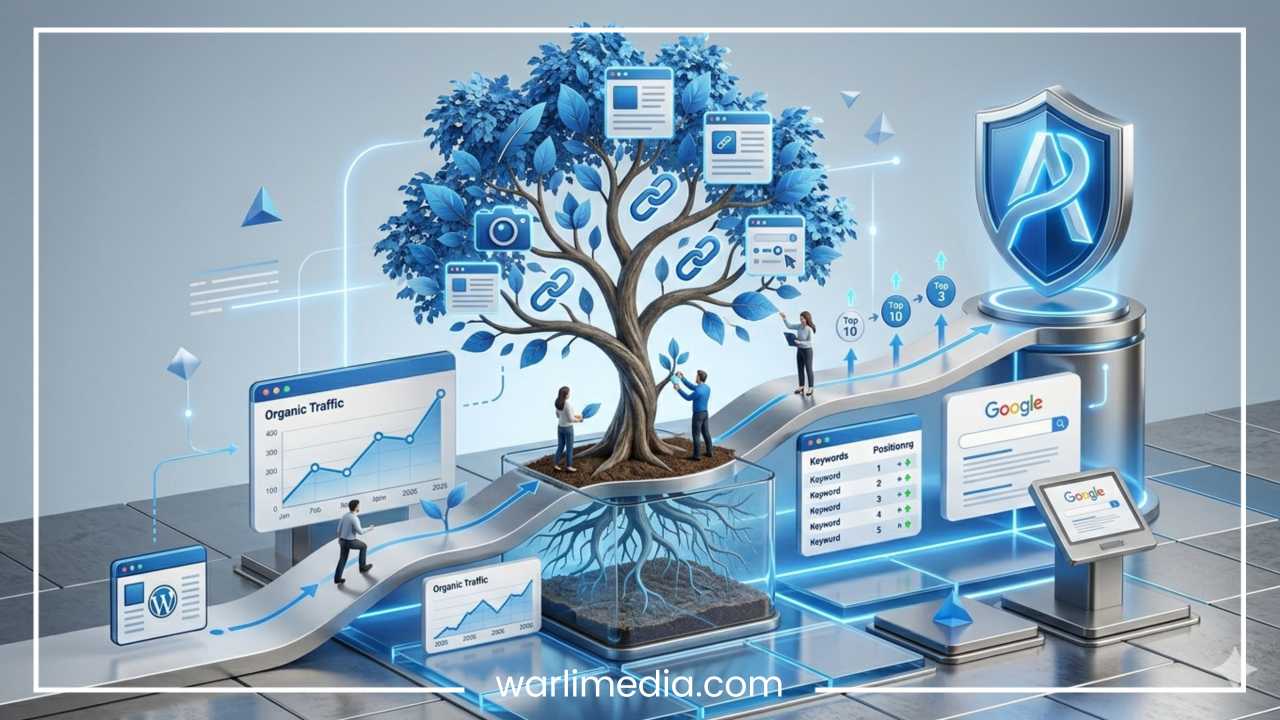
The common misconception is that SEO works like a light switch, much like paid advertising. In reality, SEO is more akin to planting a forest. You do not see the shade of an oak tree the day you plant the acorn. The truth is that SEO compounds over time. It is a slow-burn strategy that requires a significant upfront investment of time, research, and technical execution before the results become visible.
Most websites fail at SEO not because the strategies are ineffective, but because the stakeholders quit too early. They interpret the lack of immediate movement in the first few months as a failure of the tactic, rather than a necessary phase of the process. Understanding that patience is a strategic requirement—not just a virtue—is the first step in building a sustainable online presence. To win at SEO, one must stop thinking in terms of “campaigns” and start thinking in terms of “infrastructure.”
Read: The Emotionally Intelligent Leader: The Key to Success
What Makes SEO Different From Paid Marketing?
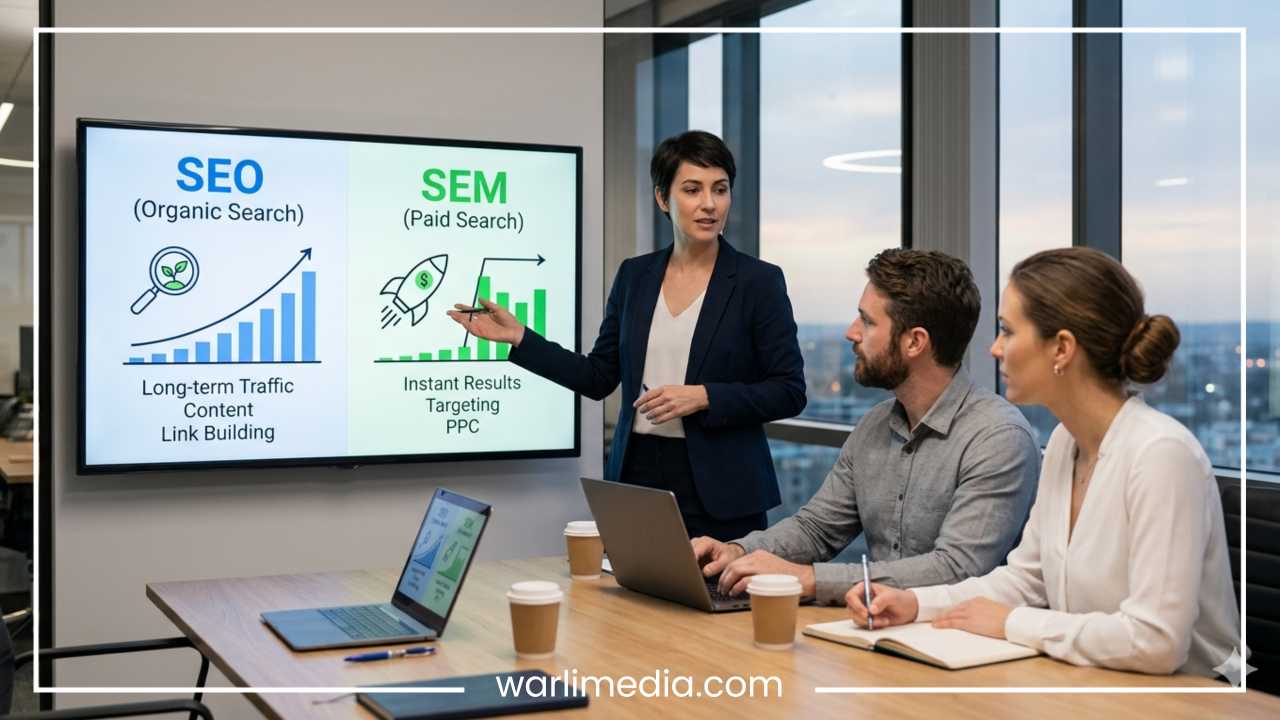
To understand why SEO is a long-term commitment, it is helpful to contrast it with Pay-Per-Click (PPC) or paid social media marketing. Paid marketing is built for speed. As soon as you set your budget, select your audience, and toggle the “on” switch, your brand appears at the top of search results or in the middle of social feeds. It provides immediate visibility and instant data. However, the moment you stop paying, your visibility vanishes.
SEO builds organic authority gradually. It is about earning your place at the top of the search engine results pages (SERPs) through merit, relevance, and technical excellence. While ads provide a temporary spike, SEO creates a sustainable acquisition channel. Over time, the cost per acquisition in SEO drops significantly because you are no longer paying for every individual click.
| Feature | SEO | Paid Ads |
| Speed | Slow, incremental start | Immediate traffic injection |
| Growth Pattern | Compounding growth curves | Linear growth linked to spend |
| ROI Longevity | Sustainable long-term ROI | ROI ends when spend stops |
| Credibility | Builds organic trust | Labeled as “Sponsored” |
Organic visibility is not just about getting a click; it is about building trust. Users are savvy; they know the difference between an ad and a top organic result. Ranking naturally at the top of Google serves as a third-party endorsement of your brand’s credibility. While a balanced marketing mix often includes both, the long-term health of a business depends on its ability to attract customers without being perpetually dependent on an advertising budget that could be undercut by competitors or rising platform costs.
Read: Leadership Styles & Impact: Building a Thriving Business
Search Engines Need Time to Trust Your Website
One of the core reasons SEO takes time is that search engines, primarily Google, have a rigorous trust-building process. Google’s primary goal is to provide the most relevant, safe, and authoritative answer to a user’s query. It does not hand out top rankings to unproven entities.
The Credibility Hurdle
Building domain authority and topical authority is a chronological process. When a new website is launched, Google’s crawlers must first discover the pages, index them, and then monitor how they interact with the rest of the web. This is often referred to as a “sandbox” phase, where Google evaluates whether a site is a legitimate source of information or a fly-by-night operation.
The Role of E-E-A-T
Authority cannot be faked or accelerated beyond a certain point. It requires the accumulation of backlinks from other trusted sites, which serves as a “vote of confidence.” It requires user engagement signals—like long dwell times and low bounce rates—which tell Google that your content actually solves the user’s problem. These signals take months, if not years, to reach a statistically significant volume.
Google rewards consistency. If you publish ten high-quality articles and then go silent for six months, you signal to the algorithm that your site might not be a reliable source for current information. Conversely, consistently publishing helpful content allows you to build E-E-A-T: Experience, Expertise, Authoritativeness, and Trustworthiness. This framework is the benchmark for modern SEO. Google wants to see that the person writing the content has real-world experience and that the website itself is a recognized leader in its niche.
Read: Making Effective Use of Stickers as Advertising for Your Business
SEO Is Built on Compounding Results
If SEO is like investing, then organic traffic is the compound interest. In the beginning, your efforts seem to yield very little. You might spend forty hours on a comprehensive guide that only receives ten visits in its first month. However, that same guide, if optimized correctly, will continue to gain traction.
The Snowball Effect
As your content library grows, a “snowball effect” begins to take place. An old article that has been live for a year might start ranking for hundreds of long-tail keywords you didn’t even specifically target. These secondary keywords often drive more total traffic than the primary “head” keyword.
Furthermore, a growing content library strengthens your internal linking structure. When you publish a new piece of content and link to it from five older, high-ranking pages, you pass “link equity” to the new page, helping it rank faster than the previous ones did. This synergy means that the more you do SEO, the more effective each subsequent action becomes.
Investing vs. Advertising
Think of your website as a digital asset. Unlike a social media post that has a shelf life of a few hours, a well-optimized blog post is an evergreen asset that can drive leads for years without further investment. Traffic growth curves in successful SEO campaigns typically look flat for the first few months, followed by a steady upward incline that eventually turns into exponential growth between months 12 and 24.
Consider a single article that ranks for 10 keywords in month three. By month twelve, through natural backlink growth and user engagement, that same article might rank for 100 keywords. This isn’t just growth; it is acceleration. This is why SEO is a game of endurance.
Why Most SEO Campaigns Fail Early
The graveyard of failed SEO campaigns is filled with businesses that had the right strategy but the wrong timeline. Failure usually stems from a few specific pitfalls:
Unrealistic Expectations: Stakeholders often expect to rank for highly competitive terms within 90 days. When this doesn’t happen, they pull the funding.
Inconsistent Publishing: Starting strong and then tapering off prevents the building of topical authority.
Chasing Hacks: Many businesses try to “game” the system using automated link building or thin content. While these might provide a temporary bump, they inevitably lead to penalties.
The 6-Month Cliff: Most SEO agencies see the highest churn rate at the six-month mark. This is exactly when the “foundation” work is finished and the growth is about to start.
Keyword Stuffing and Shortcuts: Attempting to force rankings through outdated methods like keyword density manipulation rather than focusing on user intent.
Patience is the only antidote to these failures. SEO is a marathon, and trying to sprint the first mile often leads to burnout or disqualification via algorithm penalties. Businesses that expect page one rankings instantly are often the first to fail because they stop the work just as the momentum is beginning to build.
Google Algorithm Updates Reward Long-Term Quality
Google releases thousands of updates every year, ranging from minor tweaks to massive core updates. These updates have a clear trend: they are designed to reward helpful, human-centric content and penalize manipulative tactics.
Helpful Content and Core Updates
Sustainable SEO is built on the foundation of being the best result for the user. Sites that focus on “tricking” the algorithm might find a loophole today, but that loophole will be closed tomorrow. When Google rolls out a Helpful Content Update or a Core Update, sites with a long history of high-quality, consistent output are usually the ones that survive and even gain rankings while their “shortcut-taking” competitors drop off the map.
Resilience Through Quality
Strong brands with a long-term mindset recover from updates much faster. Because they have built genuine authority and a loyal user base, Google views them as stable pillars of the search ecosystem. This is why sustainable SEO wins over manipulative SEO every time. Manipulative SEO is fragile; long-term SEO is resilient.
Content Consistency Matters More Than Viral Success
Viral success is the outlier, not the strategy. While one piece of content going viral can provide a nice boost in backlinks and temporary traffic, it does not constitute a successful SEO strategy.
Topical Authority and Clusters
Building topical authority requires covering a subject from every angle. This is achieved through topic clusters—a series of interlinked articles that cover a broad theme in depth. For example, if you are a health professional, you don’t just write one article about “wellness.” You write dozens of articles covering sleep, hydration, mental health, and physical activity.
The Value of Evergreen Content
Consistency matters because it keeps your site fresh in the eyes of search crawlers. Regularly updating old content is just as important as publishing new content. An evergreen strategy involves revisiting your top-performing pages to ensure the data is current, the links work, and the user intent is still being met.
One viral article does not equal SEO success. However, 100 useful, well-optimized articles often outperform five “perfect” articles that took months to create. Success comes from the cumulative power of a comprehensive content library.
Backlinks and Authority Take Time to Build
Backlinks remain one of the top three ranking factors in Google’s algorithm. However, the days of buying a thousand links for a small fee are over. Today, quality is the only currency that matters.
Natural Acquisition
Earned backlinks are the result of digital PR, relationship building, and creating “linkable assets”—content so good that other people in your industry naturally want to cite it. This process is inherently slow. You have to find the right journalists or bloggers, reach out to them, provide value, and wait for them to publish their own content.
Reputation and Mentions
High-quality backlinks are earned slowly because they are based on trust. As your site becomes more well-known, other writers will find your content through search and link to it organically. This “virtuous cycle” is why established sites seem to rank effortlessly; they have a natural inflow of authority that a new site simply cannot simulate. Mentions from trusted sites act as a permanent reputation boost that compounds over the years.
Realistic SEO Timelines: What Businesses Should Expect
Setting expectations is the most important part of any SEO strategy. While every niche is different, a general timeline for a brand-new website or a fresh SEO push usually follows this pattern:
0–3 Months: The Foundation
This period is dedicated to technical audits, keyword research, and setting up the tracking infrastructure. You might see some small wins in “branded search,” but overall traffic will likely remain flat. This is the “hidden” work—fixing broken links, optimizing site speed, and mapping out the content strategy—that makes future growth possible.
4–6 Months: Early Traction
During this phase, you will start to see your site appear for more “long-tail” keywords—specific phrases with lower search volume but high intent. Your pages will be indexed more frequently, and you may see your first few organic leads. This is where you verify that the strategy is working.
6–12 Months: The Growth Phase
This is where the compounding effect begins to show. Your rankings for more competitive terms start to climb. The work you did in month two starts to pay off with consistent daily traffic. Lead generation becomes more predictable, and the ROI begins to look positive.
12–24 Months: Market Authority
By this stage, you have established enough authority that you can rank for new keywords much faster than you could in year one. Your ROI becomes significantly higher than paid channels, and your organic traffic acts as a defensive moat against competitors.
SEO as a Business Asset, Not a Marketing Tactic
Many companies view SEO as an expense, similar to a monthly bill. However, it is more accurate to view it as a business asset. If you were to sell your company, a website that generates 100,000 organic visits per month is a tangible asset with a specific valuation.
Reduced Dependency
Organic traffic reduces your dependency on third-party platforms. If a social media network changes its algorithm or an ad platform doubles its prices, a business with strong SEO is protected. You own the relationship with the searcher.
Brand Authority and Lower Costs
Over time, the cost of customer acquisition through SEO drops toward zero (excluding the cost of maintenance). Blogs that generate leads years after they were written prove that SEO is a gift that keeps on giving. Evergreen pages drive continuous traffic, ensuring that your business has a baseline of visibility regardless of your current marketing budget.
Long-Term SEO Strategies That Actually Work
To win the long-term game, you must focus on strategies that stand the test of time. These include:
Topic Clusters: Organizing your content into hubs and spokes to demonstrate deep expertise.
Search Intent Optimization: Ensuring that every page on your site matches exactly what the user is looking for—whether it is information or a solution.
Technical SEO Maintenance: Keeping your site healthy with regular audits, focusing on mobile-friendliness and site speed.
Consistent Publishing: Maintaining a schedule that signals reliability to both users and search engines.
Link Earning: Creating original research or deep-dive guides that people naturally want to reference.
Improving UX: Understanding that Google monitors how users interact with your site. A seamless user experience leads to higher rankings.
Content Refreshing: Updating old articles to keep them relevant and accurate.
Practical SEO is about doing the boring things consistently well. It is about technical health, user satisfaction, and comprehensive coverage of your subject matter.
Common Myths About SEO Timelines
As businesses navigate the long-term nature of SEO, they often encounter myths that can derail their progress. Understanding these helps in maintaining the right mindset.
Myth: SEO Is a One-Time Project
Many believe that you can “do SEO” once and be finished. In reality, SEO is a process of continuous improvement. Competitors are always working to outrank you, and search engines are always updating their criteria. Stopping your SEO efforts is effectively giving your competitors a head start.
Myth: AI Has Replaced the Need for SEO
While AI can assist in content creation and data analysis, it has not replaced the need for a long-term SEO strategy. If anything, AI makes the need for unique, high-quality, and authoritative content even greater, as the web is flooded with generic information. E-E-A-T becomes the only way to stand out.
Myth: You Can Rank Overnight
Any agency promising overnight rankings is likely using “black hat” techniques. These might work for a week, but they often result in permanent bans from search results. Real ranking takes time because real trust takes time.
Case Studies: The Power of Persistence
Consider the difference between two competing businesses. Business A invests heavily in SEO for three months, sees no immediate ROI, and switches the budget back to ads. Business B invests a smaller, consistent amount into SEO over two years.
By the end of year two, Business A is still paying for every single click, and their costs are rising as more competitors enter the market. Business B has a library of 100 articles, a high domain authority, and is receiving thousands of visitors daily for free. Business B now has a massive competitive advantage that Business A cannot simply buy its way out of.
Sustainable growth is almost always the result of cumulative effort rather than a single “big break.” The companies that dominate their niches online today are almost exclusively those that began their SEO journey years ago and never stopped.
Final Thoughts: Patience Is the Competitive Advantage
In the end, the difficulty of SEO is actually its greatest benefit. Because it is hard and because it takes a long time, most of your competitors will not do it correctly. They will get frustrated, they will chase shortcuts, or they will quit after four months.
By maintaining a long-term mindset, you turn time into your greatest ally. While others are looking for the next “hack,” you are building a foundation of trust, authority, and high-quality content that will serve your business for years to come. SEO rewards those who stay committed and consistently provide value to the end user.
In the world of search, time is not the enemy—it is the multiplier that turns small, daily efforts into a dominant market position. Businesses that stay the course, focus on quality, and treat SEO as a core asset will always outperform those looking for a quick fix. Patience is not just a virtue in digital marketing; it is a competitive advantage.
FAQ About Long-Term SEO Results
How long does it take for SEO to show results for a new website?
For a brand-new website, it typically takes between six to twelve months to see significant results. While you may see small fluctuations in rankings and some long-tail traffic within the first three to four months, Google needs time to crawl, index, and establish a baseline of trust for your domain. This timeframe can vary depending on the competitiveness of your industry and the quality of your initial content strategy.
Is SEO still worth it for small businesses with a limited budget?
Yes, SEO is often the most cost-effective long-term strategy for small businesses. Unlike paid advertising, where you must pay for every visitor, organic traffic is earned. By focusing on niche “long-tail” keywords—specific phrases like “organic coffee beans for home brewing” rather than just “coffee”—small businesses can rank for highly relevant terms without competing directly with massive national brands.
Why did my website rankings drop after an algorithm update?
Algorithm updates are designed to improve the quality of search results. If your rankings drop, it is often because Google has refined its ability to identify which pages truly provide the best experience for the user. Sudden drops can also occur if a site relies on “thin” content or manipulative link-building tactics. A long-term SEO strategy focuses on high-quality, helpful content, which makes a site more resilient to these updates.
Can I stop doing SEO once I reach the first page of Google?
Stopping SEO once you reach the top is a common mistake. Search engine results are not static; your competitors are constantly publishing new content and earning new backlinks to take your spot. Furthermore, search intent can change over time. Maintaining your rankings requires consistent technical maintenance, content updates, and ongoing authority building to signal to Google that your site is still the most relevant choice.
What is the difference between organic traffic and paid search traffic?
Organic traffic refers to visitors who find your website through unpaid search results, while paid search traffic comes from clicking on advertisements (like Google Ads). The primary difference is sustainability: organic traffic builds an asset that continues to drive visits even if you stop your marketing spend, whereas paid traffic stops the moment your budget is exhausted.
Does social media activity affect my SEO rankings?
Social media does not directly impact your SEO rankings in the way that backlinks or keywords do. However, social media is a powerful tool for increasing the visibility of your content. When your content is shared widely, it increases the likelihood of other website owners seeing it and linking back to you. These natural backlinks are a primary ranking factor that helps your SEO in the long run.
Why is my website not ranking for competitive keywords?
Ranking for highly competitive, broad terms usually requires a high level of Domain Authority and a massive volume of high-quality backlinks. If you are struggling to rank for competitive terms, the best strategy is to build “Topical Authority” by creating content around less competitive, related topics. Over time, as your site becomes a recognized leader in the broader subject, ranking for those competitive “head” terms becomes much easier.