SEO vs. SEM: What’s the Difference?
In the modern digital landscape, visibility is the lifeblood of any successful business. When a potential customer has a problem, their first instinct is almost always to “Google it.” Whether they are looking for a local plumber, a new pair of running shoes, or a complex enterprise software solution, the search engine is the gatekeeper of their journey. For businesses, appearing at the top of these search results is not just a luxury; it is a necessity for survival and growth.
However, as you dive into the world of digital marketing, you will quickly encounter two acronyms that seem to dominate the conversation: SEO and SEM. While they sound similar and both focus on search engines, they represent two very different approaches to digital visibility. Many business owners and marketing beginners use these terms interchangeably, leading to confusion when allocating budgets or setting expectations for growth.
The confusion stems from the fact that both strategies aim to capture the attention of users on the Search Engine Results Page (SERP). One focuses on earning a spot through quality and relevance, while the other focuses on buying a spot through strategic bidding. Understanding the nuances between Search Engine Optimization and Search Engine Marketing is the first step toward building a robust digital presence.
In this comprehensive guide, we will break down the definitions of SEO and SEM, explore their core differences, analyze their pros and cons, and help you determine which strategy—or combination of both—is right for your specific business goals.
Read: Is Your Startup Scalable?
What Is SEO?
Search Engine Optimization (SEO) is the practice of optimizing a website to increase its visibility when people search for products or services related to a business in Google, Bing, and other search engines. The primary goal of SEO is to improve organic rankings. Unlike paid advertisements, organic results are “earned” through a combination of high-quality content, technical excellence, and established authority.
SEO is inherently a long-term strategy. It is not about “tricking” a search engine into putting you at the top; rather, it is about aligning your website with the search engine’s ultimate goal: providing the most relevant and high-quality answer to a user’s query. Because search engines like Google update their algorithms thousands of times a year, SEO requires constant maintenance and adaptation.
To understand SEO fully, we must look at its three primary pillars:
On-Page SEO
On-page SEO refers to the optimizations you implement directly on your website’s individual pages to help search engines understand the content and its value. This is the foundation of any organic strategy.
Keywords: Identifying the terms and phrases your audience uses and incorporating them naturally into your headings, body text, and image alt-text.
Meta Tags: Optimizing title tags and meta descriptions. These are the snippets that appear on the search results page, acting as the “front door” to your content.
Content Optimization: Ensuring your content is comprehensive, readable, and satisfies the user’s search intent.
Internal Linking: Connecting different pages of your site to help search engines crawl your content more effectively and keep users engaged.
Off-Page SEO
Off-page SEO involves actions taken outside of your own website to impact your rankings within search engine results pages. This is primarily about building authority and trust.
Backlinks: When other reputable websites link back to your site, search engines view it as a “vote of confidence.” The quality and quantity of these links are critical ranking factors.
Brand Authority: Mentions of your brand across the web, even without a link, contribute to your perceived expertise.
Guest Posting: Contributing valuable content to other industry blogs to reach new audiences and build your profile.
Technical SEO
Technical SEO refers to website and server optimizations that help search engine spiders crawl and index your site more effectively. Even the best content will fail if the technical foundation is weak.
Site Speed: Users and search engines prioritize fast-loading pages.
Mobile Friendliness: With the majority of searches now happening on mobile devices, a responsive design is mandatory.
Crawlability: Ensuring there are no broken links or “no-index” tags preventing search engines from seeing your content.
Structured Data: Using “schema markup” to help search engines understand the context of your data, which can lead to rich snippets (like star ratings or price info) in the search results.
Read: Starting a Photography Business
What Is SEM?
Search Engine Marketing (SEM) is a broader term that historically encompassed both organic and paid efforts, but in modern marketing terminology, it almost exclusively refers to Paid Search Advertising. SEM is the process of gaining website traffic by purchasing ads on search engines. This is often referred to as PPC (Pay-Per-Click) marketing.
The most common platform for SEM is Google Ads, followed by Microsoft Advertising (Bing Ads). Unlike SEO, which focuses on earning organic placement over time, SEM allows businesses to “leapfrog” to the top of the search results immediately by paying for the position.
How SEM Works
SEM operates on an auction-based system. When a user types in a query, search engines look at the pool of advertisers bidding on those specific keywords. The winners of the auction are displayed at the very top or bottom of the page, clearly marked with a “Sponsored” or “Ad” label.
The success of an SEM campaign is determined by two main factors:
Keyword Bidding: How much you are willing to pay for a click on your ad.
Quality Score: A metric used by Google to measure the relevance and quality of your ad and landing page.
A high Quality Score can actually lower your Cost Per Click (CPC) and improve your ad position, meaning you don’t always have to be the highest bidder to win the top spot.
Common SEM Ad Types
Search Ads: Traditional text-based ads that appear above organic results.
Shopping Ads: Visual product listings that include images, prices, and store names, ideal for e-commerce.
Remarketing: Displaying ads to users who have previously visited your website but did not convert, following them as they browse other sites or watch videos.
Display Ads: Visual banners placed on a network of partner websites.
SEM provides immediate visibility. While SEO is a marathon, SEM is a sprint. It allows for granular budget control and precise targeting based on location, demographics, and even the time of day.
Read: Widen Your Skillset and Enjoy More Job Security
SEO vs. SEM: The Core Differences
While both strategies aim to drive traffic from the SERP, their mechanics, costs, and results differ significantly. Below is a detailed breakdown of the core differences.
Traffic Source
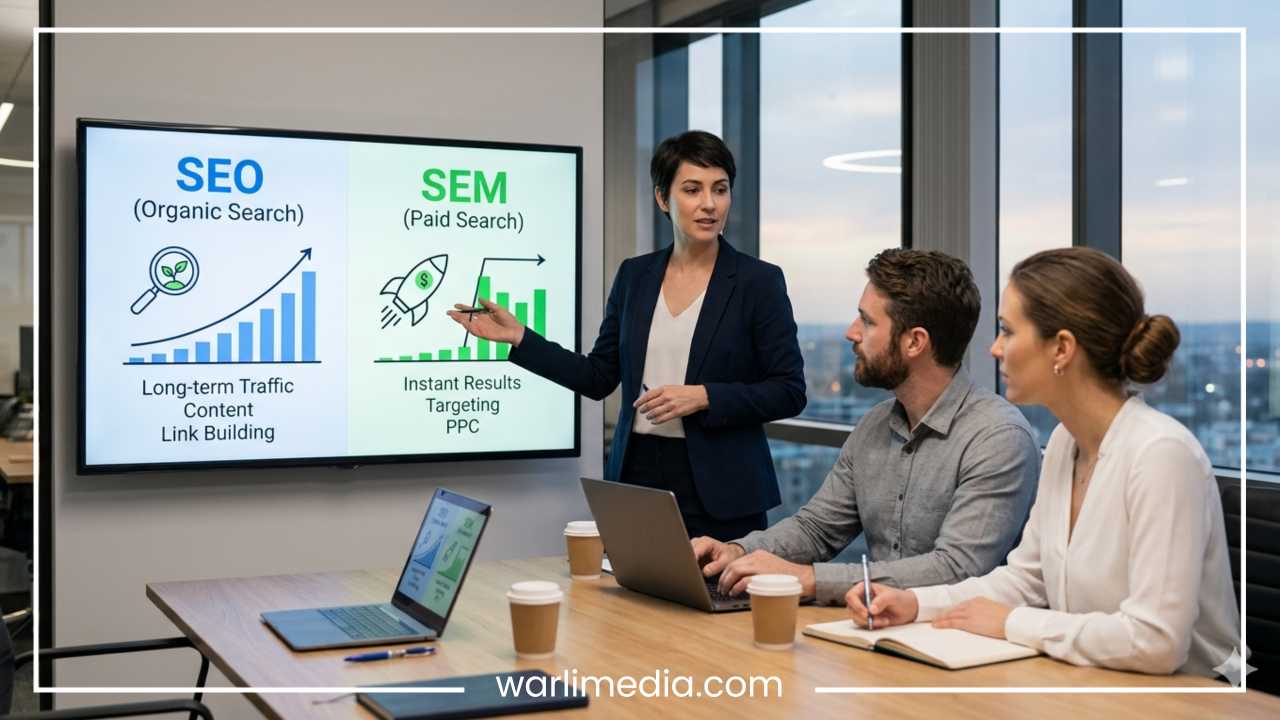
The most fundamental difference is the source of the traffic. SEO generates organic traffic, which is free in the sense that you do not pay the search engine for the click. SEM generates paid traffic, where every single visitor comes with a direct cost attached to their click.
Time to Results
If you launch a brand-new website today and focus solely on SEO, it may take three to six months (or longer) to see significant organic traffic. You must build authority and prove your relevance to search engines. Conversely, an SEM campaign can be set up in an hour, and as soon as your ads are approved, you can start receiving traffic immediately.
Cost Structure
SEO is often described as “free,” but this is a misconception. SEO requires significant investment in content creation, SEO tools, and technical expertise. However, these are upfront or fixed costs. Once you rank, the traffic is essentially free.
SEM has a variable cost structure. You must pay for every click. The moment you stop spending money on your ad budget, your traffic from SEM drops to zero.
Sustainability and Equity
SEO builds long-term equity. A well-written article can continue to drive traffic for years with only minor updates. It is a compounding asset. SEM is a short-term play. It is highly effective for promotions or quick lead generation, but it does not build lasting “authority” in the eyes of the search engine algorithm.
Click-Through Rates (CTR)
Statistically, organic results tend to receive more clicks than paid ads. Many users purposefully skip the “Sponsored” section to find the organic results, which they perceive as more trustworthy and less biased. However, for high-intent commercial keywords (e.g., “buy dishwasher online”), SEM ads often capture a significant portion of the traffic because they are highly relevant to the immediate purchase intent.
Comparison Table: SEO at a Glance vs. SEM
| Feature | SEO (Search Engine Optimization) | SEM (Search Engine Marketing) |
| Cost | Fixed (Content/Technical) | Pay-per-click (Ongoing) |
| Speed | Slow (Months) | Fast (Hours/Days) |
| Sustainability | High (Long-term equity) | Low (Stops when budget ends) |
| Search Result | Organic listings | Paid/Sponsored listings |
| CTR | Generally higher for info queries | Higher for high-intent buy queries |
| Targeting | Broad/Intent-based | Precise (Demographic/Geo/Time) |
| Control | Indirect (Algorithm dependent) | Direct (Total control over ads) |
Pros and Cons of SEO
Advantages of SEO
Trust and Credibility: Users generally trust organic results more than advertisements. Ranking on the first page signals that your business is an authority in its field.
Compounding Returns: Unlike ads, where the cost scales with the traffic, SEO becomes more cost-effective over time. Your initial investment in a blog post continues to pay off long after the work is done.
Sustainability: SEO provides a steady stream of traffic that doesn’t disappear if you have a slow month and need to cut your marketing budget.
Better for Information-Seeking: Most users start their journey with “How to” or “What is” questions. SEO is the best way to capture these top-of-funnel users.
Disadvantages of SEO
Time Lag: It is not a solution for businesses that need sales tomorrow. It requires patience and a long-term vision.
Algorithm Vulnerability: You are at the mercy of search engine updates. A change in the algorithm can occasionally cause a sudden drop in rankings.
Resource Intensive: High-quality content and technical maintenance require skilled writers, developers, and analysts.
Pros and Cons of SEM
Advantages of SEM
Immediate Impact: Perfect for launching new products, seasonal sales, or entering a new market where you have no existing authority.
Highly Targeted: You can choose exactly who sees your ads based on their location, the device they are using, and their previous browsing behavior.
Easy Testing: SEM is a fantastic tool for A/B testing. You can quickly see which headlines or offers resonate best with your audience and apply those insights to your SEO strategy.
Occupies Prime Real Estate: Ads appear at the very top of the page, often pushing organic results “below the fold” on mobile devices.
Disadvantages of SEM
Expensive Over Time: In competitive industries (like law or insurance), the cost per click can be incredibly high, eating into profit margins.
No Long-Term Value: Once the campaign ends, the benefits end. You aren’t building a permanent asset.
Ad Blindness: Many users have developed “banner blindness” or use ad blockers, meaning a segment of your audience will never see your SEM efforts.
When Should You Use SEO?
SEO should be the backbone of your digital marketing if your goal is sustainable, long-term growth. It is particularly effective for:
Brand Awareness: If you want to be seen as a thought leader or the “go-to” source in your industry, you need to rank organically for a wide range of topics.
Informational Content: If your business relies on educating customers (common in SaaS or professional services), SEO allows you to capture users early in the buying cycle.
Limited Per-Click Budgets: If your product has a low profit margin, paying $5.00 for every click may not be sustainable. SEO provides a way to get traffic without eroding your margins.
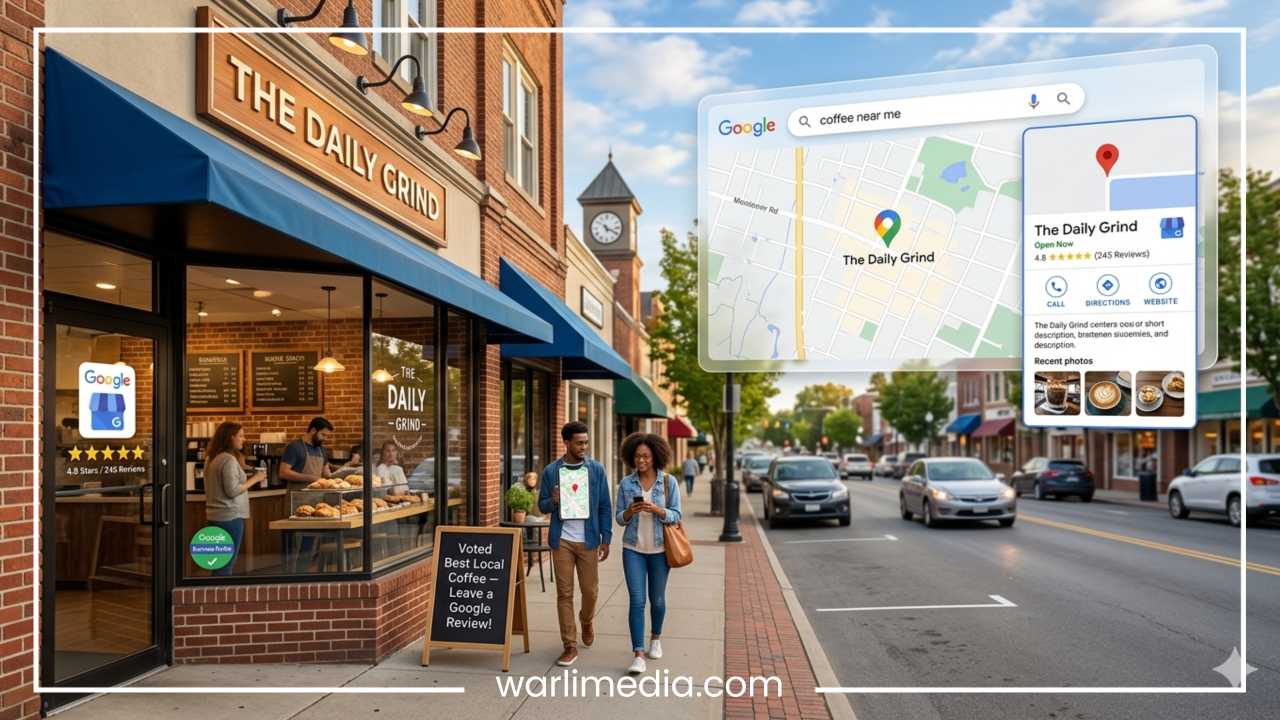
Local Authority: Local businesses benefit immensely from “Local SEO” (Google Maps) to capture nearby foot traffic.
Example: A SaaS company building a project management tool should use SEO to rank for terms like “how to manage remote teams” or “best productivity hacks.”
When Should You Use SEM?
SEM is the preferred choice when you need results “now” or have a specific conversion goal. It is best for:
New Launches: When you have a new website or a new product line with zero existing search presence.
Time-Sensitive Promotions: If you are running a Black Friday sale or a week-long webinar registration, SEO won’t move fast enough.
High-Competition Keywords: If your competitors are massive brands with decades of SEO authority, SEM might be the only way to get onto page one for “bottom-of-the-funnel” keywords.
Direct Lead Generation: When the goal is an immediate action, like a phone call, a form fill, or a purchase.
Example: An e-commerce store selling specialized hiking boots should use SEM to bid on “buy waterproof hiking boots” to capture users ready to make a purchase today.
Why SEO and SEM Work Better Together
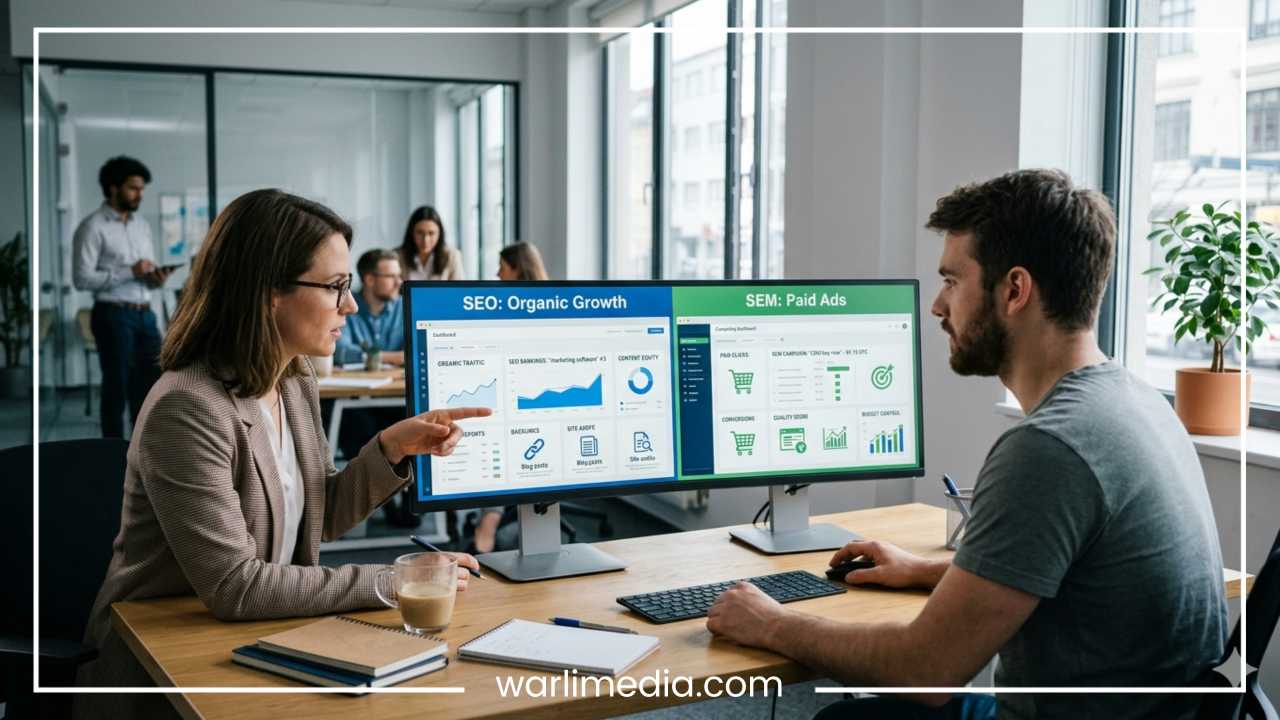
While we often discuss them as two separate entities, the most successful digital marketing strategies treat SEO and SEM as two sides of the same coin. This integrated approach is often called Search Marketing Strategy.
Full SERP Domination
If you rank #1 organically and also run a top-of-page ad for the same keyword, you occupy a massive amount of visual space on the results page. This not only increases the likelihood of a click but also creates a psychological sense of brand dominance and trust.
Data Sharing
SEM provides immediate data on which keywords convert into sales. Instead of waiting six months to see if an SEO keyword is profitable, you can run a two-week ad campaign to test the keyword. If it converts well in SEM, you can then confidently invest in a long-term SEO strategy for that term.
Quality Score and SEO
While SEO rankings don’t directly affect SEM rankings, the work you do for SEO—improving page speed, creating high-quality content, and ensuring mobile-friendliness—improves your SEM Quality Score. A higher Quality Score leads to lower costs and better ad placements.
Retargeting
You can use SEO to bring in large volumes of top-of-funnel traffic (people looking for information) and then use SEM (specifically remarketing ads) to stay top-of-mind and guide them back to your site when they are ready to buy.
Common SEO and SEM Mistakes
Navigating these channels is full of potential pitfalls. Avoiding these common mistakes can save you thousands of dollars and months of wasted effort.
SEO Mistakes
Keyword Stuffing: Writing for search engines instead of humans. Overloading your text with keywords makes it unreadable and can lead to penalties.
Ignoring Technical Health: Creating great content on a site that takes 10 seconds to load is a recipe for failure.
Thin Content: Publishing short, low-value pages just to target a keyword. Google prioritizes “depth” and expertise.
Buying Backlinks: Engaging in “black hat” SEO by purchasing links will eventually lead to a manual penalty from Google, which can be devastating.
SEM Mistakes
Broad Match Overload: Allowing your ads to show for “related” terms that aren’t actually relevant to your business, leading to wasted spend.
Neglecting Negative Keywords: Failing to tell Google which words you don’t want to rank for (e.g., a “luxury watch” seller should add “cheap” as a negative keyword).
Weak Landing Pages: Sending paid traffic to a generic homepage instead of a specific, optimized landing page that matches the ad’s promise.
Set It and Forget It: SEM requires daily or weekly monitoring. Bids change, competitor tactics evolve, and ad fatigue is real.
Future Trends in SEO and SEM
The world of search is shifting rapidly. Staying ahead of these trends will ensure your strategy remains evergreen.
AI-Generated Search Results: Search engines are increasingly using generative AI to answer queries directly on the SERP (SGE – Search Generative Experience). This means SEO will need to focus more on providing “source-worthy” expertise that AI wants to cite.
Search Intent Over Keywords: Search engines are becoming better at understanding why someone is searching. Content must satisfy the intent (Informational, Navigational, Transactional) rather than just containing the right words.
EEAT: Google’s emphasis on Experience, Expertise, Authoritativeness, and Trustworthiness is higher than ever. Showing who wrote your content and why they are an expert is crucial.
Automation in SEM: Google Ads is moving toward “Smart Bidding” and “Performance Max” campaigns, where AI handles much of the targeting. The role of the marketer is shifting from manual bidding to high-level strategy and creative input.
Voice and Visual Search: As people use smart speakers and tools like Google Lens, search queries are becoming more conversational and image-based.
Final Thoughts
The debate of SEO vs. SEM is not about which one is “better,” but rather which one is right for your current needs.
SEO is your long-term investment. It is the marathon runner that builds your brand’s reputation, earns user trust, and creates a sustainable source of traffic that grows more valuable every year. It is about playing the long game and winning through quality.
SEM is your high-performance engine. It provides the speed and precision necessary to launch new initiatives, dominate competitive spaces, and generate immediate revenue. It is about paying for performance and achieving instant results.
For most businesses, the winning formula is a balanced integration of both. By using SEM to gain immediate insights and visibility while simultaneously building an SEO foundation, you create a search strategy that is both agile and enduring. Whether you are a small local startup or a global enterprise, understanding these differences is the key to unlocking the full potential of the search engine results page. Treat SEO and SEM as complementary partners, and you will find your business not just appearing in search results, but thriving in them.
Frequently Asked Questions About SEO and SEM
To further clarify the nuances of search marketing, here are some of the most common questions regarding how SEO and PPC work in the real world.
Is SEM the same as PPC?
While the terms are often used interchangeably, there is a slight technical difference. PPC (Pay-Per-Click) is a specific billing model where you pay for each click on an advertisement. SEM (Search Engine Marketing) is the broader category of using paid strategies to gain visibility on search engines. Essentially, PPC is the primary mechanism used within SEM campaigns on platforms like Google Ads or Microsoft Advertising.
Which is better for small businesses: SEO or SEM?
The answer depends on your immediate goals and budget. If you are a new business needing customers today, SEM is better because it provides instant visibility. However, if you have a limited marketing budget and are looking for sustainable growth over the next year, SEO is a better long-term investment. Most successful small businesses use a “crawl, walk, run” approach: starting with a small SEM budget to generate leads while consistently working on their SEO foundation.
Can SEO work without SEM?
Yes, SEO can be highly effective as a standalone strategy. Many of the world’s largest content sites and blogs rely almost entirely on organic traffic. However, without SEM, you lack a “fast-track” option for new product launches or seasonal promotions. While SEO provides the most cost-effective traffic in the long run, combining it with SEM often leads to a more diverse and resilient marketing funnel.
How long does SEO take to start showing results?
For a brand-new website, it typically takes three to six months to start ranking for low-competition keywords and up to a year for more competitive terms. SEO is a compounding process; the efforts you make today in technical optimization and content creation build authority that makes it easier to rank for future keywords.
Is Google Ads worth it for competitive industries?
Google Ads is often most valuable in highly competitive industries precisely because organic ranking is so difficult. While the Cost Per Click (CPC) may be higher in fields like law, insurance, or software, the search intent is also much higher. A well-optimized SEM campaign with a strong landing page can still provide a high Return on Ad Spend (ROAS) even in expensive niches.
Does running SEM ads improve my organic SEO rankings?
Directly, no. Spending money on Google Ads does not give you a “boost” in organic rankings. However, there is an indirect benefit: SEM increases brand recognition. When users see your brand in an ad and then see you again in the organic results, they are more likely to click. Additionally, the data you gather from SEM—such as which headlines get the most clicks—can be used to improve your SEO meta titles and descriptions.
What are long-tail keywords and why do they matter for SEO and SEM?
Long-tail keywords are longer, more specific phrases (e.g., “best organic SEO services for small businesses” vs. “SEO”). These keywords usually have lower search volume but much higher conversion rates because they indicate specific user intent. In SEO, they are easier to rank for. In SEM, they often have a lower CPC because there is less competition compared to broad, generic terms.